Courses
- Abaqus
Full Course: SPH
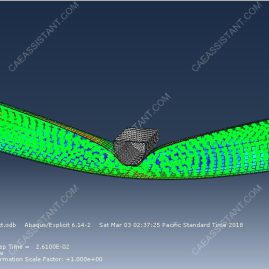
Read moreSmoothed Particle Hydrodynamics Tutorial: Abaqus SPH (Smoothed Particle Hydrodynamics) is a numerical method used in this software to model fluid-structure interaction problems. SPH in Abaqus is a meshless approach that uses a set of particles to discretize the fluid domain. The Abaqus SPH modeling tutorial is particularly useful for problems with large deformations, fragmentation, and free surface effects.
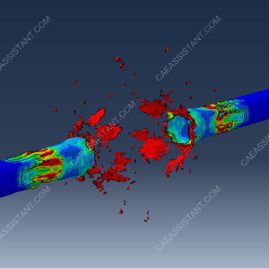
It can be used in combination with other Abaqus features, such as finite element analysis, to model coupled fluid-structure systems. This Abaqus SPH tutorial, created by CAE Assistant group, can help you understand and apply this method through practical examples, some of which include projectile impact simulation on a cementitious material, TNT explosion simulation inside a rock using the SPH method, bullet movement through a water pipe in Abaqus, and bird strike simulation in Abaqus.
- Abaqus
Full Course: Masonry wall simulation
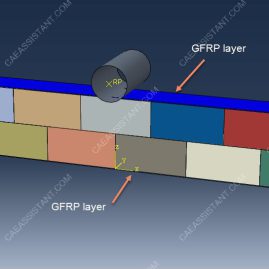
Read moreThe term masonry can refer to the construction materials brick, stone, etc. An assembly of masonry units, such as concrete blocks, burnt clay bricks, sundried bricks, stone bricks, and natural stones, linked together with mortar or grout is referred to as a masonry wall. It is important to know how these structures behave under different loading conditions, such as explosion, tension, earthquake, etc. to have the best design. In this package, you’ll learn all of that in four workshops: Behavior of a masonry wall under a couple Eulerian-Lagrangian explosion, micro modeling of a masonry wall, modeling of reinforced bricks masonry beams using GFRP reinforcement, earthquake simulation over masonry wall.
- Abaqus
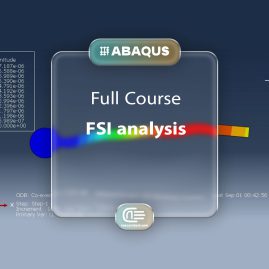
Full Course: FSI analysis
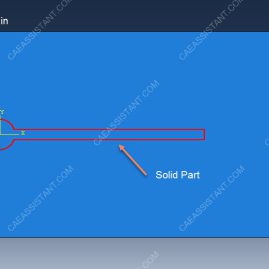
Read moreFluid-Structure Interaction (FSI) refers to the interaction between a deformable or movable structure and an internal or surrounding fluid flow. FSI simulations are vital for understanding and predicting the behavior of systems where fluid and solid components interact. These simulations enable engineers and researchers to study the effects of fluid forces on structures and vice versa. FSI simulations are crucial in various fields, including aerospace, civil engineering, biomechanics, and automotive industries. They provide valuable insights into the performance, safety, and reliability of engineering systems. By accurately modeling the complex interactions between fluids and structures, FSI simulations can identify potential issues such as vibrations, instabilities, and structural failures. In this package, you’ll learn simulating FSI in Abaqus within 3 workshops.
- Abaqus
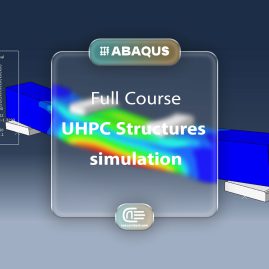
Full Course: UHPC Structures simulation
Read moreUltra-High Performance Concrete structures refer to structures that are constructed using Ultra-High Performance Concrete (UHPC). UHPC is a specialized type of concrete known for its exceptional strength, durability, and resistance to various environmental and loading conditions. UHPC structures can include bridges, high-rise buildings, infrastructure components, architectural elements, and more. Simulating UHPC structures is of significant importance. Through simulation, engineers can analyze and predict the structural behavior and performance of UHPC under different loading conditions. This includes assessing factors such as stress distribution, deformation, and failure mechanisms. By simulating UHPC structures, engineers can optimize the design, evaluate the structural integrity, and ensure the safety and reliability of these complex systems. In this project package, you will learn simulating the UHPC structures with many practical examples.
- Abaqus
Full Course: Hydroforming simulation
Read moreHydroforming is a metal forming process that allows the shaping of various metals, such as steel, stainless steel, copper, aluminum, and brass. It is a cost-effective and specialized form of die molding that utilizes highly pressurized fluid to shape the metal. Hydroforming can be classified into two main categories: sheet hydroforming and tube hydroforming. Sheet hydroforming uses a single die and a sheet of metal, while tube hydroforming involves expanding metal tubes using two die halves. Hydroforming simulation in Abaqus is a valuable tool for optimizing the hydroforming process. It enables engineers to predict and analyze important factors such as material flow, stress distribution, thinning, and wrinkling during the forming process. By accurately simulating the hydroforming process, engineers can optimize key parameters like fluid pressure, die design, and material properties to achieve the desired shape with minimal defects. In this package, you will learn hydroforming process simulation with the SPH method and using time-pressure curve.
- Abaqus
Full Course: Geostatic analysis
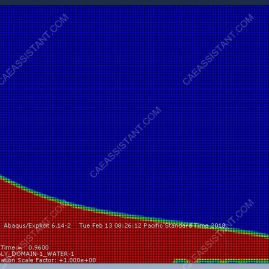
Read moreGeostatic Relates to the pressure exerted by the earth or similar substance. Total stress at a point due to the combined weight of the soil or rock (solids plus water) and the load on the foundation is called Geostatic stress. Geostatic analysis is used in cases such as earthquakes, designing a dam, analyzing the foundation of a structure, etc. In this package, three workshops are presented to learn the Geostatic analysis: The first workshop analyzes a water column broke under the weight of gravity, the second workshop simulates an earthquake load over a gravity dam in contact with water and dirt, the last workshop models cylindrical tank’s water sloshing phenomenon.
- Abaqus
Full Course: Steel Damage types
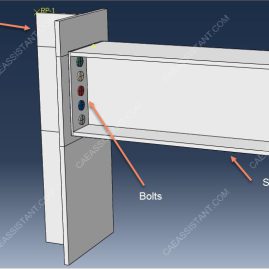
Read moreSteel materials are everywhere and used in almost every structure, from the building you live into the car you drive. Therefore, it’s essential to know the steel properties and behaviors when it’s under different loading conditions such as compression, tension, cyclic load, impact, etc. moreover, knowing the damage mechanism of steel structures helps to have better designing. In this tutorial package, you will learn how to analyze steel structures when they’re damaged with practical examples. There are five workshops here that could teach you the damage mechanism of steel structures: Simulation of bolt failure on the steal beam, reinforced concrete containment damage mechanism under internal explosion, tensile test of a steel specimen, impact on ceramic plate reinforced by steel plate, water jet cutting simulation.
- Uncategorized
Full Course: Foam simulation
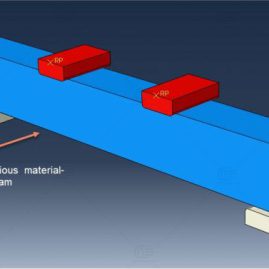
Read moreFoam is a type of expanded plastic and rubber produced by forcing gas bubbles into a polymer material. It is a permeating, lightweight material. Along with corrugated packaging, foam fabric can protect goods during transportation. Foams, a novel family of ultra-light materials, have the capacity to undergo significant deformation at practically constant plateau stress, which allows them to absorb a significant amount of kinetic energy. In this tutorial package, you will learn how to analyze sandwich panels with an interior layer of foam, Foam-Filled Aluminum Tubes subjected to compressive loads, simulation of a reinforced foamed concrete beam, concrete-titanium foam panel explosion, etc. All of these cool practical examples with their complete tutorial videos are in this package which you can read their description below.
- Uncategorized
Full Course: Car part industrial simulation
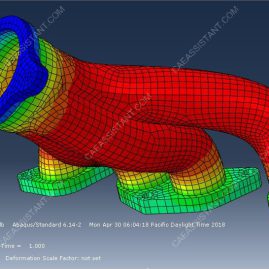
Read moreCar industrial parts are complex and critical components that play a vital role in the operation of a car. Two such parts are the exhaust manifold and the internal combustion engine (IC engine). The exhaust manifold directs hot exhaust gases from the engine’s cylinders into the exhaust system and is typically made of cast iron or stainless steel. The IC engine converts fuel into mechanical energy by burning fuel in a controlled explosion within the engine cylinder. High temperatures and pressures must be considered in the design, and the components must be made of durable materials that can withstand the stresses of constant combustion. Therefore, it is important to know how these parts respond under different loading conditions to have the best design possible. In this package, there are two workshops to help you with this job: Heat transfer analysis in an exhaust manifold and Thermomechanical analysis of an exhaust manifold.
- Abaqus
Full Course: Piezoelectric simulation
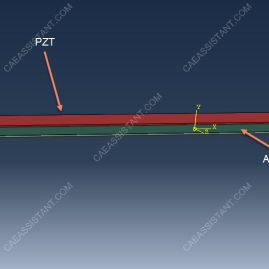
Read morePiezoelectric materials are unique materials that generate an electric charge in response to applied mechanical stress, such as pressure or vibration. They are used in a wide range of applications, including sensors, actuators, and energy harvesting devices. The piezoelectric analysis is the process of studying the mechanical and electrical behavior of piezoelectric materials under various loading conditions. It involves modeling and simulating the response of piezoelectric materials to external stimuli, such as electrical potential or mechanical stress. The importance of piezoelectric analysis lies in its ability to evaluate the performance and optimize the design of piezoelectric devices, which are becoming increasingly important in various industries, including medical, automotive, aerospace, and energy. Piezoelectric analysis can help improve the efficiency, accuracy, and durability of piezoelectric devices, leading to advancements in technology and innovation. In this package you will learn how to model piezoelectric materials in Abaqus.
- Abaqus
Full Course: Water Simulation
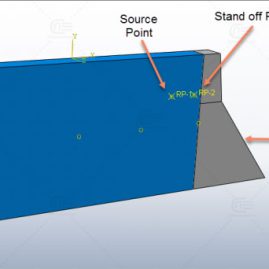
Read moreWater is the primary component of the Earth’s hydrosphere and the fluids of all known living things. Therefore, we build dams to store the water and transfer it through piping systems to use it for daily activities and produce energy. In industries, we use it as a cooler, solvent, hydroforming, cutting, etc. In this package, there are nine practical examples, such as the ones mentioned to teach you how to simulate water in Abaqus. These examples are explosions in the depth of the water, gravity dam simulation subjected to the underwater explosion, ball impact to the water, water jet cutting, etc.
- Abaqus
Full Course: Rock simulation
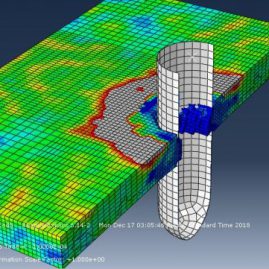
Read moreRock simulation is essential for evaluating the behaviour of rock masses under various loading conditions, such as earthquakes, landslides, and blasting. It enables engineers and geologists to assess the stability and integrity of rock structures, predicts potential failure modes, and develop effective mitigation strategies. Rock simulation is crucial in the design and planning of mining operations, tunnels, and underground constructions to ensure the safety and longevity of the structures. It also plays a vital role in assessing the seismic hazard of an area and evaluating the potential impact of earthquakes on the built environment. In this package, you will learn how to do an impact simulation on a granite stone using the JH-2 model; also an explosion simulation inside a rock for excavation purposes. You can learn more detail in the description of the workshops.
- Abaqus
Full Course: Explosion simulation
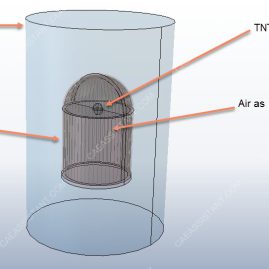
Read moreThis training package teaches simulation of the explosion in ABAQUS with a variety of examples. In this training package, different methods for implementation are discussed.
- Abaqus
Full Course: Friction Stir Welding
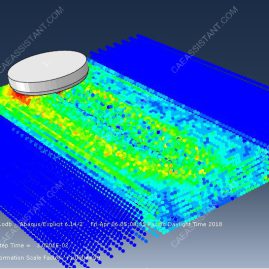
Read moreFriction stir welding (FSW) is a solid-state joining process that utilizes a rotating tool to generate frictional heat, enabling the consolidation of materials without melting. FSW offers numerous benefits and is particularly valuable for welding challenging materials like aluminum alloys. It finds widespread applications in industries such as automotive, aerospace, shipbuilding, and construction, providing enhanced strength, weight reduction, and structural integrity. FSW minimizes distortion, reduces the need for post-weld machining, and eliminates issues related to solidification and cooling. Simulations using Abaqus, a popular finite element analysis software, play a crucial role in optimizing FSW processes. Engineers can investigate process parameters, evaluate weld quality, predict residual stresses and distortions, and optimize weld designs through Abaqus simulations. These simulations enable cost-effective development, improved weld quality, reduced material waste, and enhanced productivity in industrial applications. In this package, you will learn how to simulate FSW simulations in a variety of examples with different methods.
- Seismic & Dynamic Analysis
Full Course: Earthquake simulation
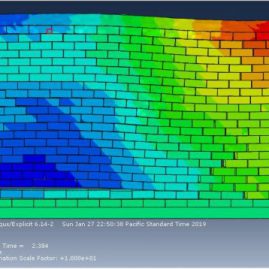
Read moreIt is known that an earthquake is a disastrous event that can cause great damage to buildings, structures, and even people. So it’s essential to know how a structure will behave when subjected to an earthquake. Therefore engineers must take into account the possibility of an earthquake when designing a structure. With finite element analyses, engineers can predict the behaviour of structures under earthquake loading. With this method, they can determine the best way to design a structure to withstand an earthquake. In this package, you can learn how to do earthquake simulation in Abaqus to have the best design for your structure to save human lives. Three practical examples are presented to you to start simulating earthquakes: “simulating an earthquake over a gravity dam in contact with water and soil”, “simulating an earthquake load over a water-filled tank”, “Abaqus-Micro model simulation of seismic load over masonry wall (concrete brick)”.
- Abaqus
Full Course: Soil Impact Analysis
Read moreSoil impact refers to the interaction between a solid object and the soil, wherein the object collides with or penetrates into the soil. This issue holds great importance across various industries, including civil engineering, geotechnical engineering, construction, and transportation. Understanding soil impact behavior is crucial for designing and assessing the safety and performance of structures and systems subjected to dynamic loads, such as vehicle collisions, pile driving, and projectile impacts. Simulation plays a vital role in studying soil impact. By employing advanced numerical methods and software tools like Abaqus, researchers and engineers can accurately model and analyze the complex interactions between objects and soil. Simulation allows for the investigation of various parameters, such as impact velocity, soil properties, object geometry, and boundary conditions, to assess their influence on the response and behavior of the system. In this package, you will learn how to do soil impact simulations in several practical examples.