Uncategorized
- Uncategorized
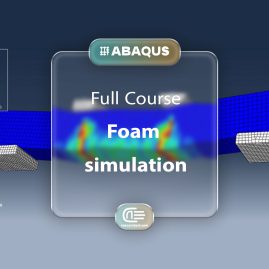
Full Course: Foam simulation
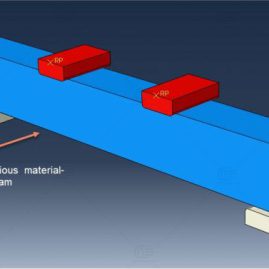
Read moreFoam is a type of expanded plastic and rubber produced by forcing gas bubbles into a polymer material. It is a permeating, lightweight material. Along with corrugated packaging, foam fabric can protect goods during transportation. Foams, a novel family of ultra-light materials, have the capacity to undergo significant deformation at practically constant plateau stress, which allows them to absorb a significant amount of kinetic energy. In this tutorial package, you will learn how to analyze sandwich panels with an interior layer of foam, Foam-Filled Aluminum Tubes subjected to compressive loads, simulation of a reinforced foamed concrete beam, concrete-titanium foam panel explosion, etc. All of these cool practical examples with their complete tutorial videos are in this package which you can read their description below.
- Uncategorized
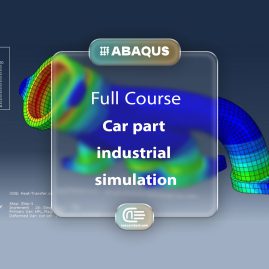
Full Course: Car part industrial simulation
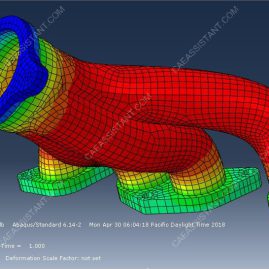
Read moreCar industrial parts are complex and critical components that play a vital role in the operation of a car. Two such parts are the exhaust manifold and the internal combustion engine (IC engine). The exhaust manifold directs hot exhaust gases from the engine’s cylinders into the exhaust system and is typically made of cast iron or stainless steel. The IC engine converts fuel into mechanical energy by burning fuel in a controlled explosion within the engine cylinder. High temperatures and pressures must be considered in the design, and the components must be made of durable materials that can withstand the stresses of constant combustion. Therefore, it is important to know how these parts respond under different loading conditions to have the best design possible. In this package, there are two workshops to help you with this job: Heat transfer analysis in an exhaust manifold and Thermomechanical analysis of an exhaust manifold.
- Uncategorized
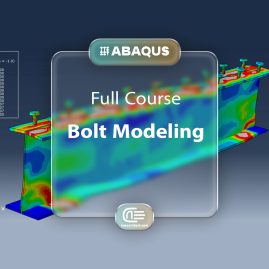
Full Course: Bolt Modeling
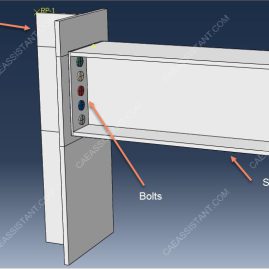
Read moreBolts and joints play a vital role in the stability and structural integrity of various engineering structures, including buildings, bridges, and machines. Bolts are used to fasten or connect different components together, providing a means of transferring loads and ensuring the continuity of load paths. Joints connect structural elements, allowing them to move and deform while maintaining their overall stability. Proper design and selection of bolts and joints are crucial to ensuring the safety and durability of the structure. Factors such as the type of load, the materials used, and the environmental conditions must be considered when selecting bolts and joints. Failure to properly design and install bolts and joints can result in catastrophic failure of the structure. In this package, you will learn how to model bolts and joints, simulating the failure of connections and other things with practical examples.