


In this tutorial, the simulation of piezoelectric displacement under an applied electrical potential in Abaqus is presented. The piezoelectric effect is the ability of certain materials to generate an electric charge when mechanical stress is applied. A key characteristic of this effect is its reversibility. Materials that show the direct piezoelectric effect (electricity generated from mechanical stress) also show the converse effect (mechanical deformation generated by an electric field).
When a piezoelectric material is subjected to mechanical stress, the positive and negative charge centers shift. This creates an external electric field. When the process is reversed, an external electric field causes the material to stretch or compress.
The piezoelectric effect is widely used in many applications. These include sound generation and detection, high‑voltage production, electronic frequency generation, microbalances, and precision optical focusing. It is also essential in scientific instruments with atomic‑level resolution, such as scanning probe microscopes (STM, AFM). In everyday life, it appears in simple devices like piezoelectric igniters in lighters.
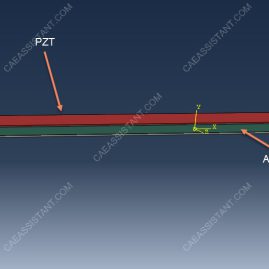
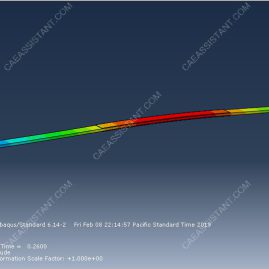
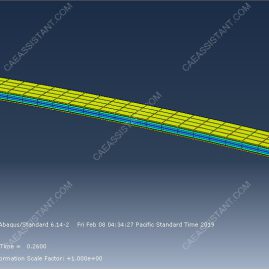
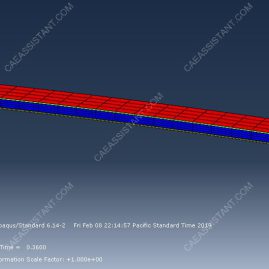
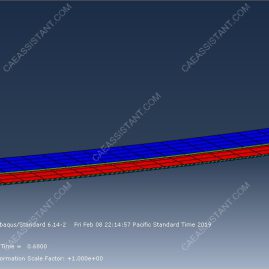
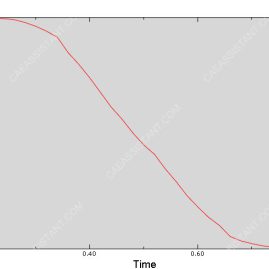
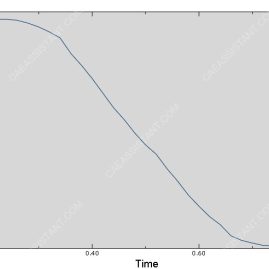
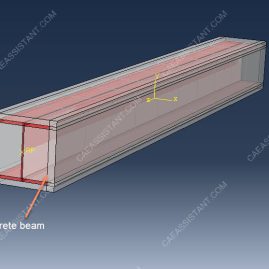
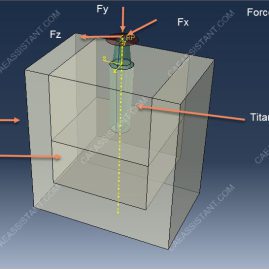
In this simulation, a sinusoidal voltage is applied to the top surface of the PZT component. The aluminum core responds to the deformation generated by the PZT. During the analysis, the PZT converts electrical voltage into mechanical displacement, which is clearly visible in the results. Figures of the assembled model and simulation output are shown below.






Reviews
There are no reviews yet.