


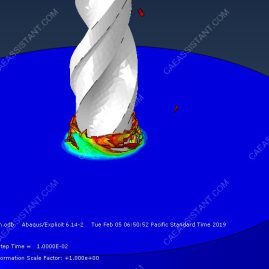

In this tutorial, the bone drilling process is simulated using the explicit method in Abaqus. Bone drilling is a common procedure in many surgical fields, including orthopaedics, neurosurgery, plastic and reconstructive surgery, craniomaxillofacial surgery, and ear, nose, and throat operations.
A cylindrical tunnel is usually prepared in bone with a surgical drill bit. This tunnel allows placement of a screw or other threaded device for rigid fixation. The fixation is achieved through integration of the screw threads with cancellous and/or cortical bone. In this configuration, bone screws can resist axial and shear forces as well as bending moments. This makes them suitable for load-bearing functions of the skeleton during locomotion.
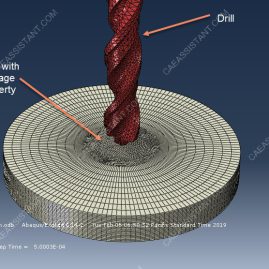
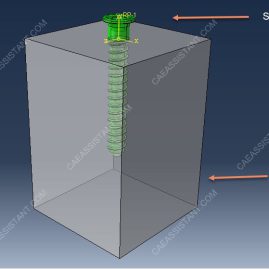
Drill bits are also used to prepare bony tunnels, for example in anterior cruciate ligament (ACL) reconstruction. A figure of the assembled part is shown below.
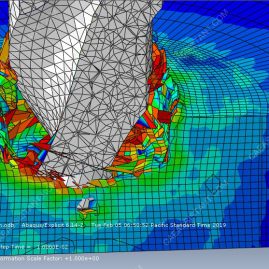
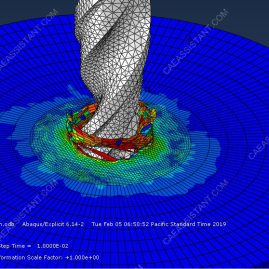
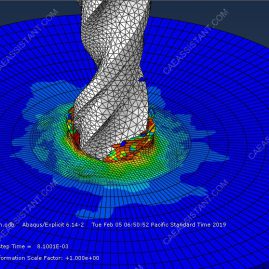
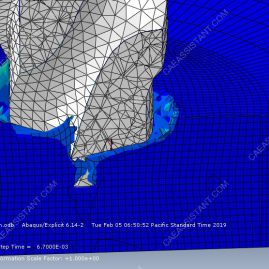
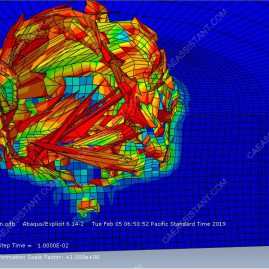
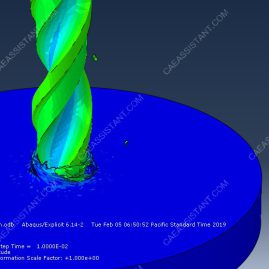
For this type of analysis, the dynamic explicit procedure in Abaqus is appropriate. General contact is defined, including internal damage and erosion. The drill is given rotational velocity combined with axial displacement. During the simulation, the drill penetrates the bone and creates a hole. Figures of the simulation results are shown below.

Reviews
There are no reviews yet.