


Cutting of bone is a common procedure in orthopedic trauma surgery and dentistry. Bone cutting operations include grinding, sawing, and drilling. In manufacturing, the proper definition of machining operations is essential for efficiency in both time and cost, as well as for maintaining surface integrity. This concept also applies to bone cutting, where it is important to balance short cutting times (to reduce surgery duration) with high surface quality (to minimize thermal damage). Excessive heat can create a thermally affected layer in the bone, which may lead to osteonecrosis.
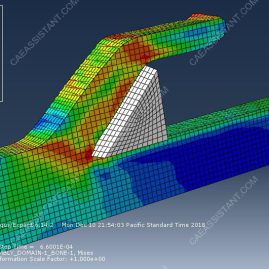
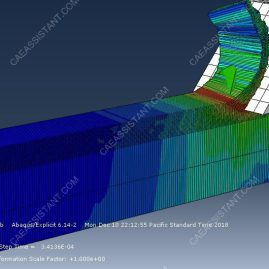
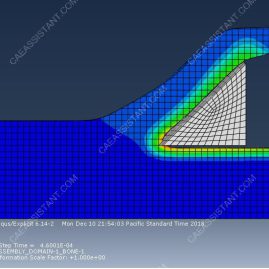
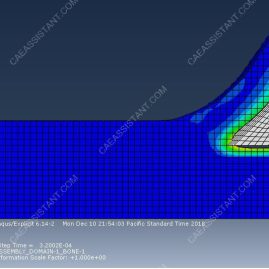
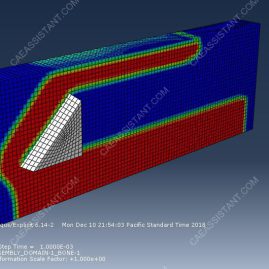
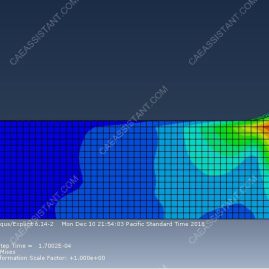
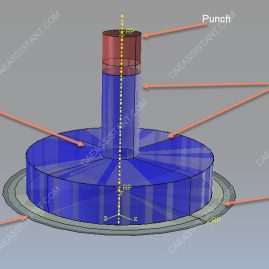
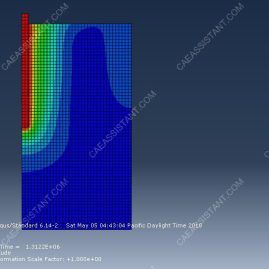
Validated modeling tools, such as the finite element method (FEM), can support the analysis and optimization of bone machining operations. A critical factor for accurate simulations is the use of constitutive equations that correctly represent bone behavior. In this simulation, an Eulerian approach was applied. The Johnson-Cook material model was selected to describe the mechanical response of bone. A dynamic temperature-explicit step was used, which is suitable for this type of analysis. Figures of the simulation are shown below.


Reviews
There are no reviews yet.