


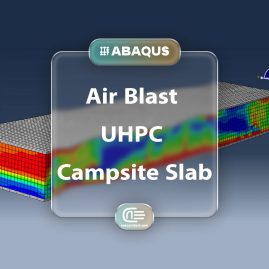
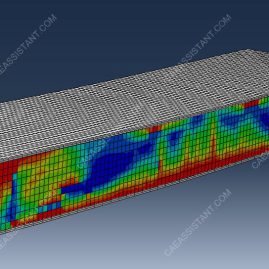
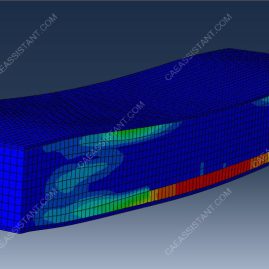
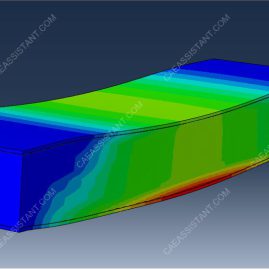
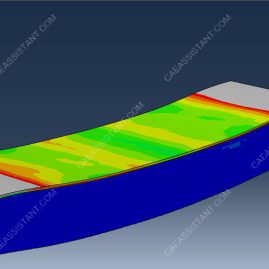
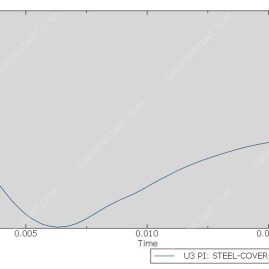
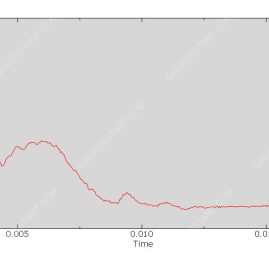
In this tutorial, an air blast explosion over a campsite slab (UHPC–Steel) is simulated using cohesive interaction in Abaqus.
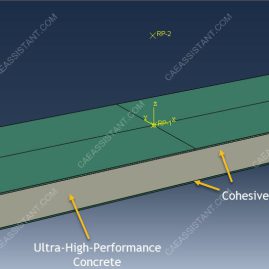
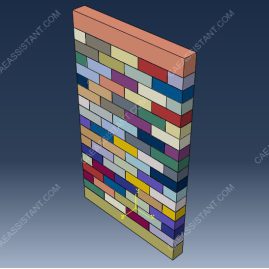
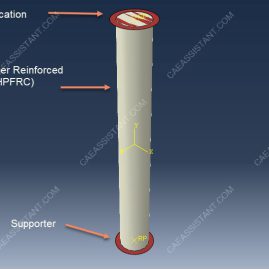
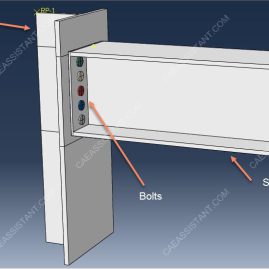
The two steel covers are modeled as three-dimensional solid parts. The Ultra-High-Performance Concrete (UHPC) slab is also modeled as a three-dimensional solid part.
UHPC is a tailored cementitious material that can significantly improve the blast resistance of structural panels. Its properties—very high tensile and compressive strength, ductility, and durability—make it suitable for demanding engineering applications, especially in bridge construction.
For the UHPC slab, the Concrete Damaged Plasticity (CDP) model is used. This continuum, plasticity-based damage model assumes two main failure mechanisms: tensile cracking and compressive crushing. The CDP model can predict both tensile and compressive damage.
Steel behavior is modeled using elastic–plastic material properties. A dynamic explicit step is chosen, as it is appropriate for blast analysis. Cohesive interaction is defined between the steel and concrete surfaces using stiffness, fracture stress, and fracture energy. This allows investigation of possible separation during the blast.
The CONWEP blast technique is applied to simulate TNT detonation and its location. Fixed boundary conditions are assigned to two sides of the slab. A fine mesh is required to ensure accurate results.
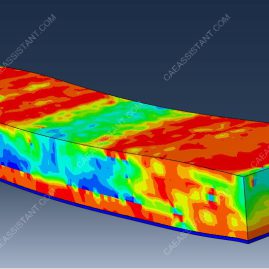
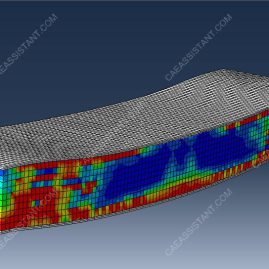
After the simulation, results such as stress, strain, tensile damage, compressive damage, and displacement are available. Figures of the results can be viewed for better understanding.

Reviews
There are no reviews yet.