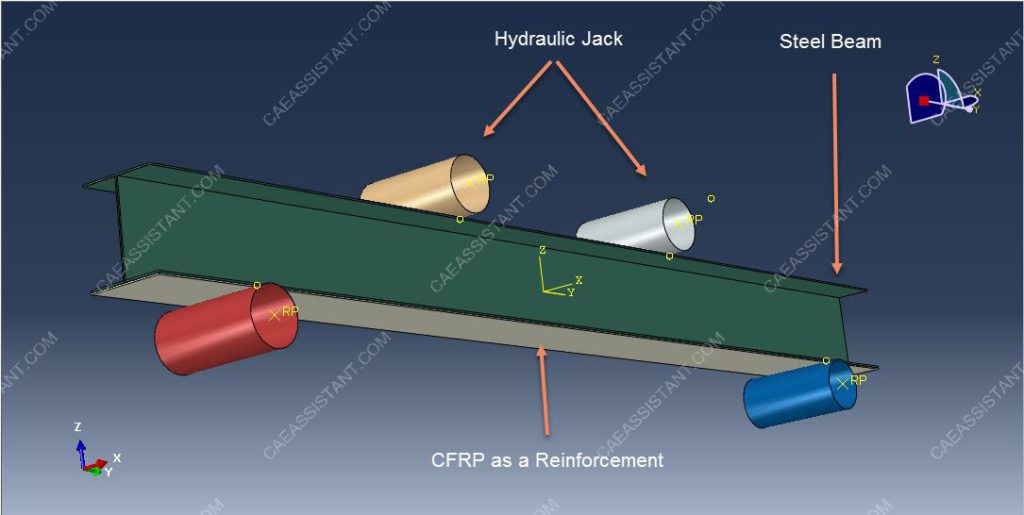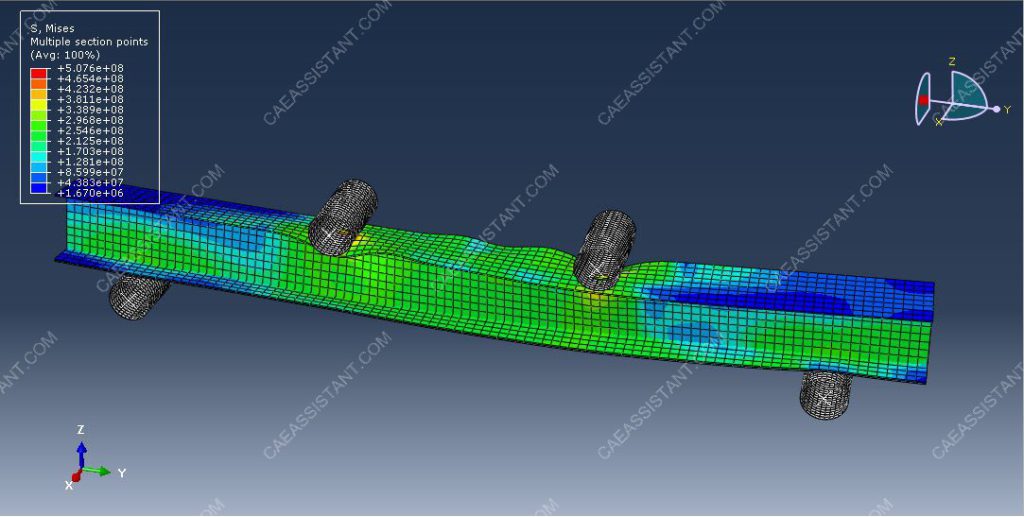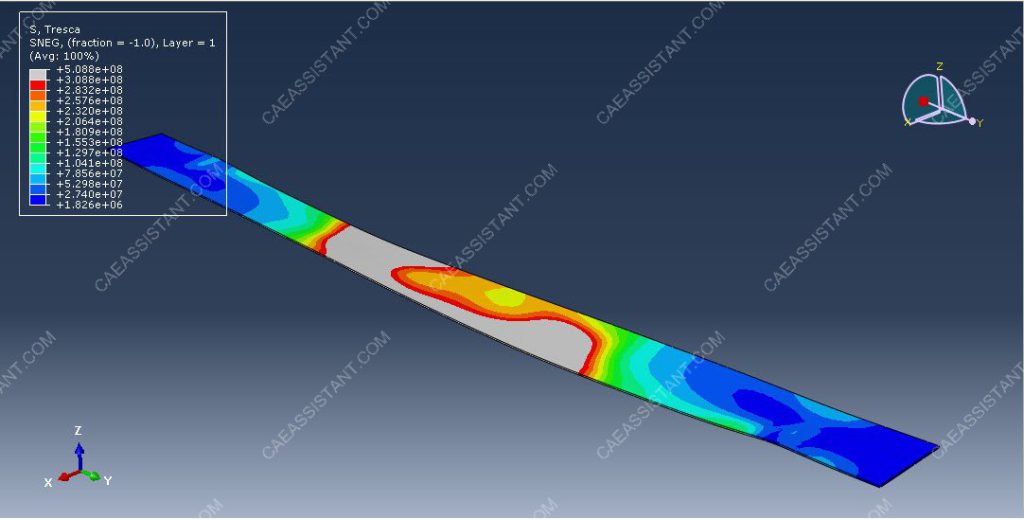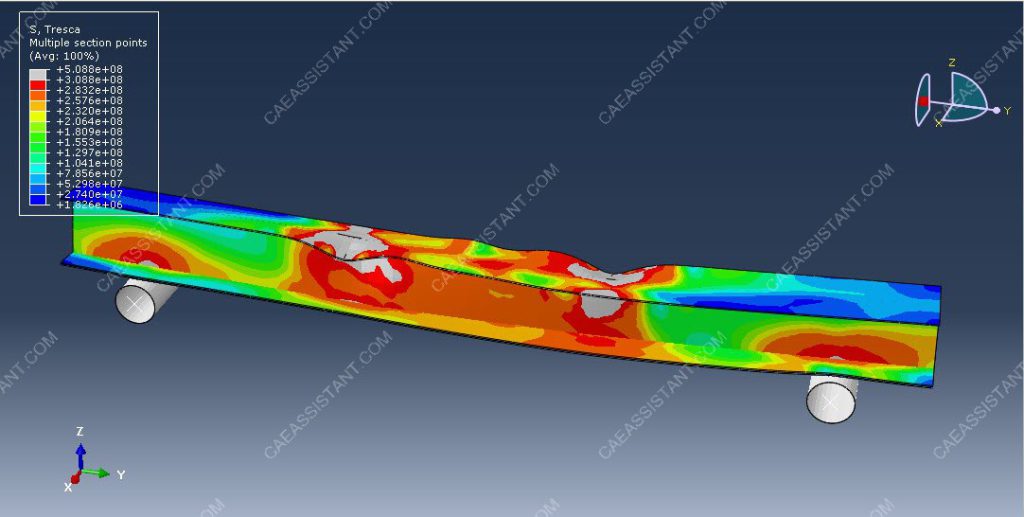
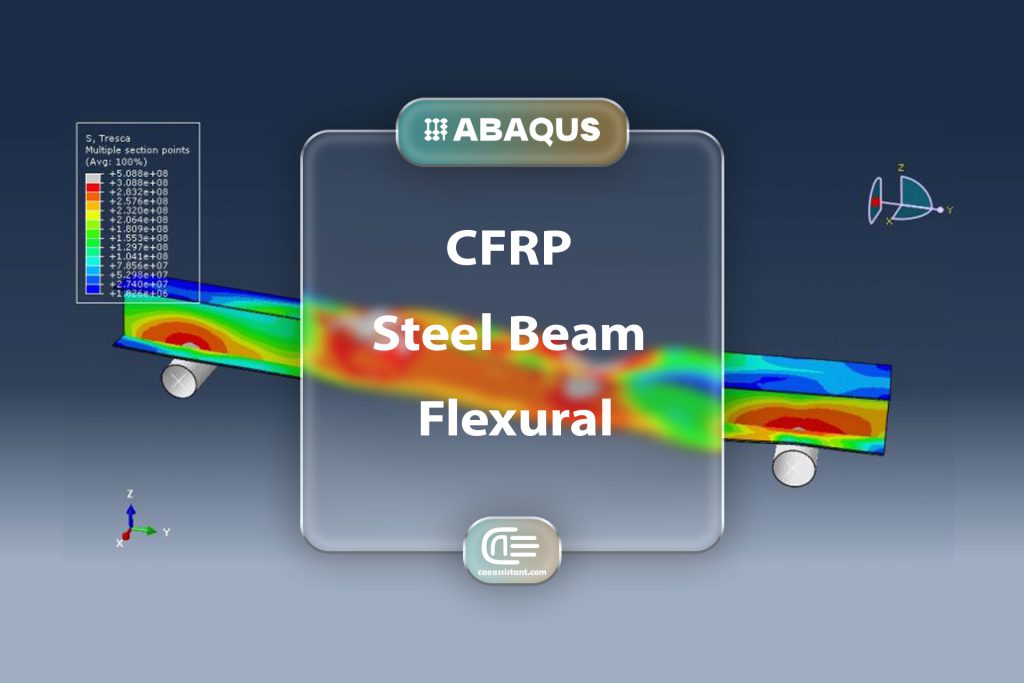
In this tutorial, the flexural behavior of a steel beam reinforced with CFRP is simulated in Abaqus. The steel beam and CFRP sheet are modeled as three-dimensional shell parts, while the rigid bodies are defined as discrete rigid bodies.
Fiber-reinforced polymer (FRP) materials are composites made of an epoxy matrix and fiber reinforcement. They are widely used for the rehabilitation and strengthening of concrete structures due to their high strength-to-weight ratio, corrosion resistance, and fatigue resistance. Common FRP types include Glass FRP (GFRP), Carbon FRP (CFRP), and Aramid FRP (AFRP). CFRP is frequently applied to strengthen steel beams, although its brittle failure modes and risk of galvanic corrosion are notable drawbacks.
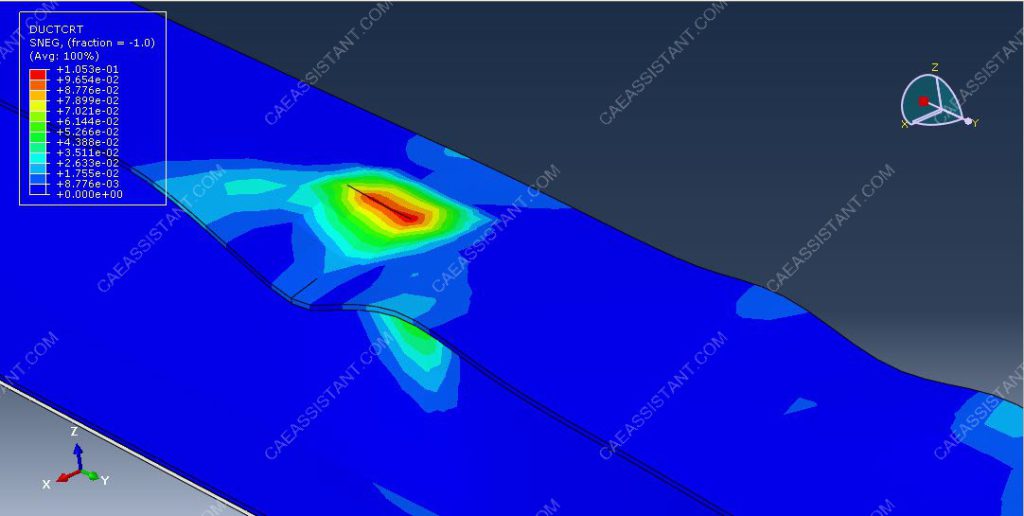
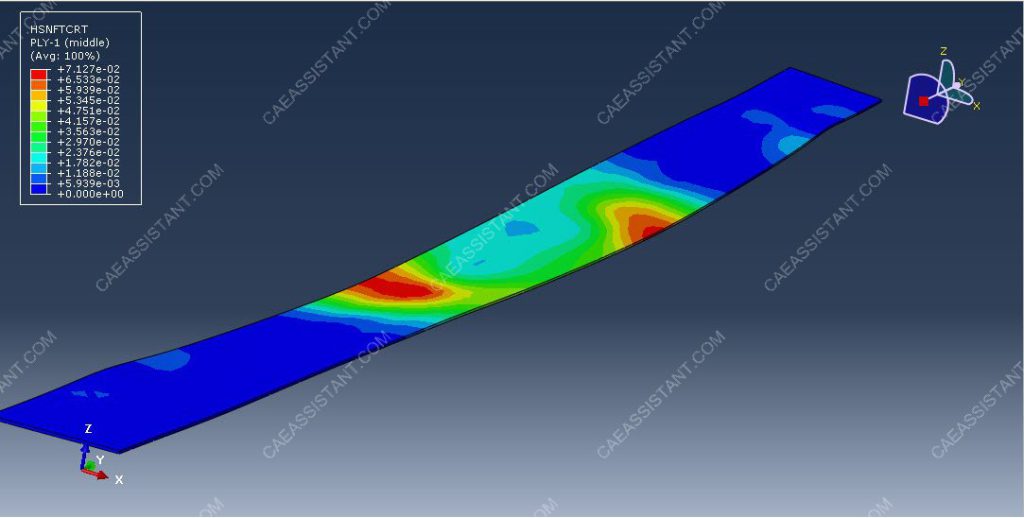
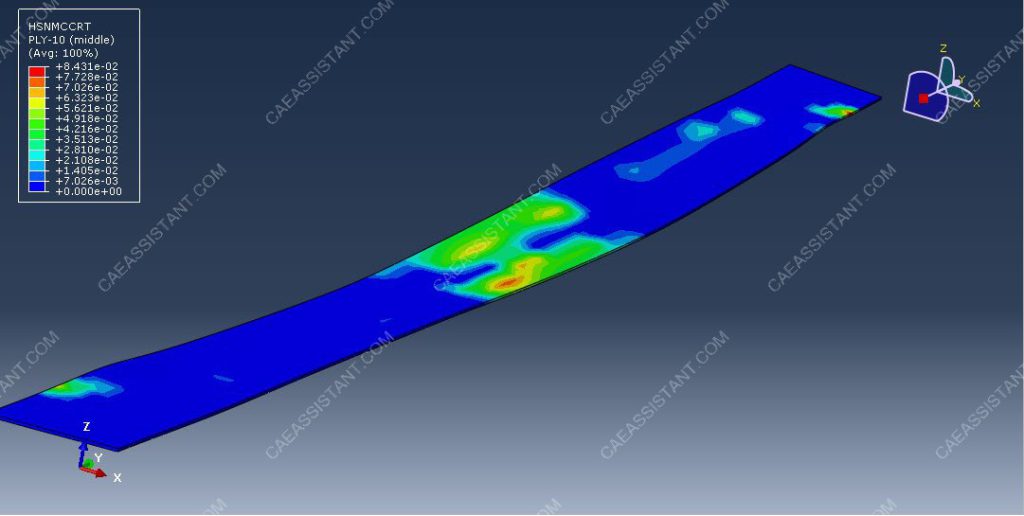
For the simulation, the steel beam is modeled with elastic-plastic behavior and a ductile damage criterion. The CFRP is defined using elastic engineering constants combined with Hashin’s damage criterion. These material models allow prediction of damage under static loading and bending. A general static analysis is performed with adjustments to the convergence model.
Surface-to-surface contact is applied between the rigid parts, the steel beam, and the CFRP. Perfect bonding is assumed between the steel beam and CFRP. Boundary conditions fix the bottom rigid bodies, while displacement loading is applied through the two top rigid bodies. A fine mesh is required to ensure accurate results.
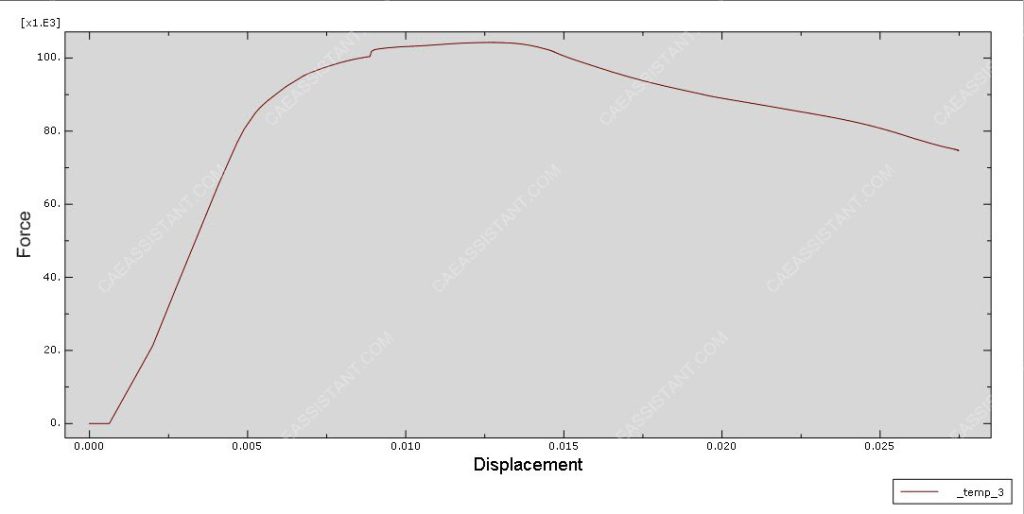
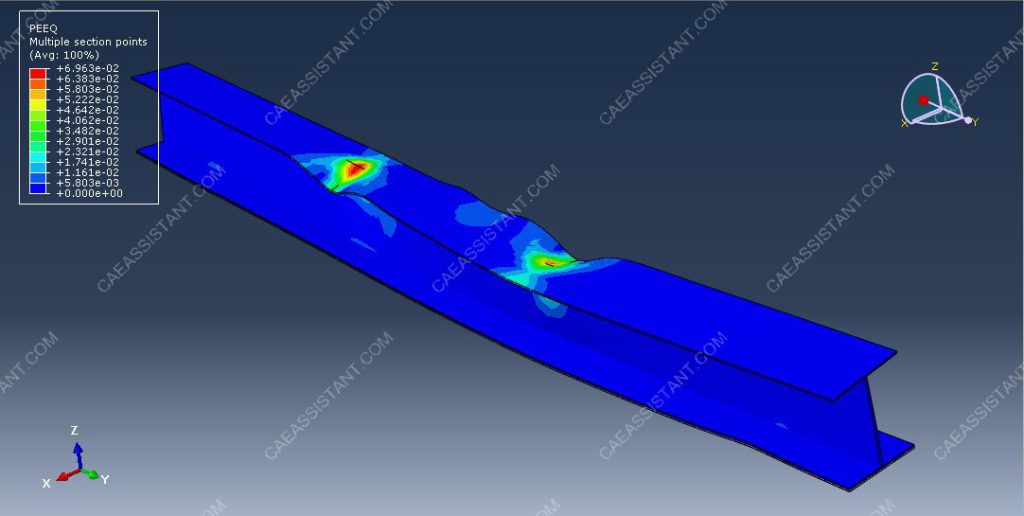
The simulation provides outputs such as stress, strain, damage evolution, and the force-displacement diagram. From the force-displacement curve, the maximum load-carrying capacity of the reinforced beam can be determined.