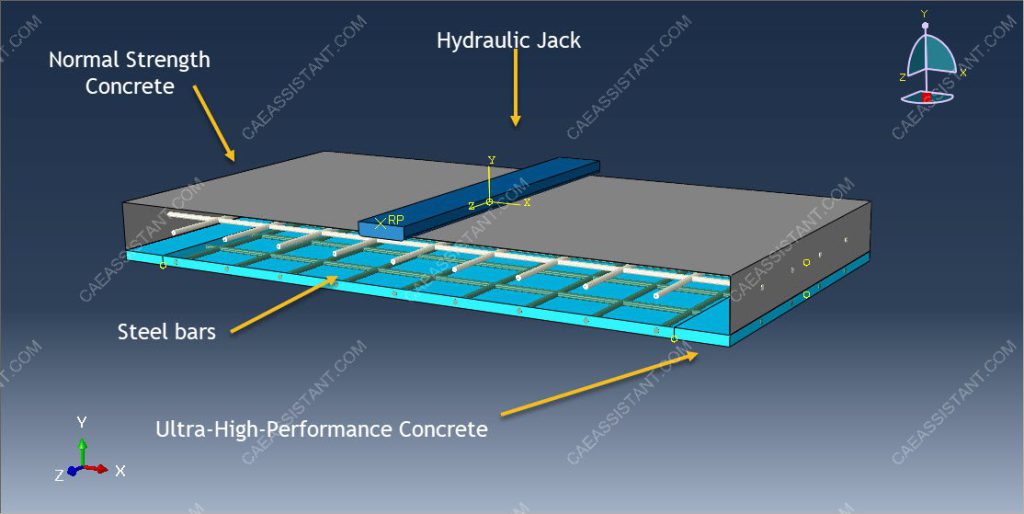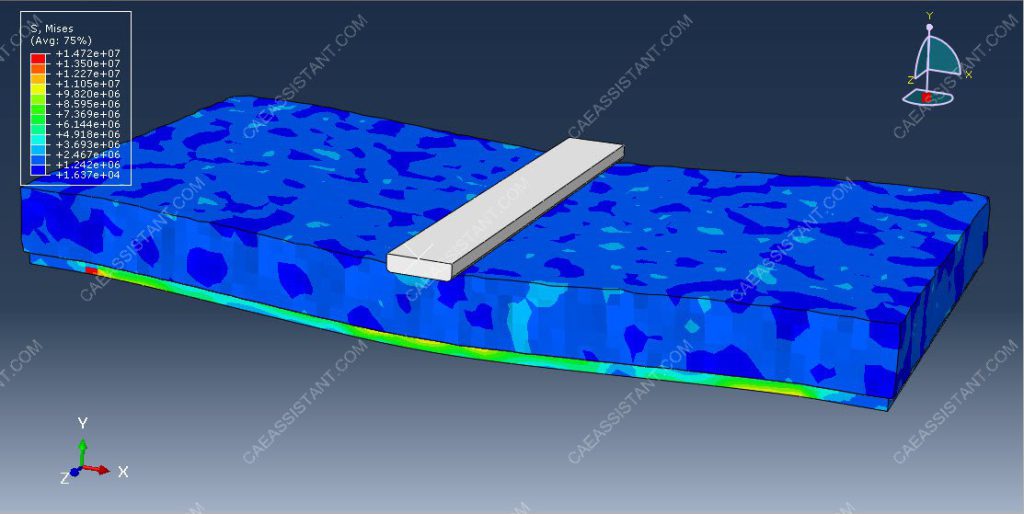
In this tutorial, the dynamic bending test of a composite UHPC–NSC panel is simulated in Abaqus. The Ultra‑High‑Performance Concrete (UHPC) and Normal Strength Concrete (NSC) are modeled as three‑dimensional solid parts. The steel bars are modeled as three‑dimensional wire elements. A shell rigid body represents the hydraulic jack used to apply displacement at the loading point.
UHPC is increasingly used for strengthening and rehabilitation of reinforced concrete beams. Its high tensile and compressive strength, ductility, and durability make it suitable for demanding structural applications, especially in bridge engineering.
To model the behavior of UHPC and NSC, the Concrete Damaged Plasticity (CDP) model is used. This model is a continuum, plasticity‑based damage model that captures two main failure mechanisms: tensile cracking and compressive crushing. The steel bars are defined using an elastic‑plastic material model.
A dynamic explicit step is selected, along with mass scaling, to reduce simulation time and limit inertia effects. Surface‑to‑surface contact with friction is used between the rigid body and the NSC surface. Cohesive behavior with a damage model is applied at the UHPC–NSC interface to represent the interaction between the two materials. Embedded constraints are used to place the steel bars inside the concrete host.
Fixed boundary conditions are applied to both sides of the bottom slab, and displacement is applied to the rigid body. A fine mesh is recommended to achieve accurate results.
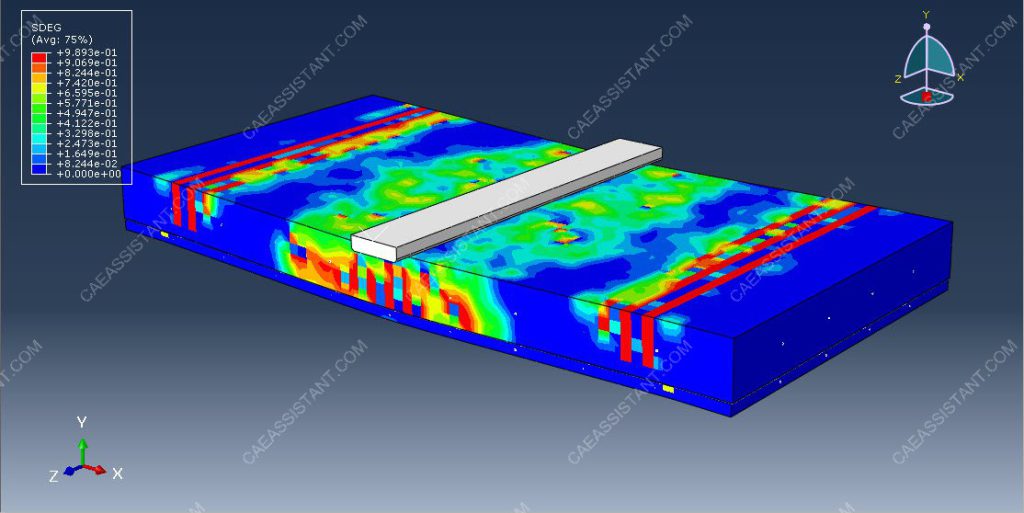
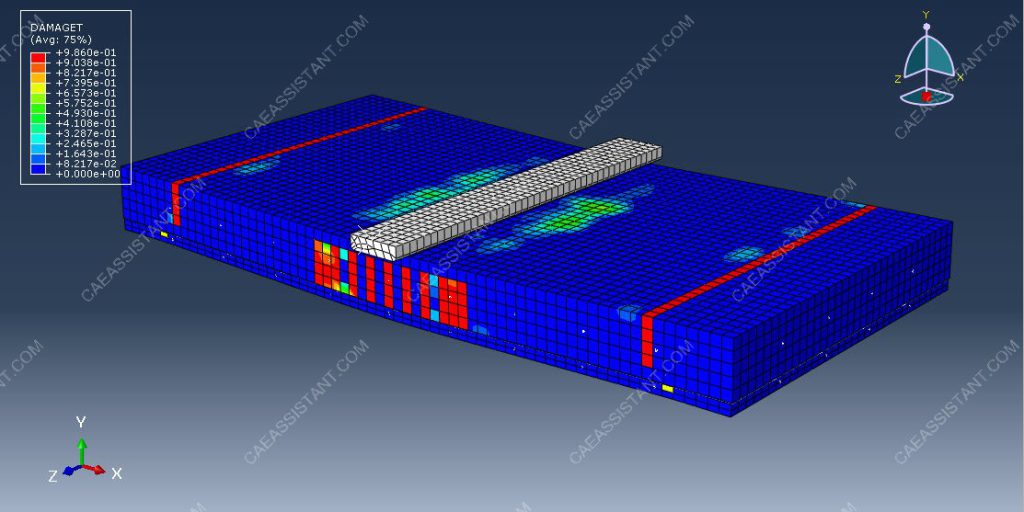
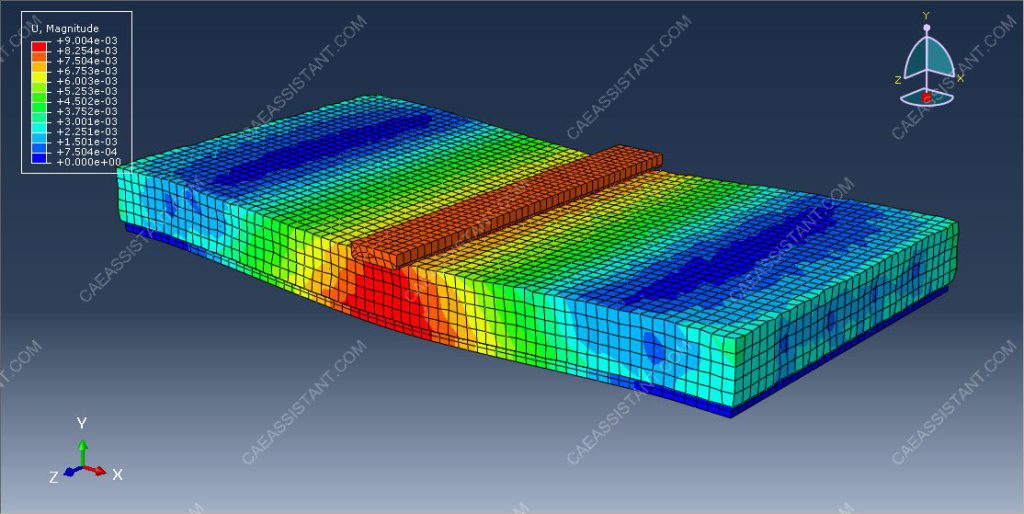
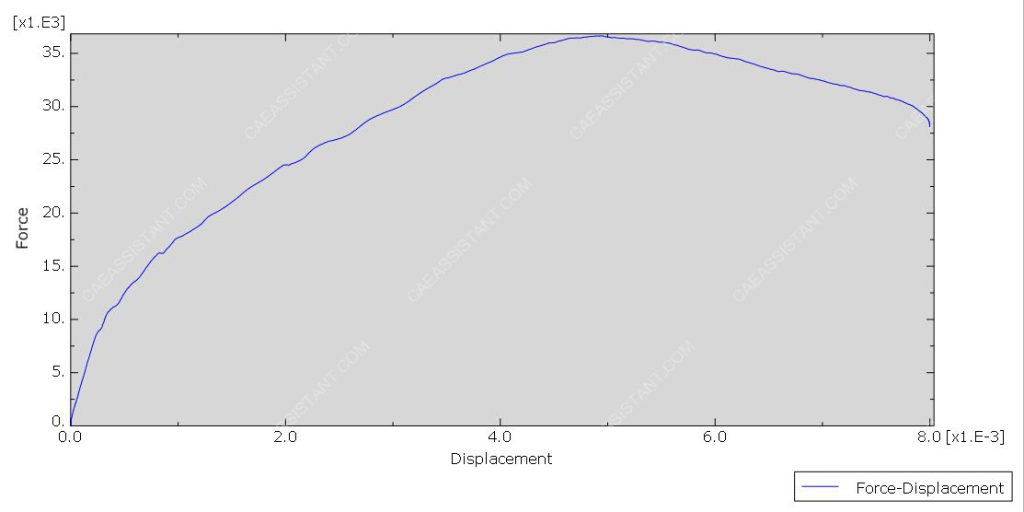
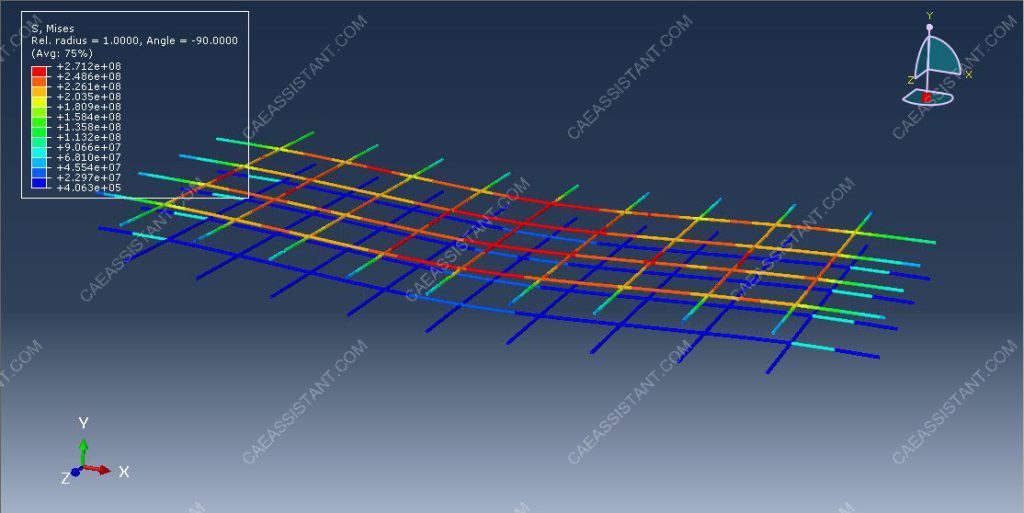
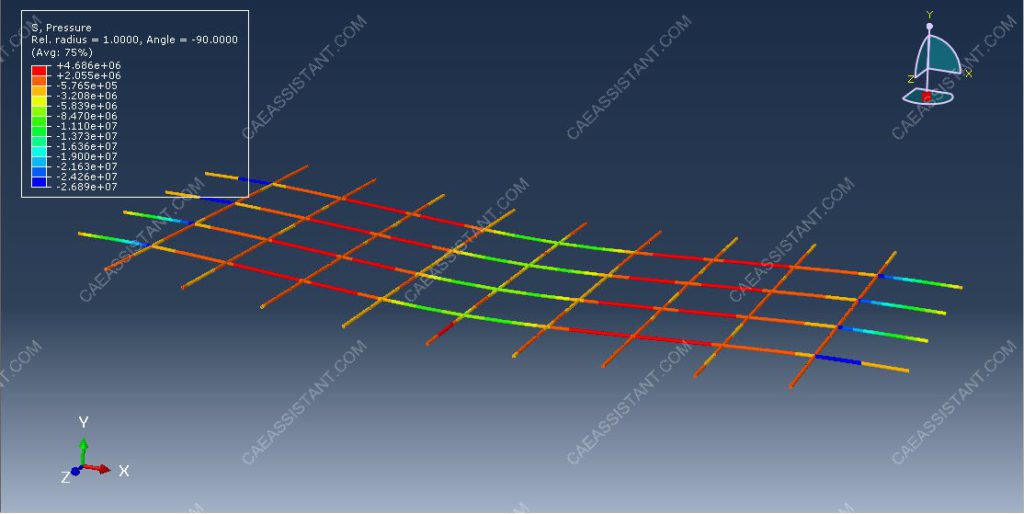
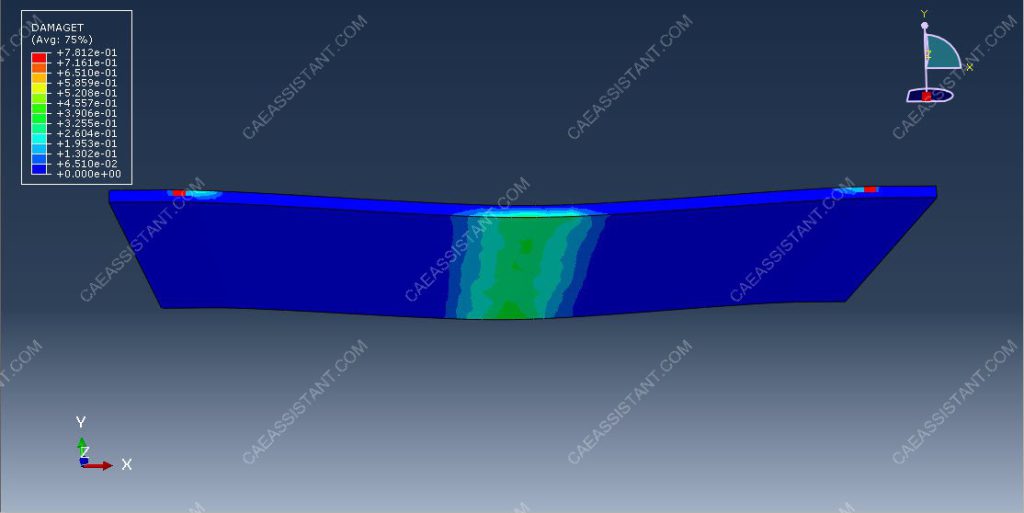
After the simulation, results such as stress, strain, tensile and compressive damage for both concrete materials, and the force–displacement curve are available. Several example result figures are shown below.