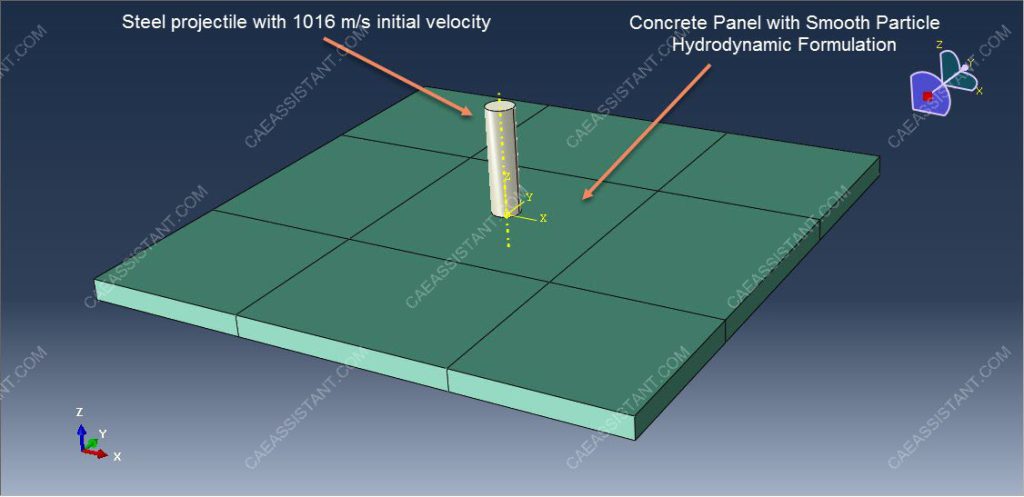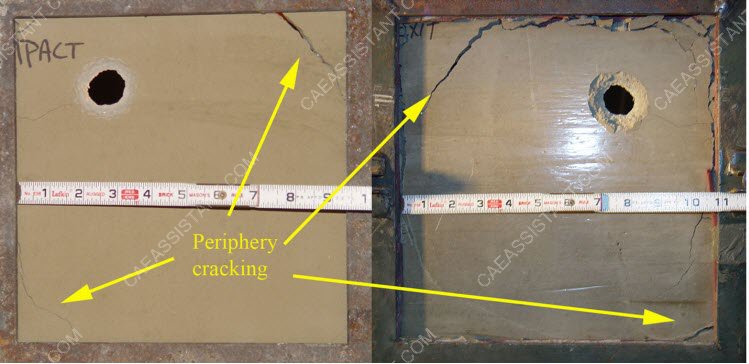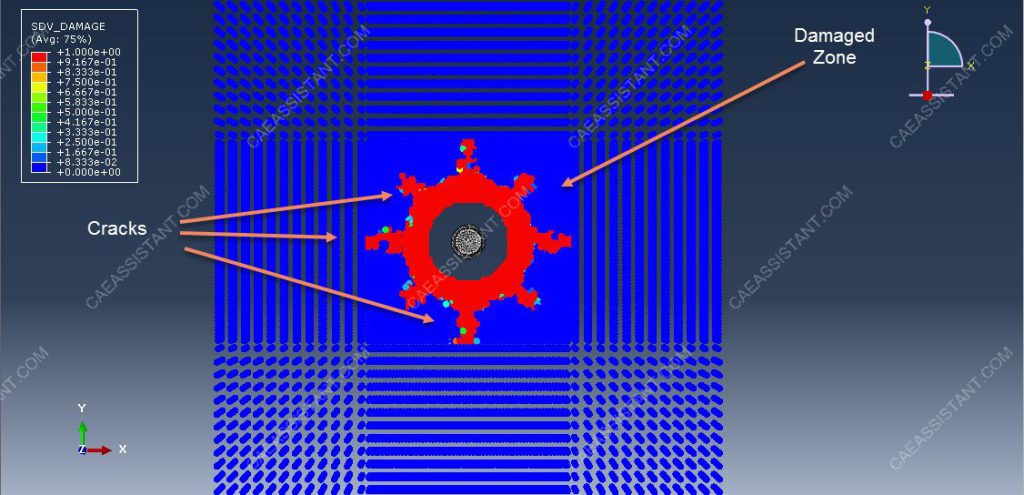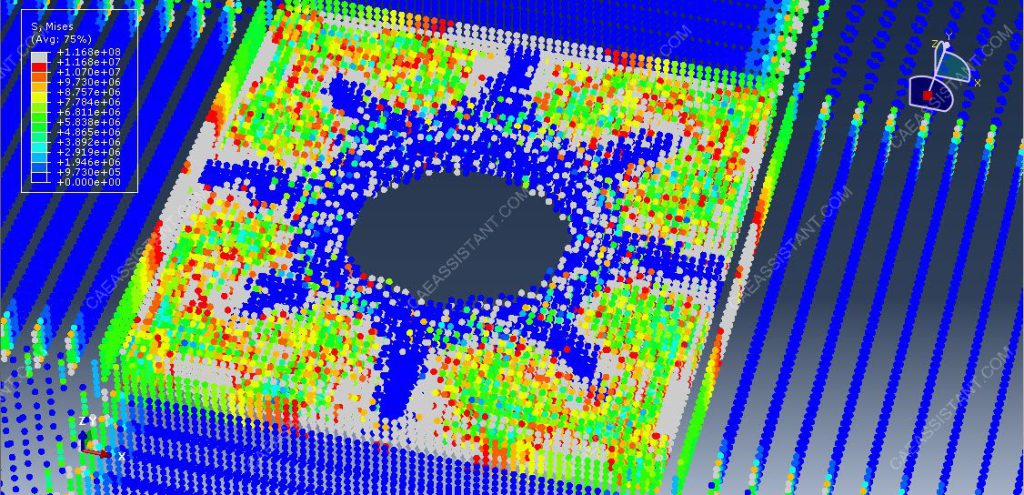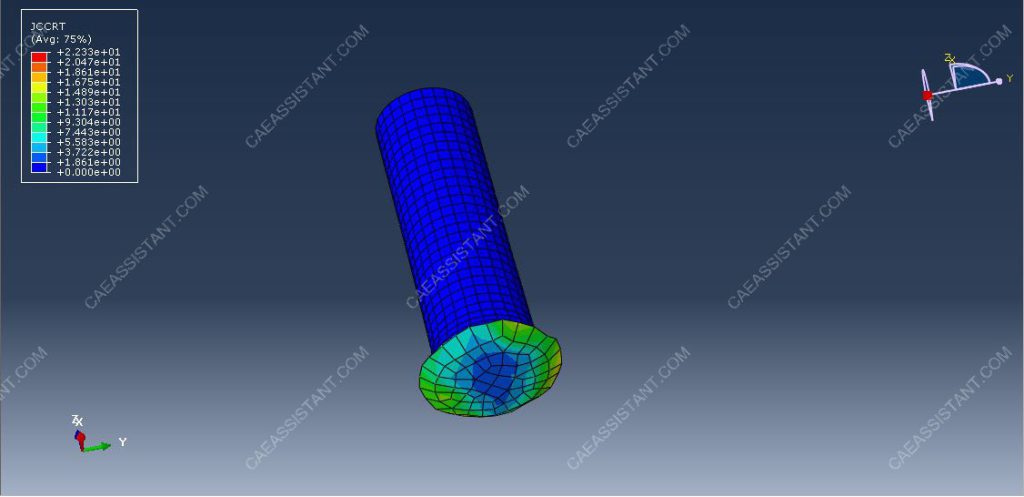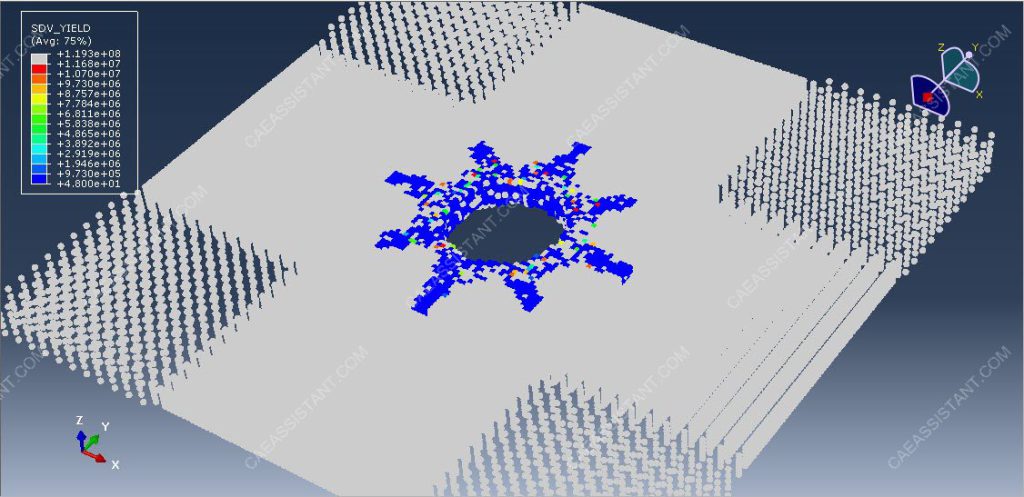
In this tutorial, finite element analysis using Smooth Particle Hydrodynamics (SPH) is applied to study projectile impact on cementitious materials. The performance of brittle, cement-based armor panels under high-rate impact depends on many factors, including projectile and target geometry, impact velocity, projectile material type, and angle of impact.
High-strength concrete (HSC) is often used as protective armor because of its low cost, rapid on-site manufacturing, and high early strength. Understanding how these panels behave under ballistic impact is critical for ensuring the safety of personnel in combat environments. Accurate simulation of structural response under dynamic loads helps reduce research and development costs for new materials and applications.
In the model, both the projectile and the concrete panel are defined as three-dimensional solid parts. The projectile is modeled with steel material properties, using elastic behavior combined with Johnson-Cook plasticity and a damage criterion. For the concrete, several Abaqus material models are available, such as Concrete Damaged Plasticity (CDP) and Brittle Cracking. However, the Johnson-Holmquist model provides better performance for this type of analysis and can be implemented through a VUMAT subroutine or input file.
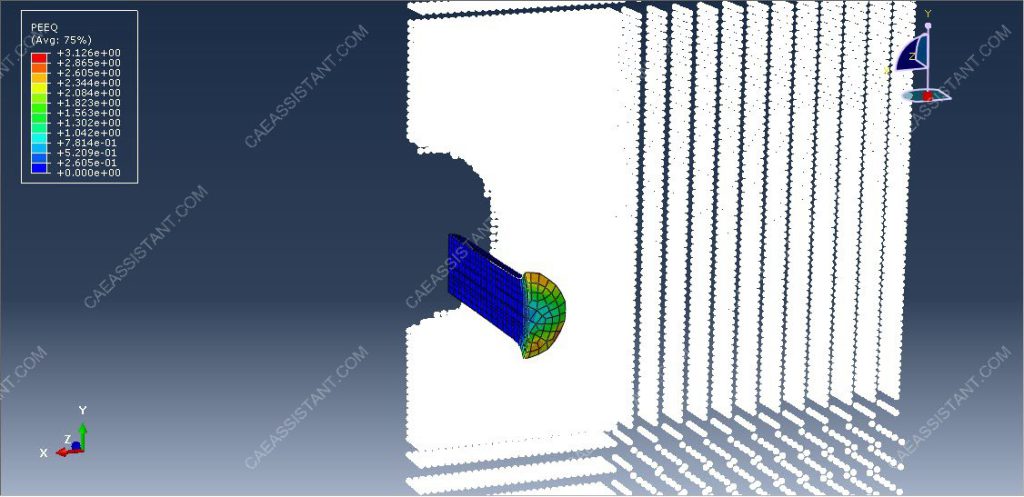
The simulation uses a dynamic explicit step. General contact is applied with a friction coefficient, while the concrete panel is fixed with boundary conditions. The projectile is assigned an initial velocity. The SPH formulation is used for the concrete panel, and the mesh is refined in the contact zone to capture detailed damage.
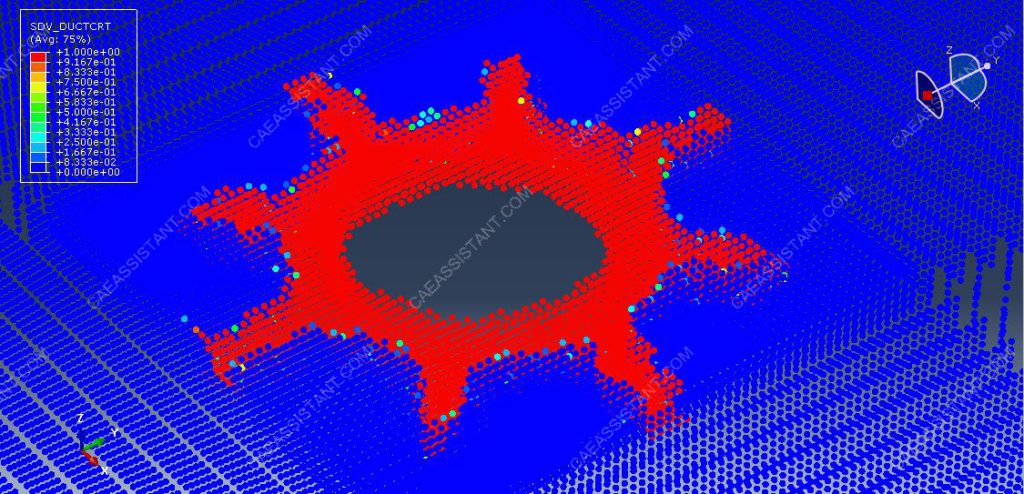
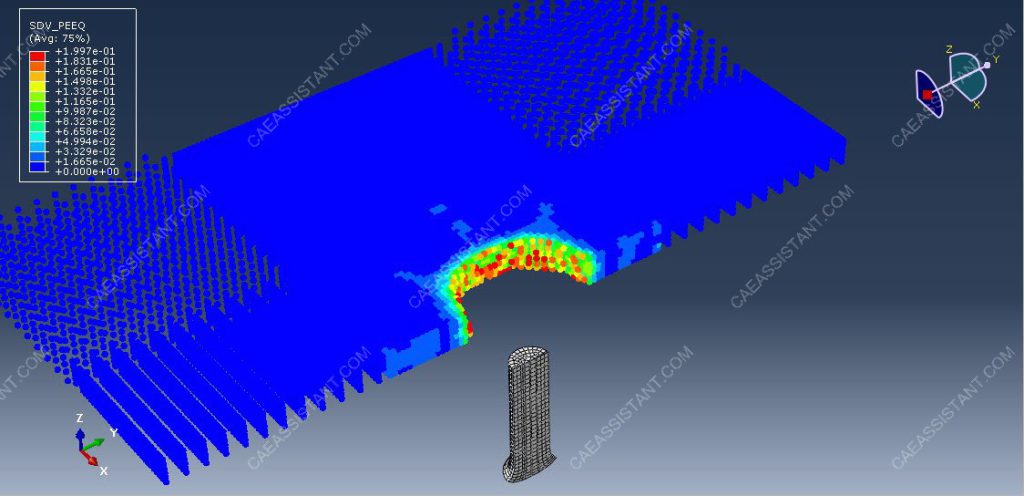
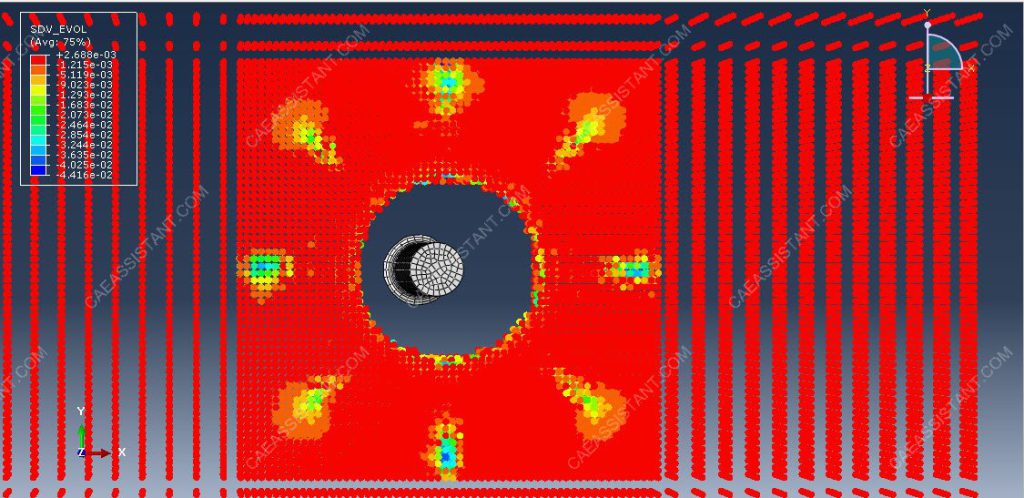
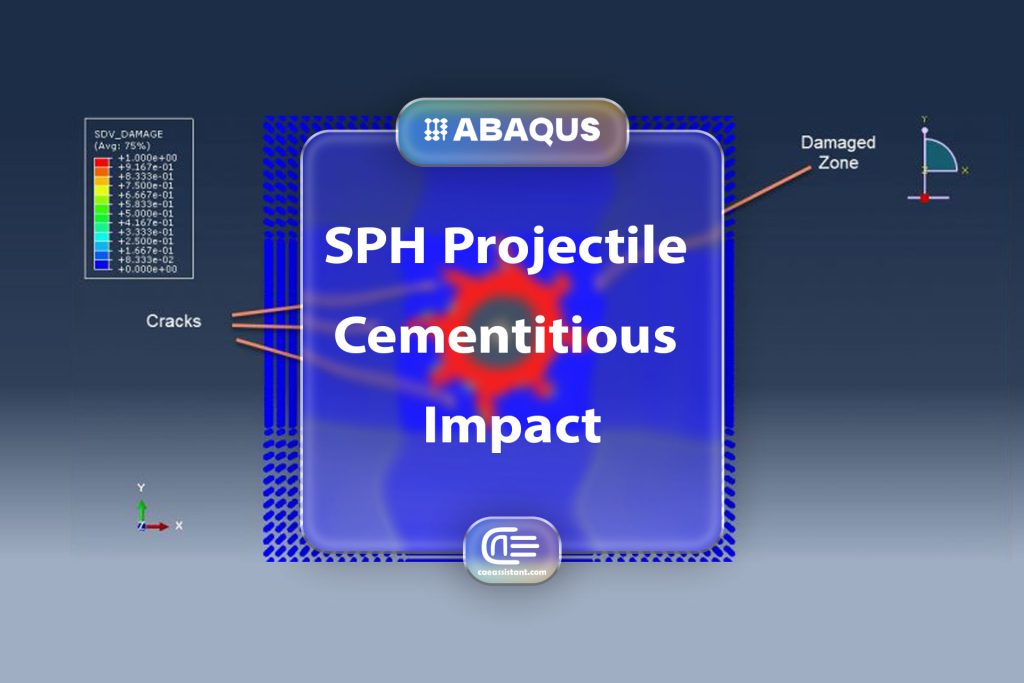
During the simulation, the projectile penetrates the concrete, creating severe local damage. Output variables such as damage, stress, strain, and failure indicators are available for analysis. Figures of the results can be reviewed to better understand the structural response.