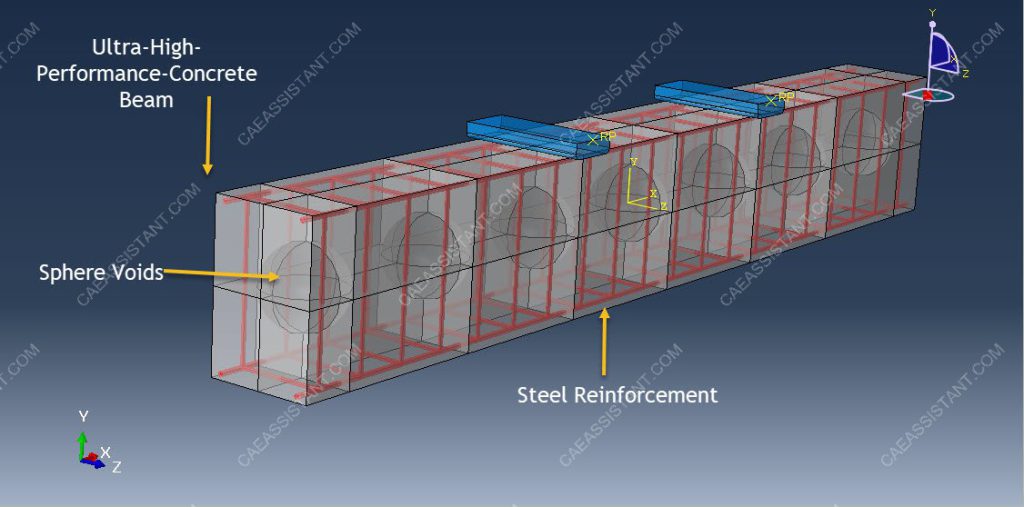
In this tutorial, the dynamic bending test of an interior‑voided RC UHPC beam is simulated in Abaqus. The Ultra‑High‑Performance Concrete (UHPC) beam is modeled as a three‑dimensional solid part containing internal spherical voids. The steel bars and strips are modeled as three‑dimensional wire parts. Two rigid bodies act as hydraulic jacks to apply load on the top surface of the beam.
The voided beam is much lighter than a solid beam while maintaining similar flexural strength. The Concrete Damage Plasticity (CDP) model is used to capture the nonlinear behavior of the UHPC under bending. Compression and tension data, including damage parameters, are defined to simulate crack propagation and stiffness degradation. The steel reinforcement uses an elastic‑plastic material model.
Both static and dynamic solvers can be used. However, the static step may suffer from convergence issues and long computation time. Therefore, a dynamic explicit step is selected in this tutorial. Surface‑to‑surface contact with friction is defined between the rigid bodies and the top surface of the beam. The bars and strips are embedded inside the concrete. Fixed boundary conditions are applied at both beam ends, and displacement is assigned to the two top rigid bodies. A fine mesh is required to obtain accurate results.
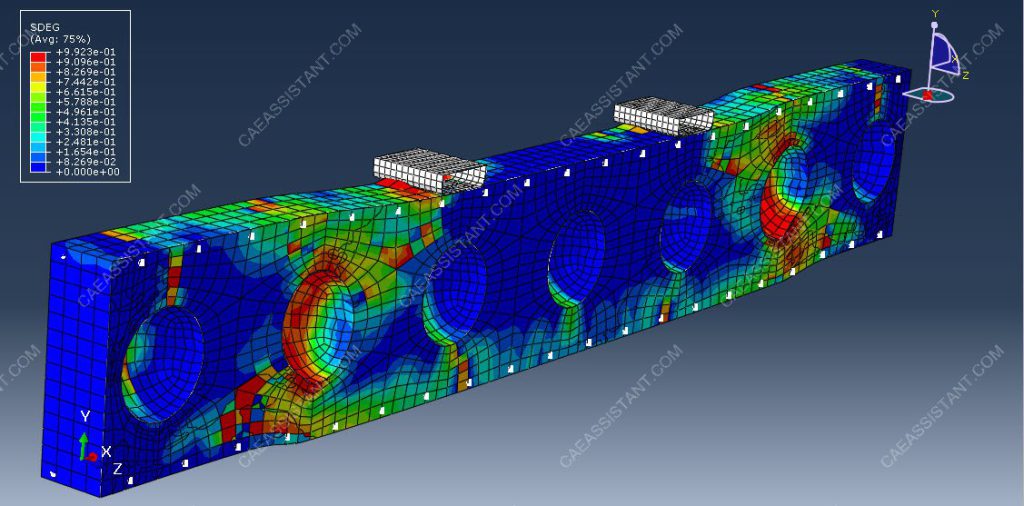
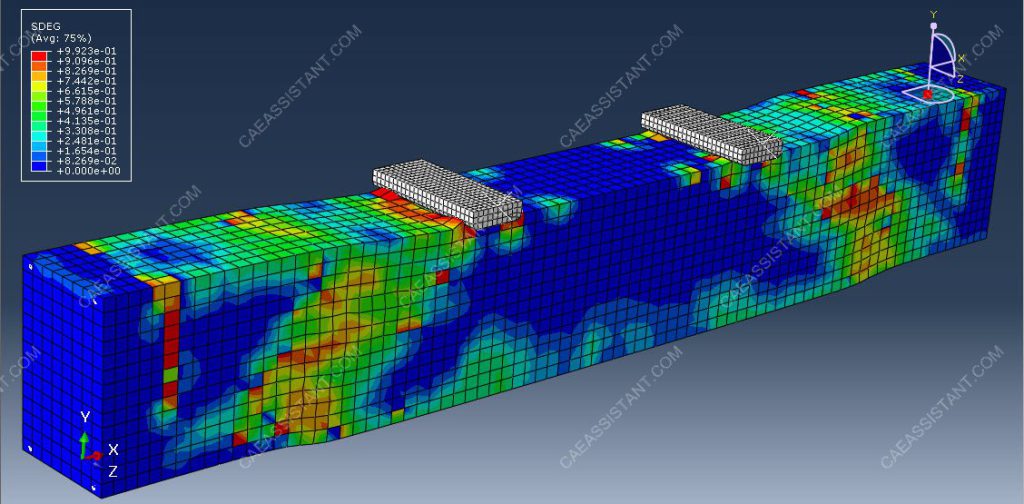
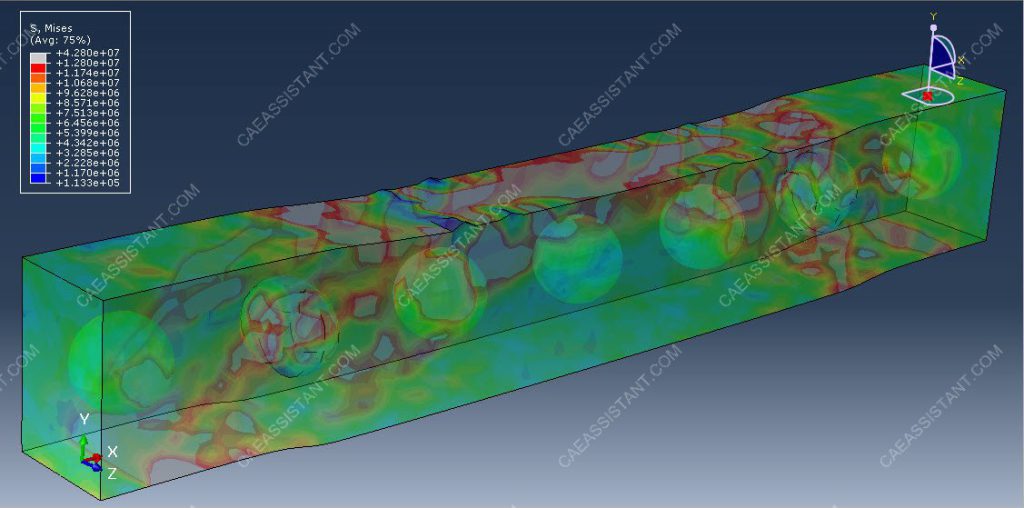
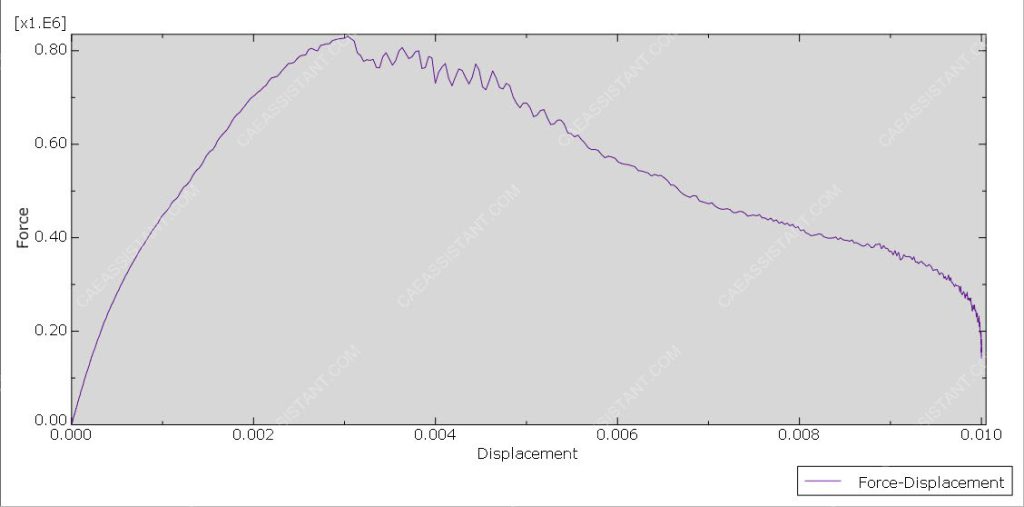
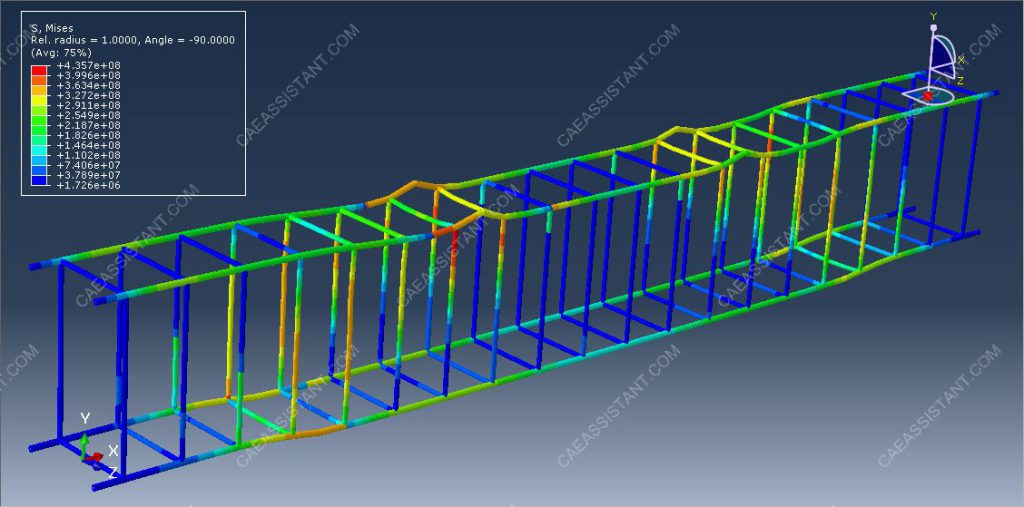
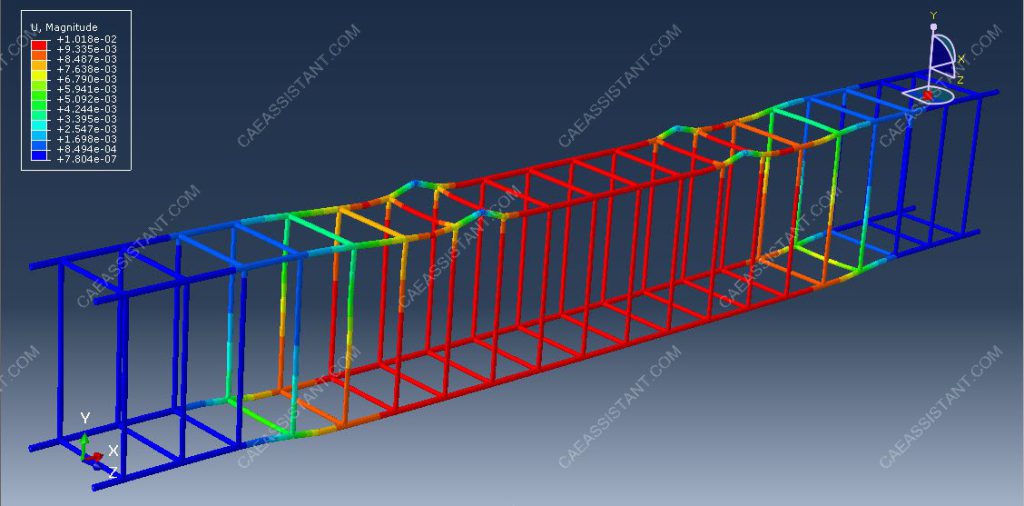
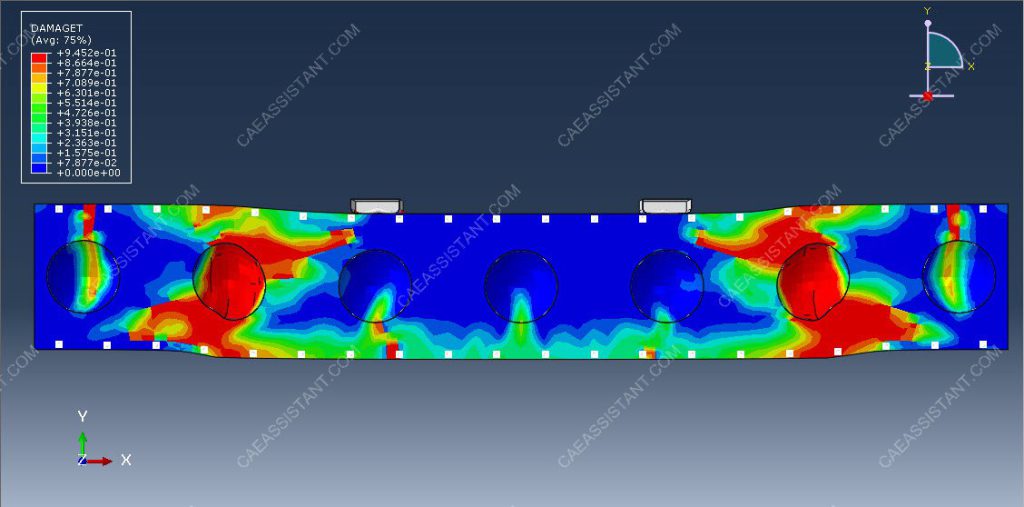
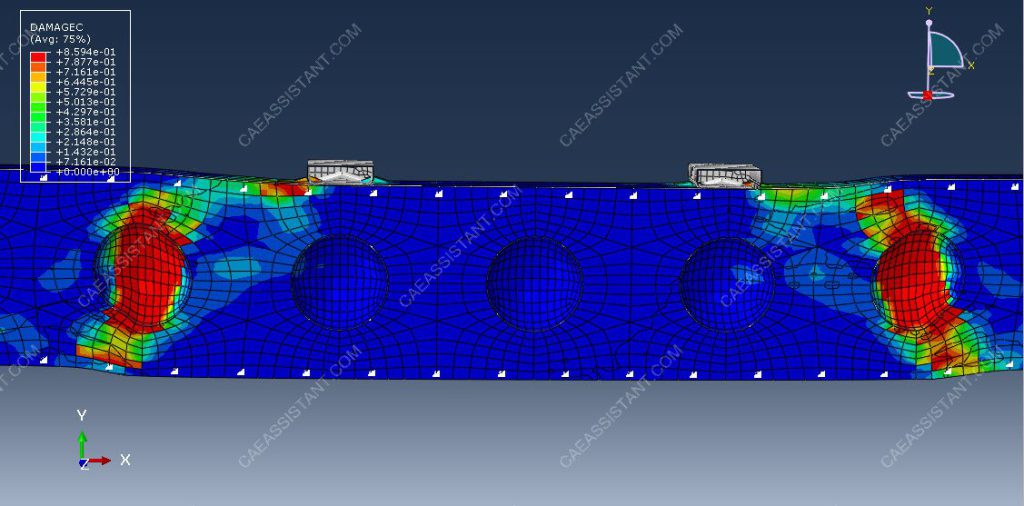
After running the simulation, results such as stress, strain, tensile and compressive damage, and the force‑displacement curve are available. Several example result figures are shown below.