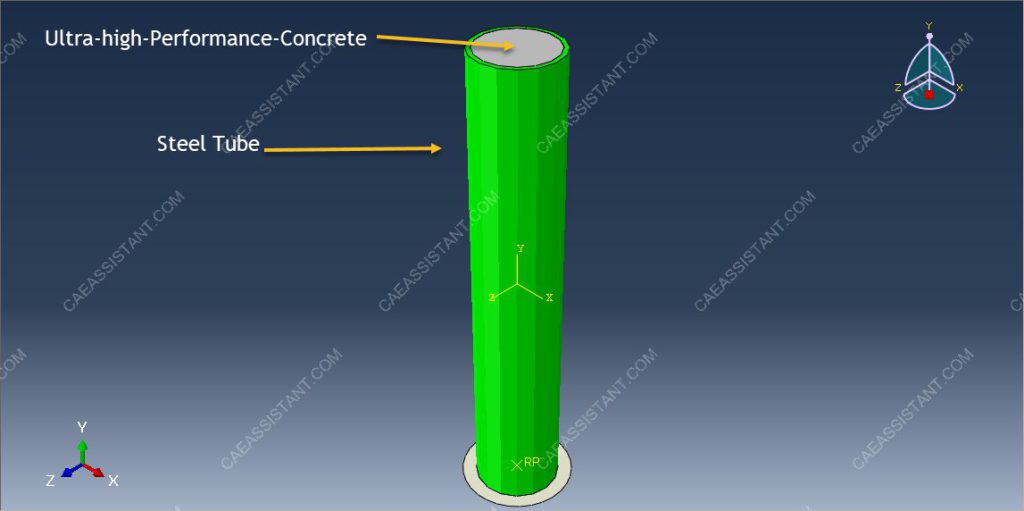
In this tutorial, the simulation of an Ultra-High-Performance (UHPC) circular short CFST column under a compression test in Abaqus is presented. The concrete core is modeled as a three‑dimensional solid part, while the steel tube is modeled as a three‑dimensional shell part.
CFST columns are widely used as economical composite structural members. Most of the concentric compressive force is carried by the concrete, which is less expensive than steel. Using UHPC in CFST columns can further reduce material usage because UHPC allows for smaller cross‑sectional dimensions. This also helps save workspace area. However, UHPC reduces the ductility of CFST columns, which must be considered in design.
The Concrete Damaged Plasticity (CDP) model is used to define the UHPC behavior. The steel tube is modeled using an elastic‑plastic material with a ductile damage criterion to capture its response under compression. A general static step is selected, with adjustments made to improve convergence.
General contact with defined contact properties is used to capture all interactions in the model. The interaction between the steel tube and the concrete core can be defined using surface‑to‑surface contact with contact properties or by assuming perfect (ideal) contact.
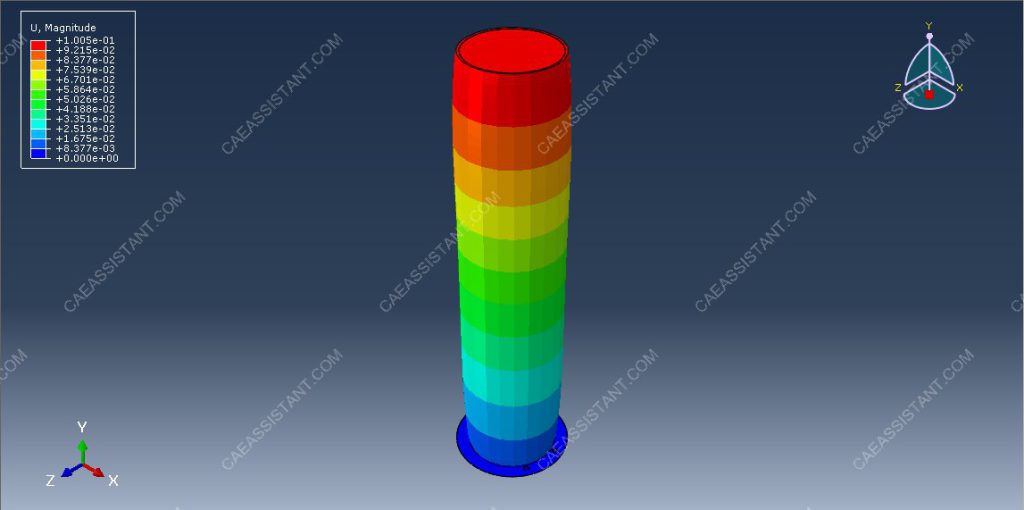
A fixed boundary condition is applied to the bottom rigid body, and a displacement boundary condition is applied to the top rigid body. A fine mesh is recommended to achieve accurate results.
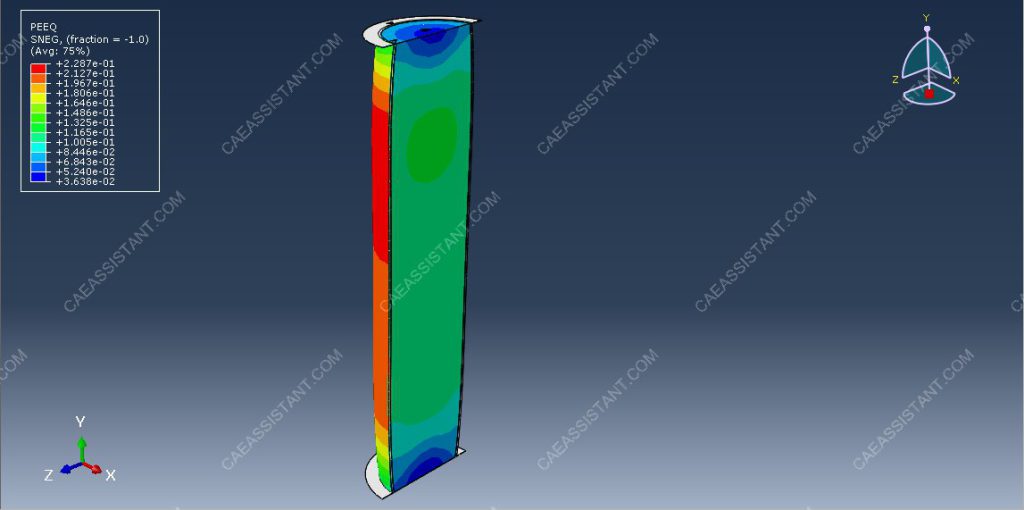
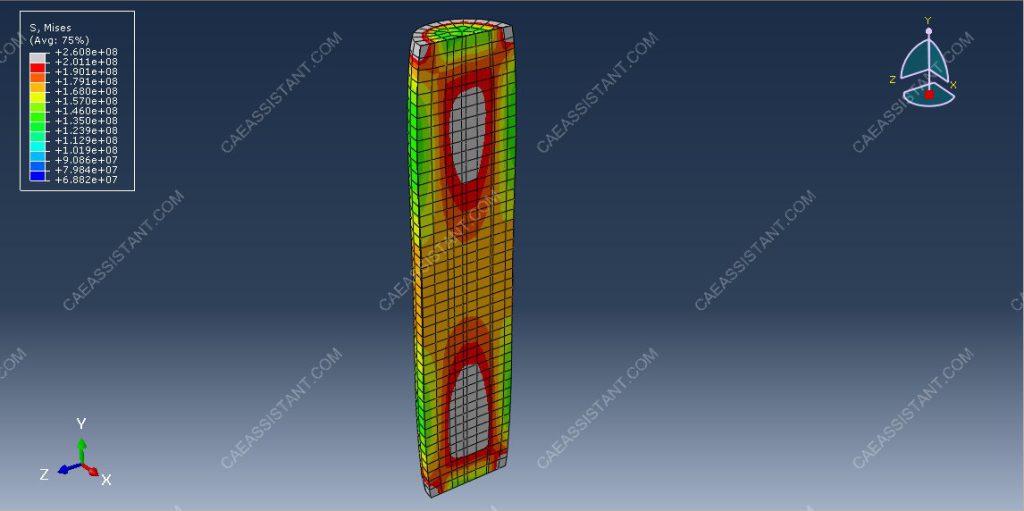
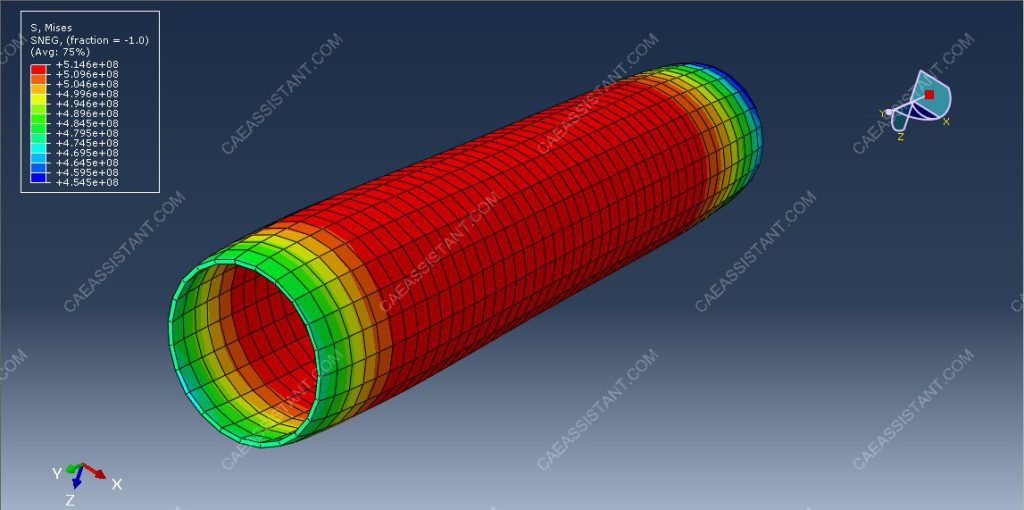
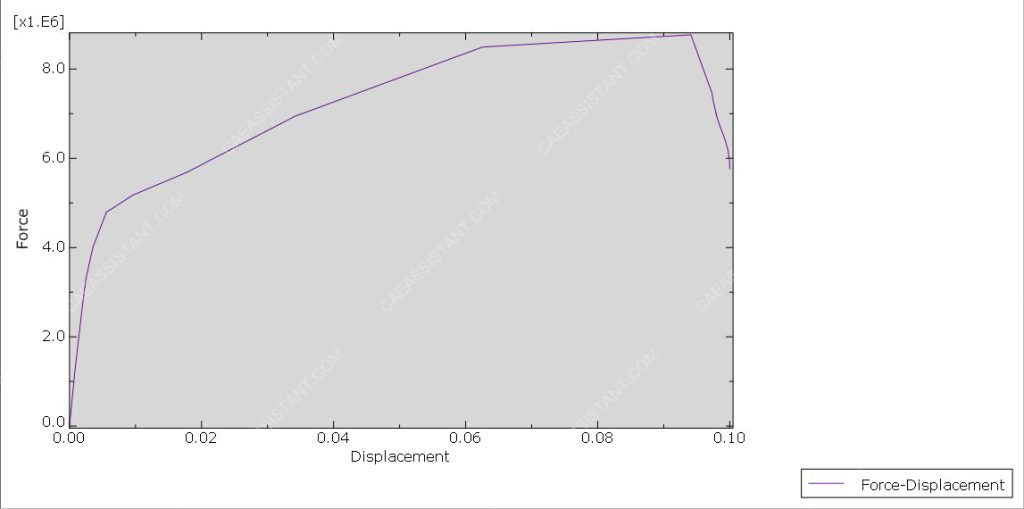
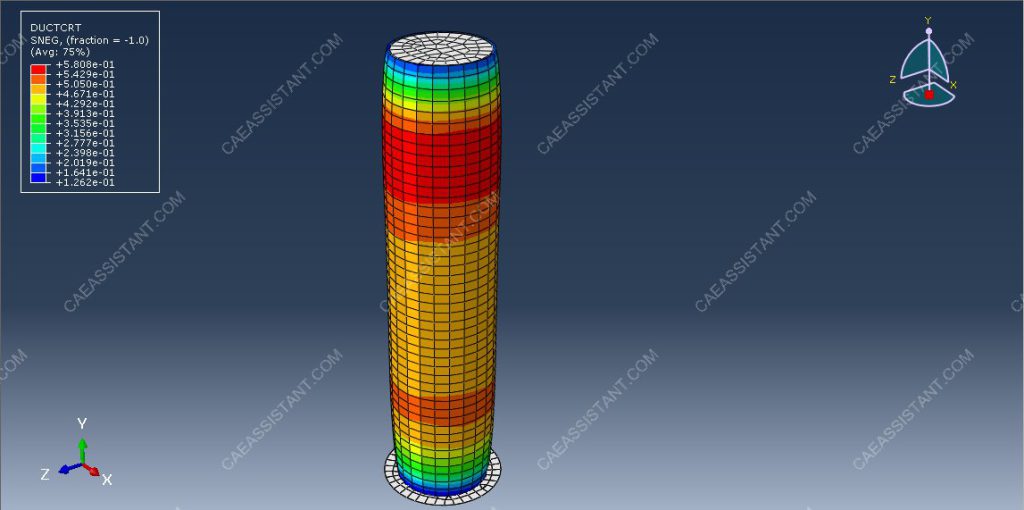
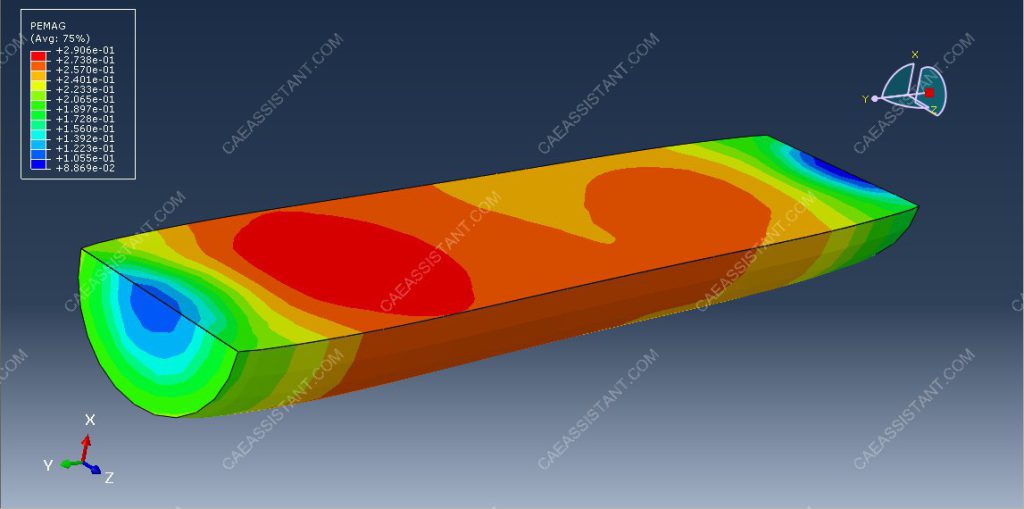
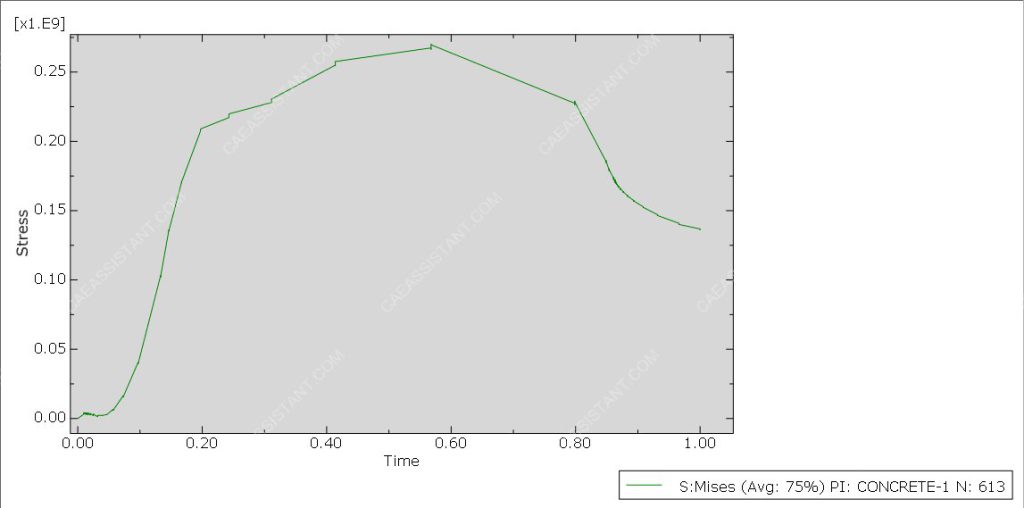
After running the simulation, results such as stress, strain, failure patterns, and the force‑displacement curve are available for review.