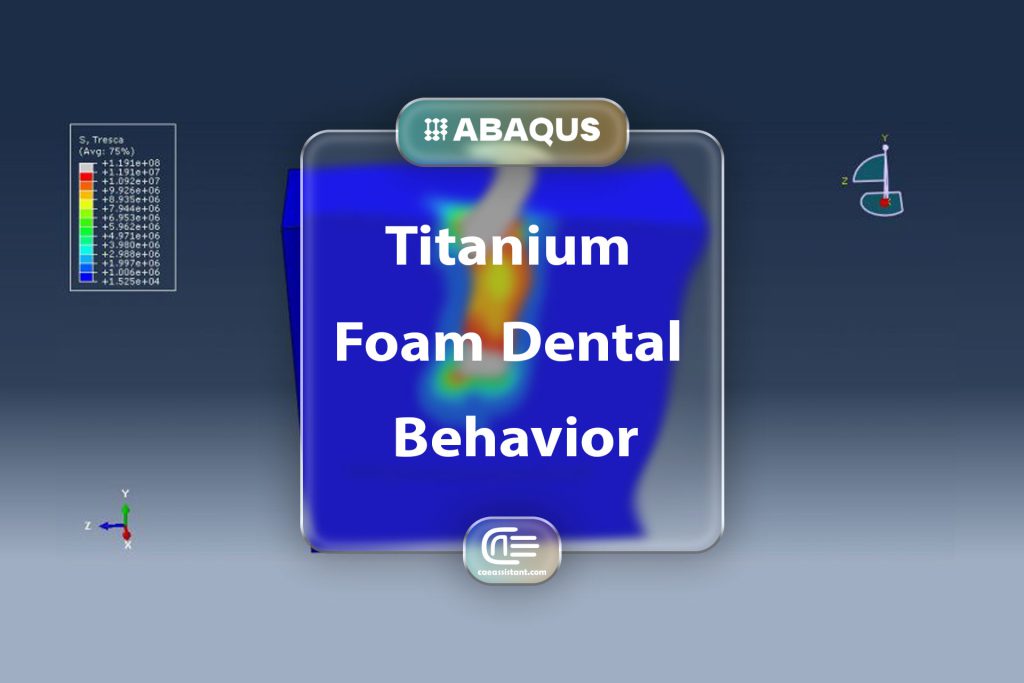
In this tutorial, the finite element simulation of titanium foam behavior as a dental implant under dynamic load in Abaqus is presented.
Metal foams are a new class of materials increasingly used in applications such as structural components, automotive parts, sound and vibration absorbers, heat exchangers, and biomedical implants. Their popularity comes from unique properties including low density, high specific stiffness, high specific strength, and excellent energy absorption capability.
Among these materials, titanium foams (Ti-foams) are preferred for biomedical implants due to their biocompatibility. Cellular metals also improve the friction coefficient between the implant and surrounding bone. This enhances mechanical interlocking, promotes bone in-growth, and ensures better long-term stability. Furthermore, implant stiffness can be tailored by adjusting porosity, which helps reduce the stress shielding effect.
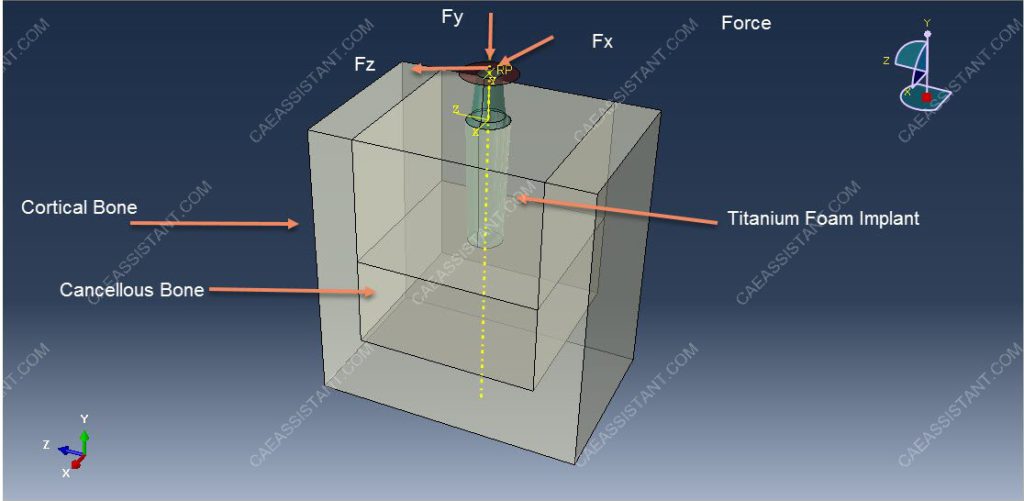
In the simulation, the titanium foam implant and mandible are modeled as three-dimensional solid parts. The mandible includes both cancellous and cortical bone. The titanium foam is defined as an elastic material with crushable foam plastic behavior, using an isotropic hardening model. The cancellous and cortical bone are modeled as elastic materials.
A dynamic explicit procedure is applied to simulate the implant under dynamic loading. Two contact approaches are tested: surface-to-surface contact with defined properties in the first simulation, and a tie constraint in the second. The bottom surface of the mandible is fixed with boundary conditions, while concentrated forces are applied in three directions. A fine mesh is used at the contact zone to ensure accuracy.
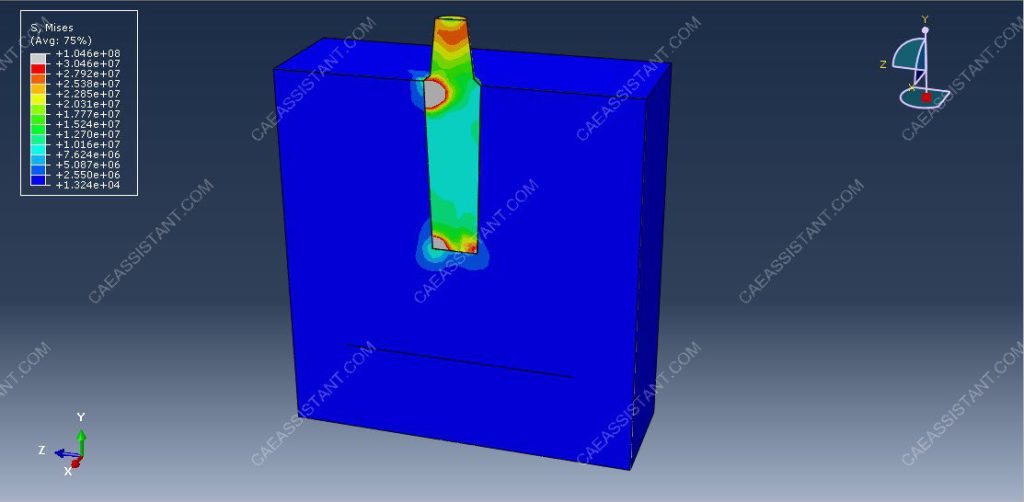
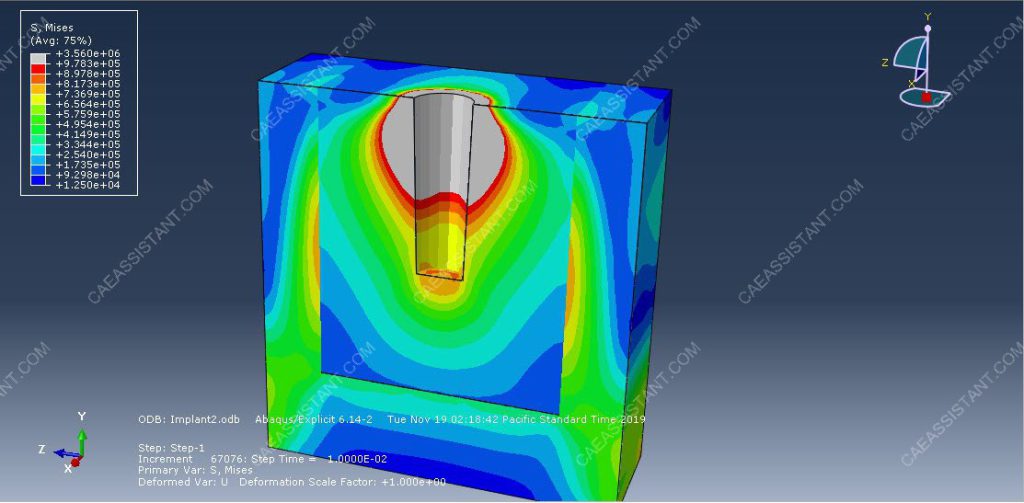
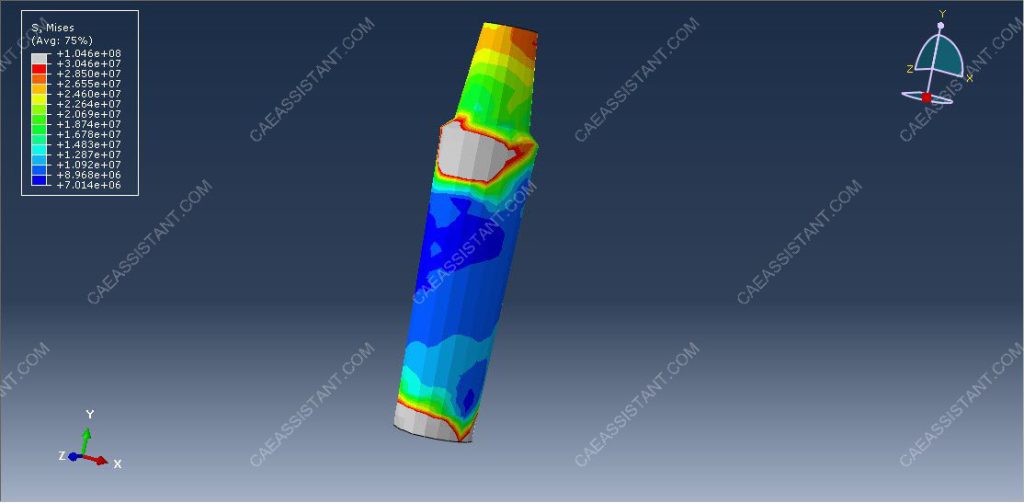
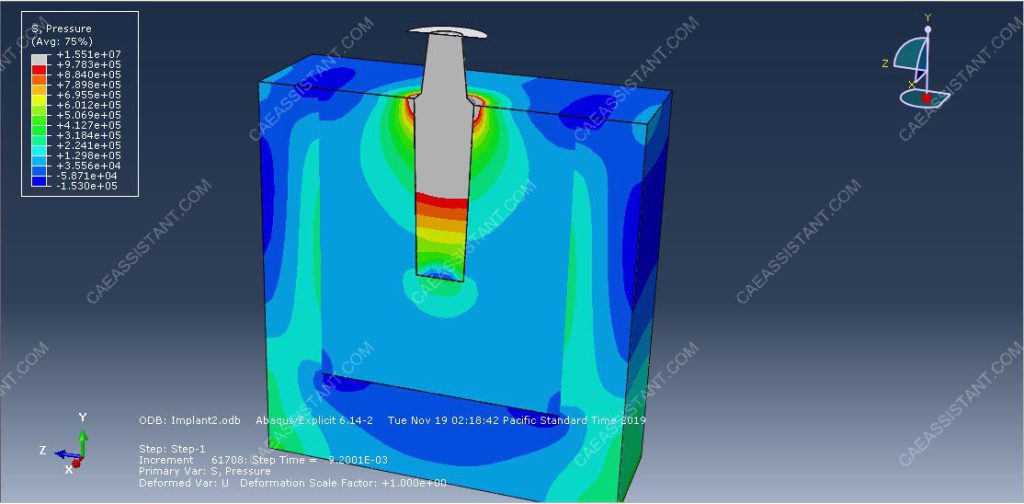
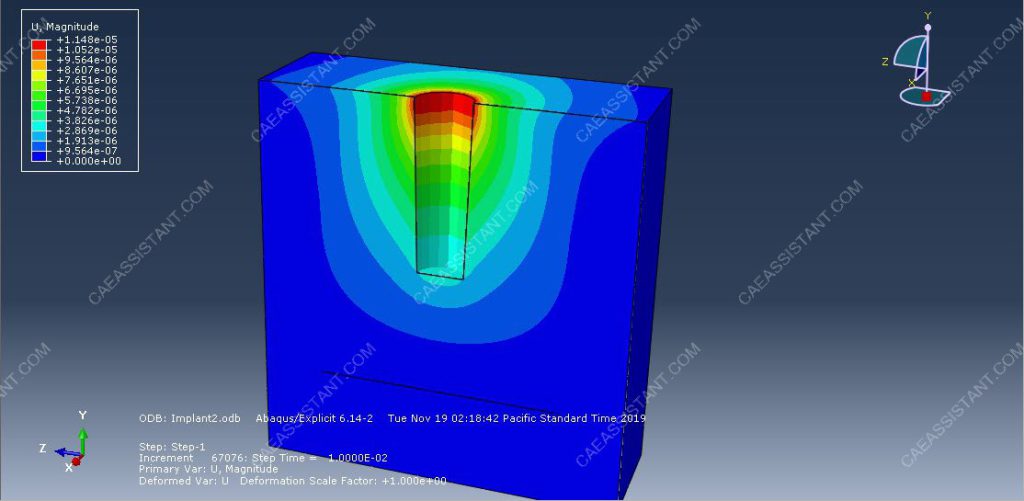
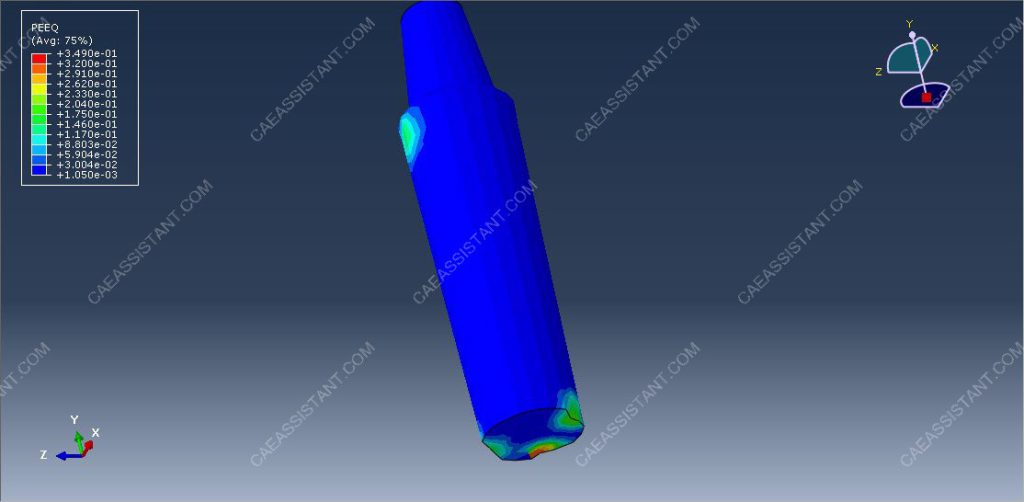
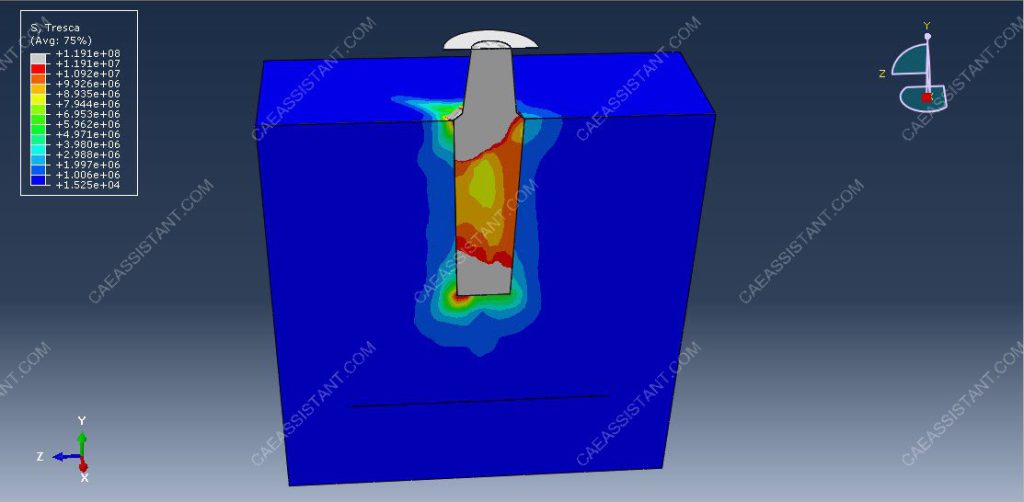
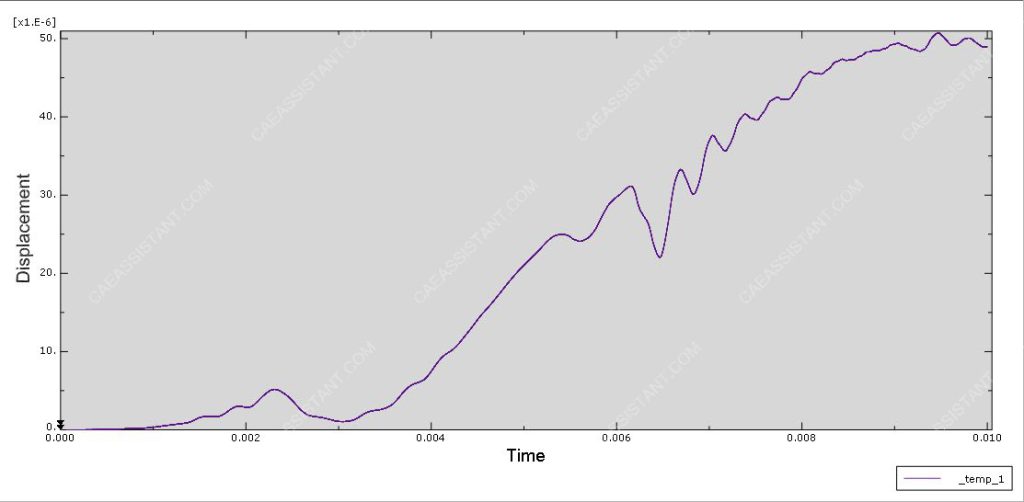
After the simulation, results such as stress, strain, and force distributions are obtained. Figures of the assembled parts and simulation results are shown below.