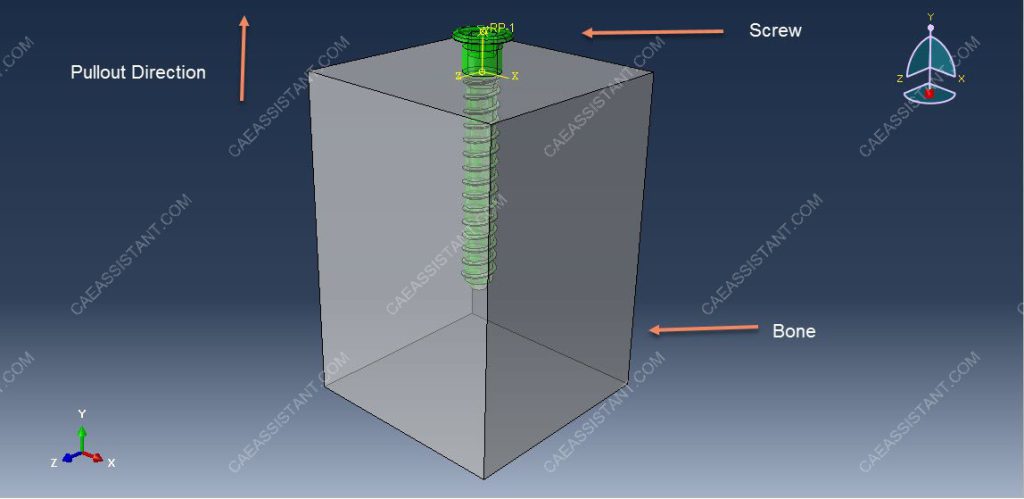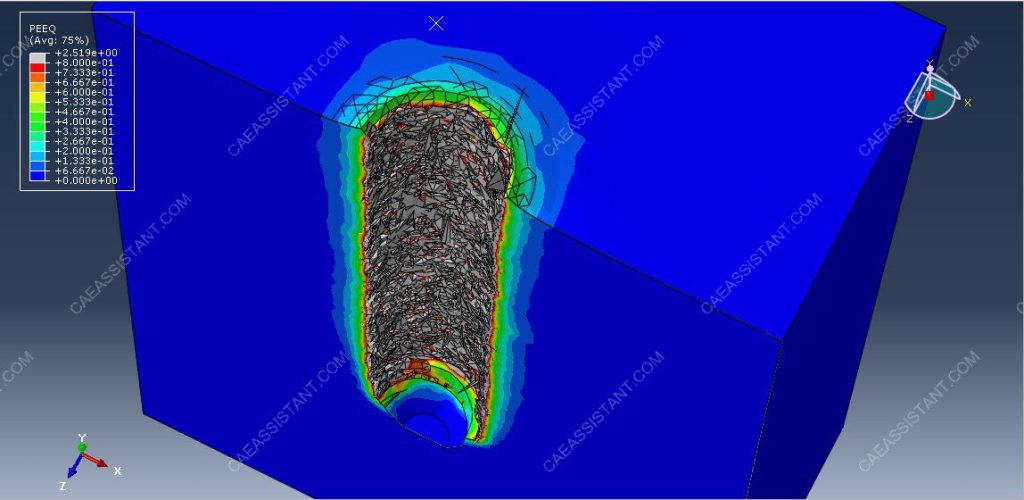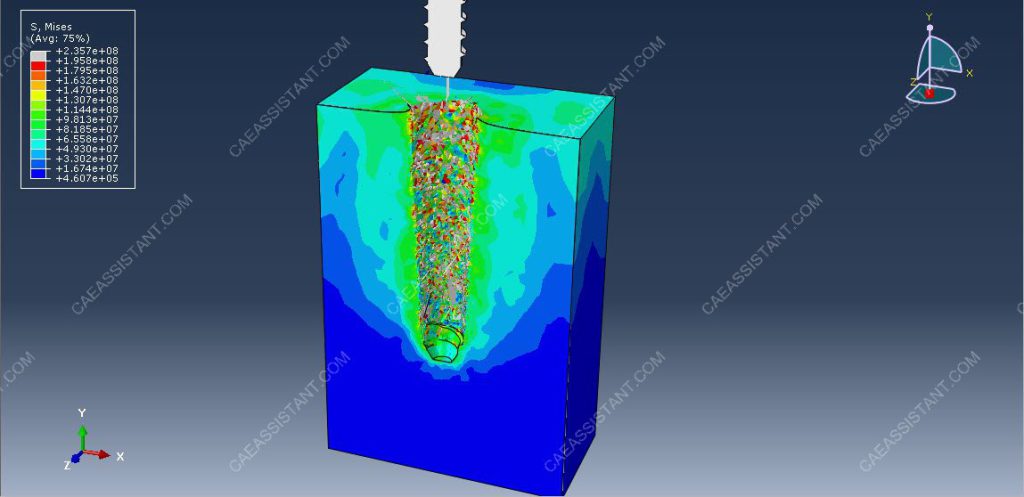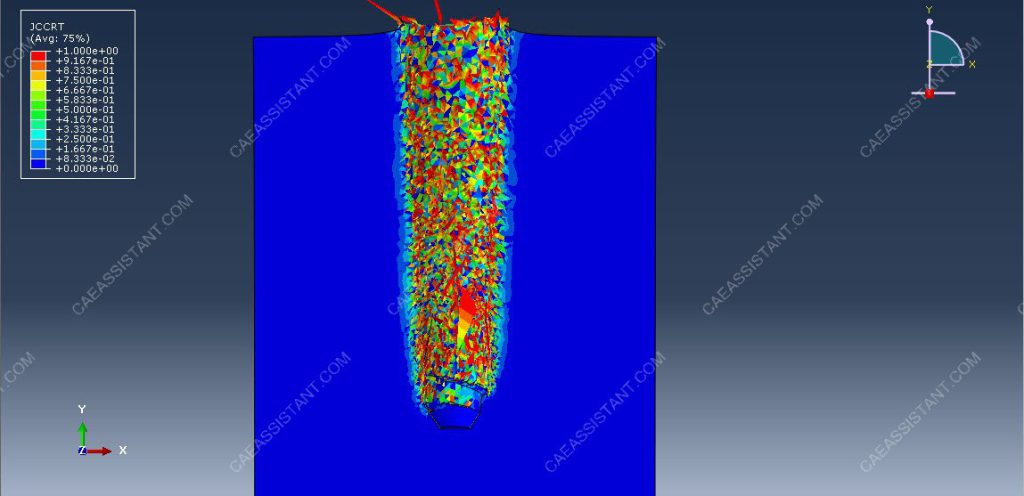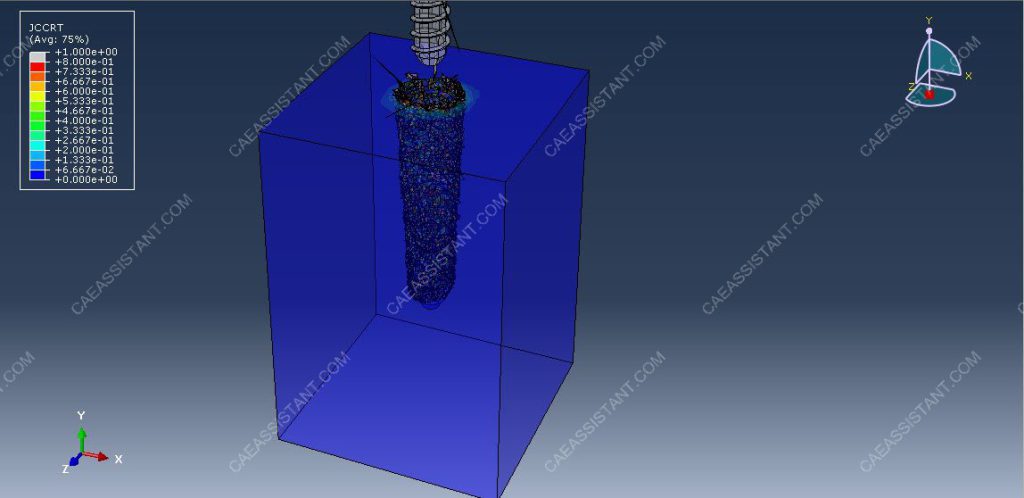
In this tutorial, the pull-out process of a medical screw from bone is simulated in Abaqus to investigate damage. This type of threaded fastener is inserted directly into the bone without tension in the screw or clamping force in the bone. Such screws are widely used in treatments for neck and spine injuries, as well as hip and knee replacements.
The strength of the screw–bone connection is critical for post-surgery recovery and long-term patient mobility. Therefore, ensuring high reliability of self-tapping screws in medical devices is essential.
- Modeling:
- The bone is modeled as a three-dimensional solid part.
- The screw, due to its complex geometry, is imported into Abaqus as a rigid part.
- Material Behavior:
- The Johnson-Cook hardening law is applied to analyze the dynamic behavior of the bone material.
- Elastic properties and Johnson-Cook plasticity are used to represent bone behavior under dynamic loading.
- Damage is modeled using the Johnson-Cook damage criterion.
- Simulation Setup:
- The contact zone between bone and screw is defined to allow for damage and failure during pull-out.
- A dynamic explicit step is chosen, as it is suitable for this type of analysis.
- Mass scaling is applied to reduce simulation time.
- General contact capability is used, with erosion defined in the input file to capture failure at the interface.
- Boundary conditions: the bone is fixed, while the screw is given axial displacement without rotation.
- A fine mesh is applied at the contact zone to improve accuracy.
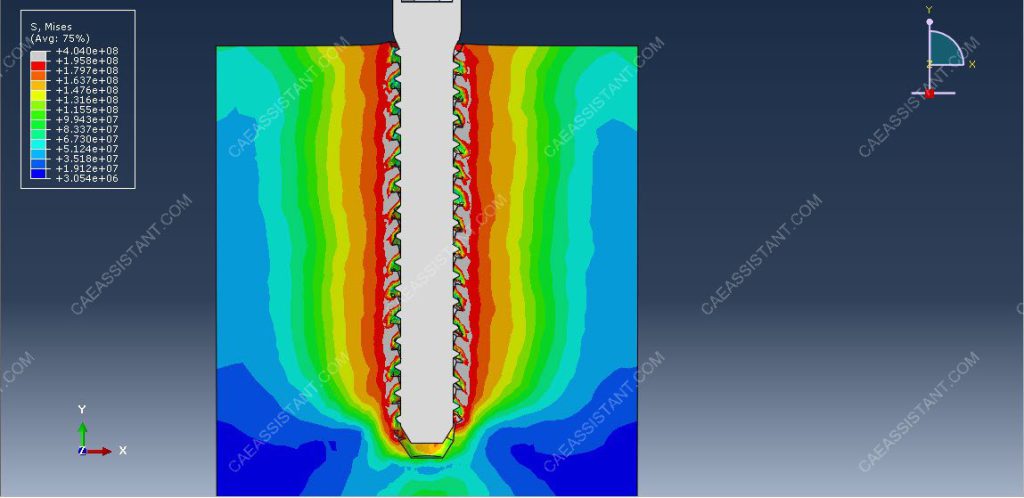
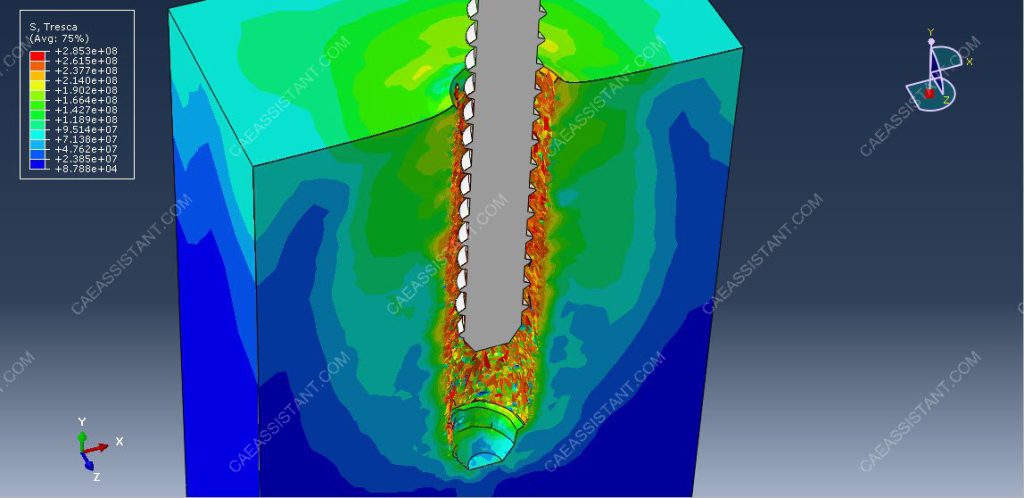
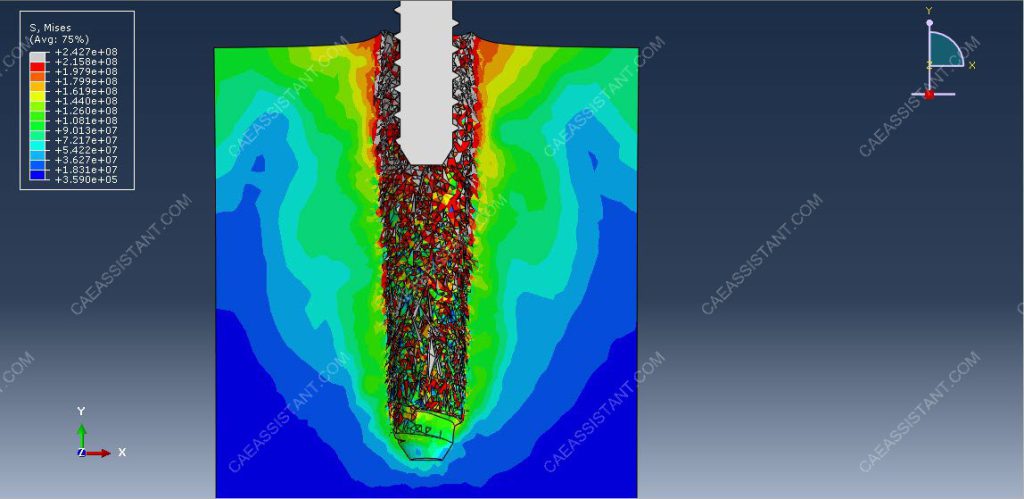
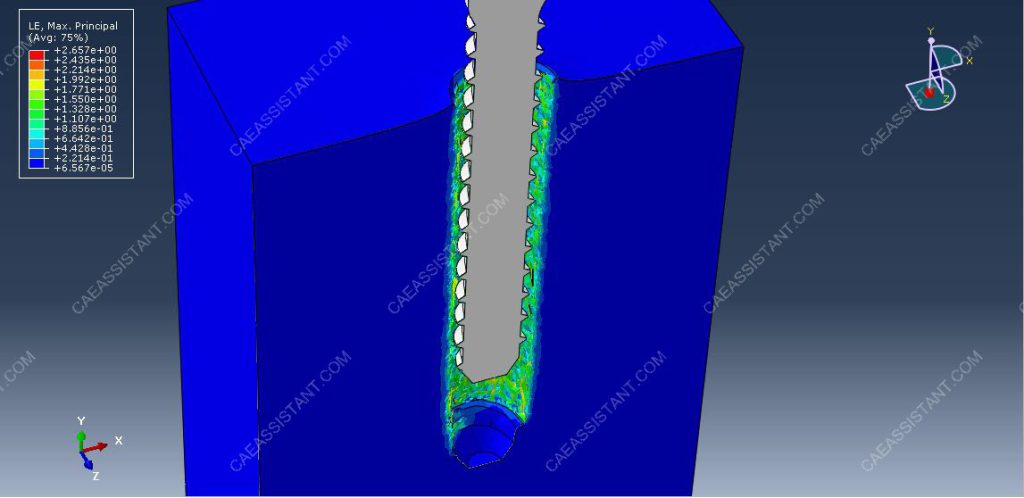
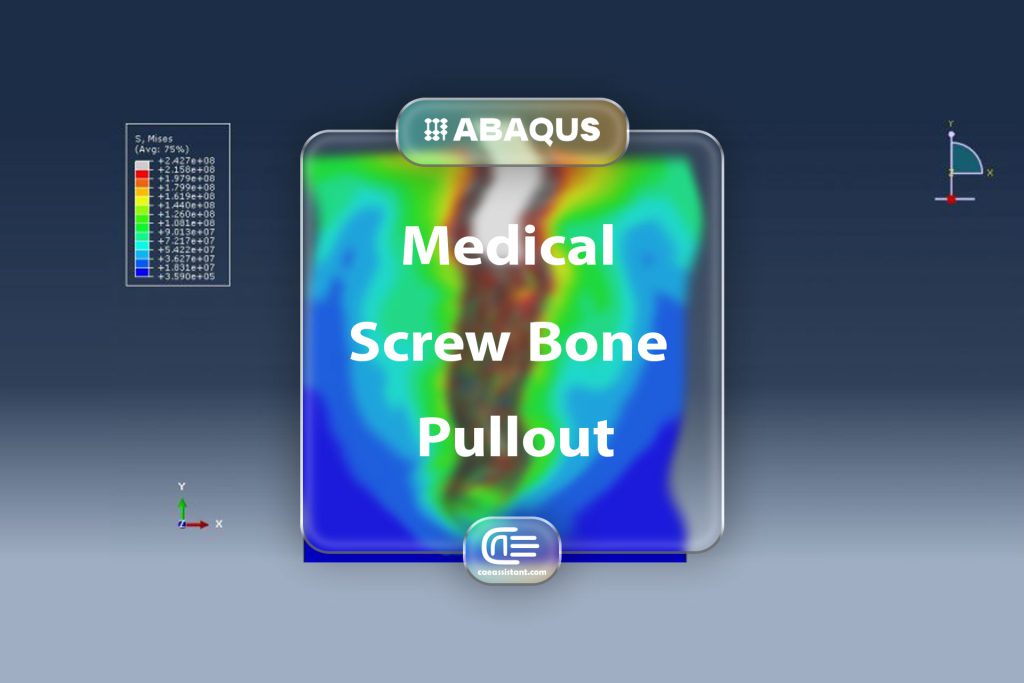
- Results: After the simulation, results such as damage, failure, stress, and strain can be obtained. Figures of the assembled model and simulation results are provided for visualization.