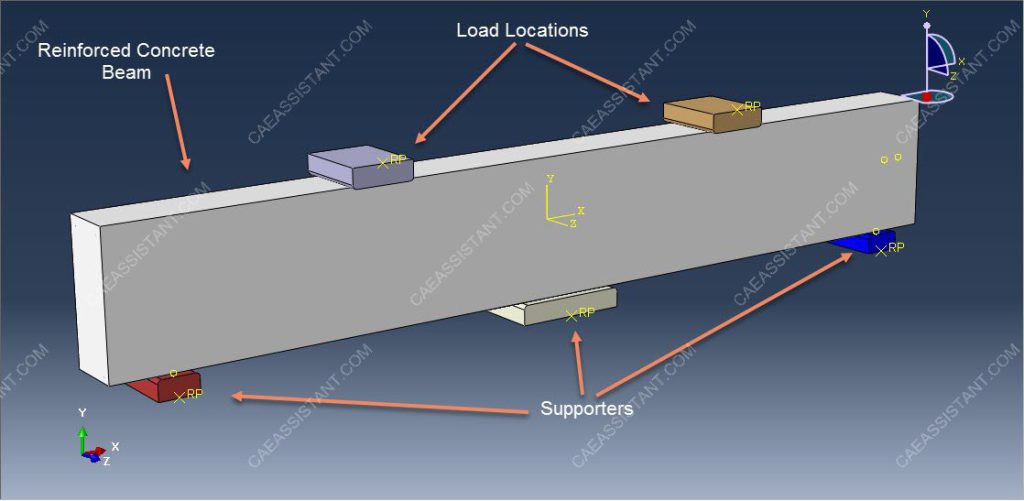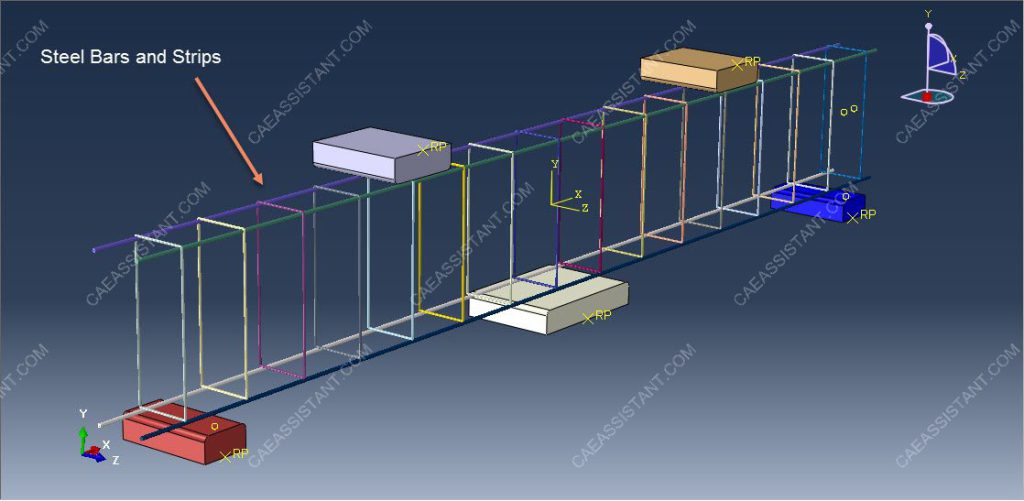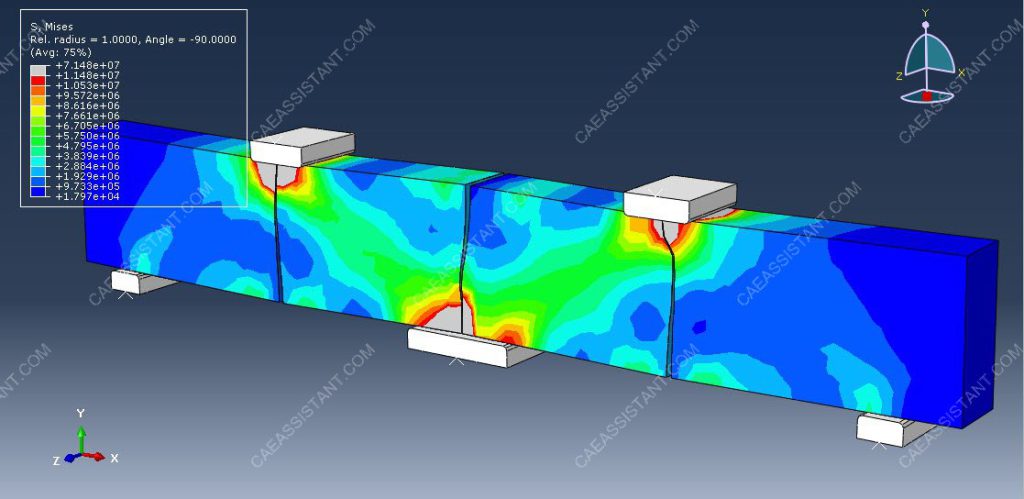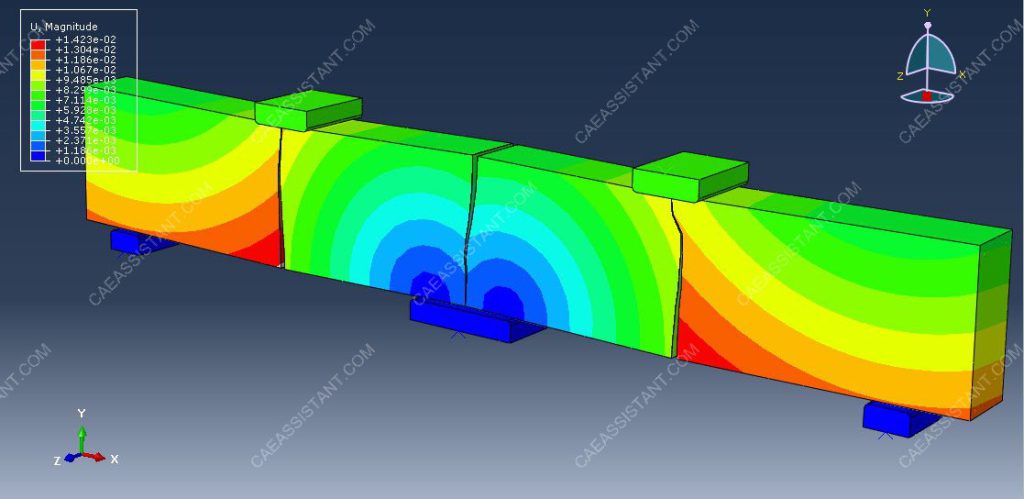
In this tutorial, the crack growth in a reinforced concrete (RC) beam under five-point bending is simulated using Abaqus.
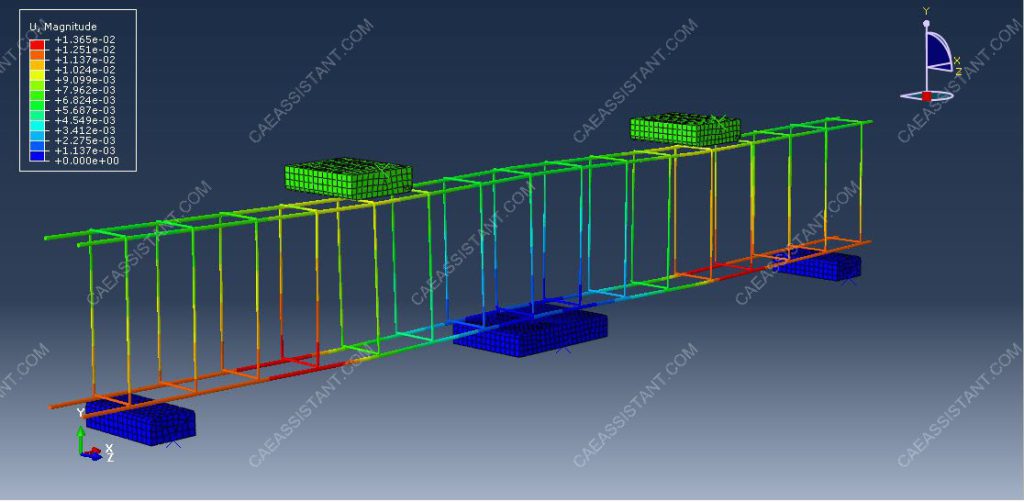
- The concrete beam is modeled as a three-dimensional solid part.
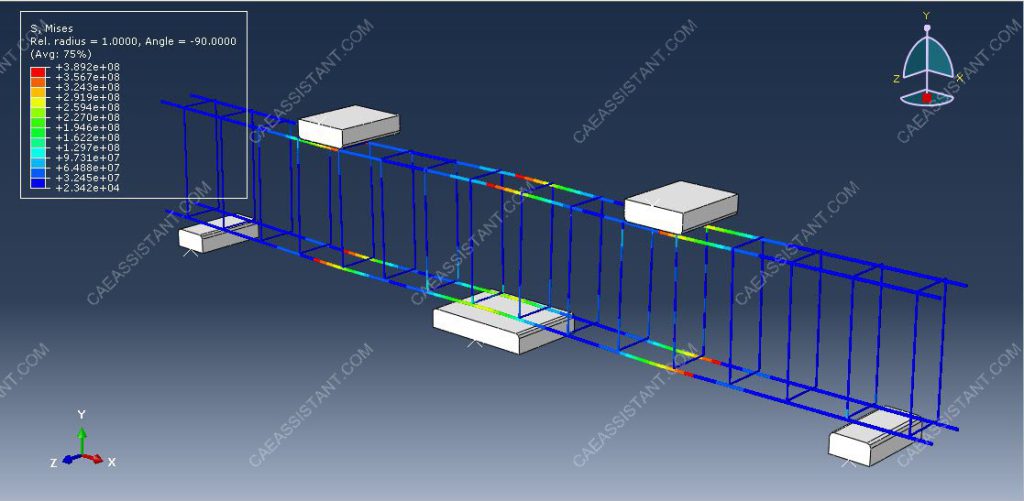
- The reinforcing bars and strips are modeled as three-dimensional wire parts.
- The rigid supports and hydraulic jacks are modeled as three-dimensional rigid shell parts.
A traction–separation law is applied to represent concrete behavior and crack growth. Cohesive behavior is defined in the enriched elements of the model. For damage initiation, the maximum principal stress criterion is used. For damage propagation, an energy-based damage evolution law with a power-law fracture criterion is selected.
The steel reinforcement is modeled with elastic–plastic material properties. A general static step is applied, with adjustments to the convergence algorithm. Steel members are embedded inside the concrete host. Surface-to-surface contact with friction is defined between the rigid bodies and the concrete beam.
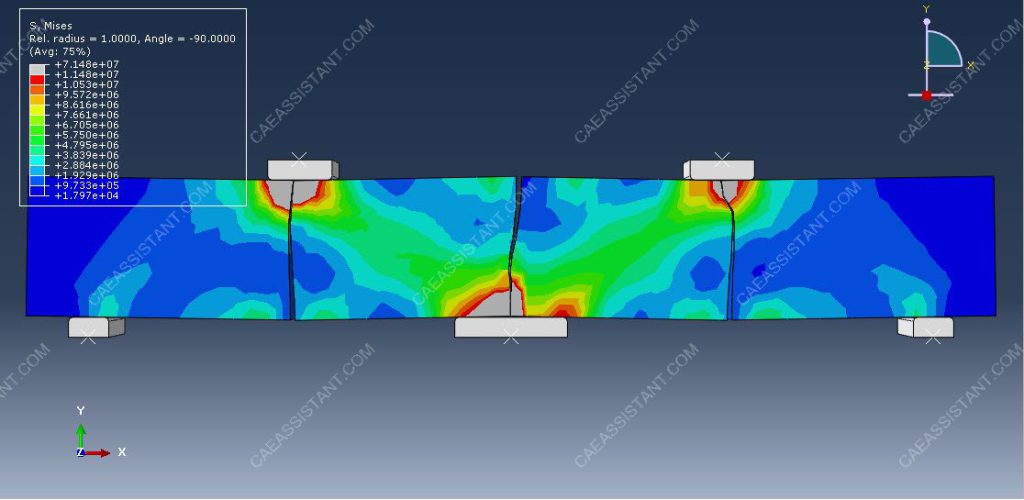
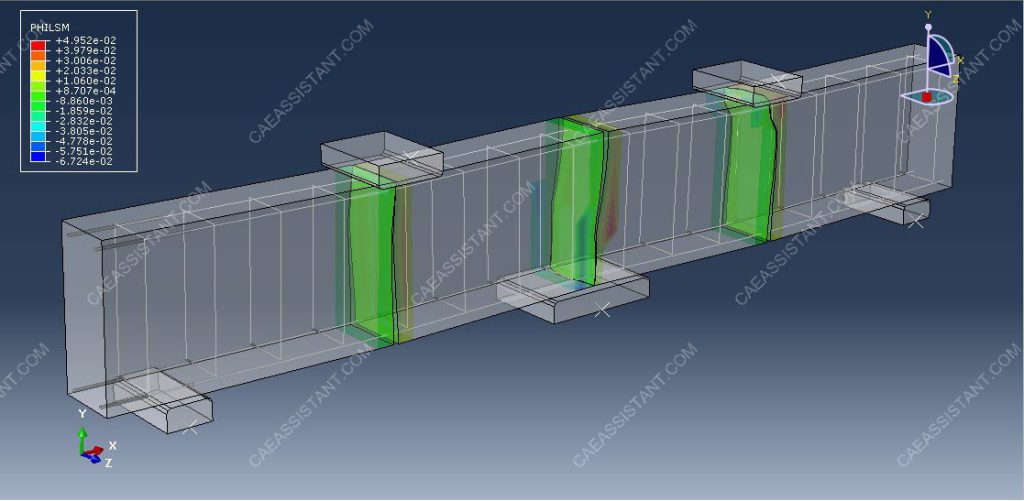
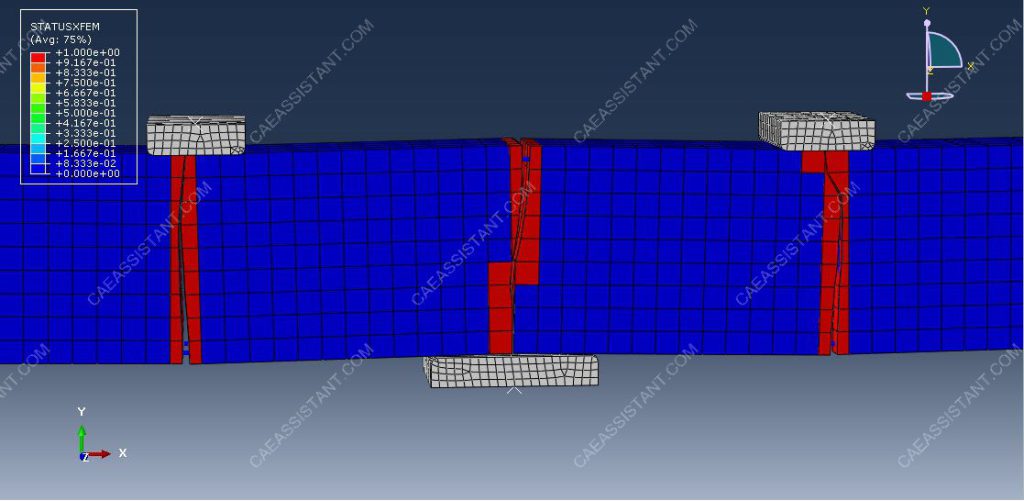
The extended finite element method (XFEM) is used to study crack growth and monitor crack propagation in the RC beam. Boundary conditions are set as follows: the three bottom rigid bodies are fixed, while displacements are applied to the two top rigid bodies. A fine mesh is required to achieve accurate prediction of the crack path.
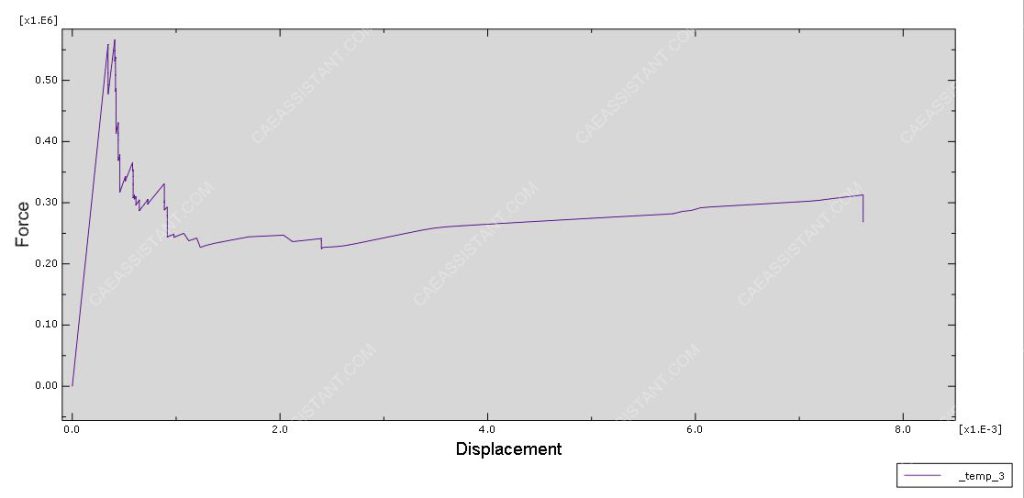
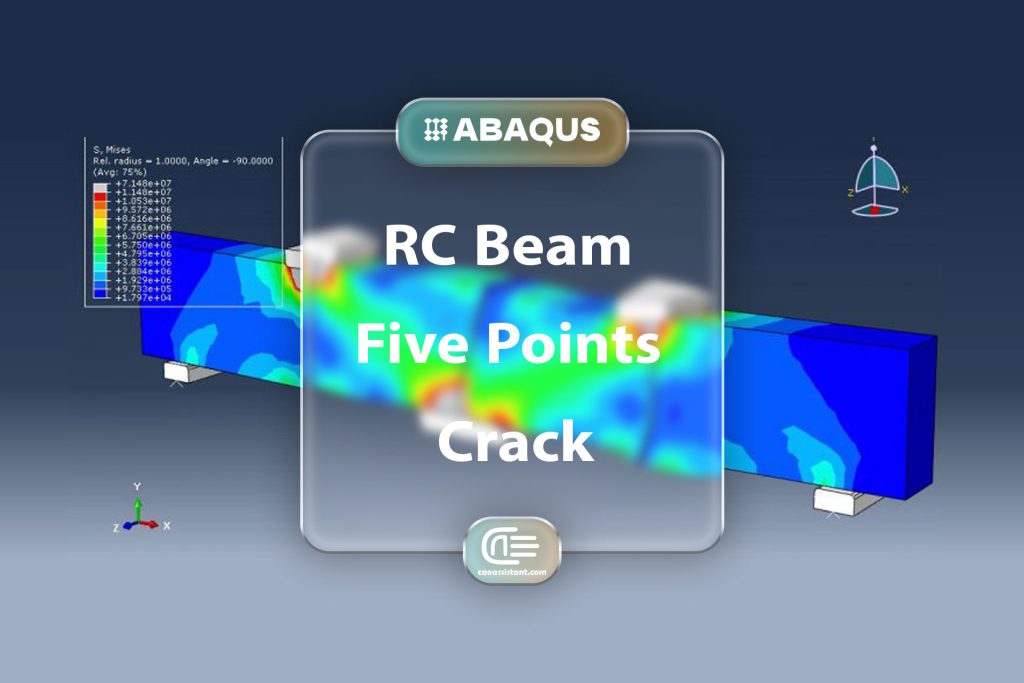
After the simulation, results such as crack propagation, stress distribution, displacement, and XFEM outputs can be obtained. Figures of the assembled model and results are provided below.