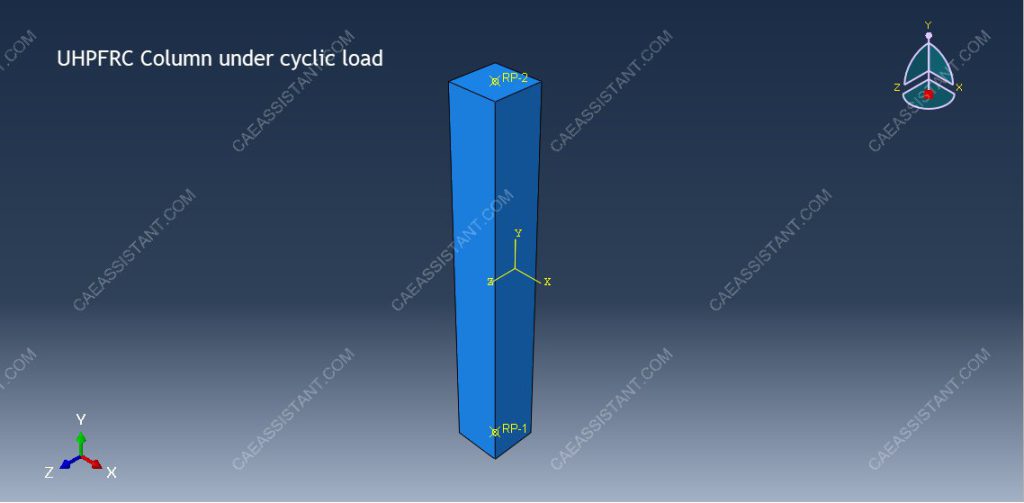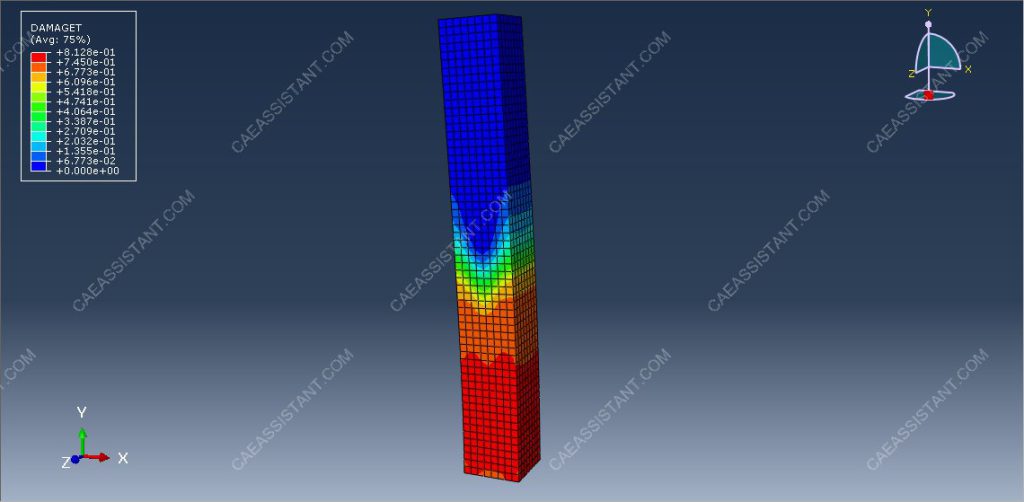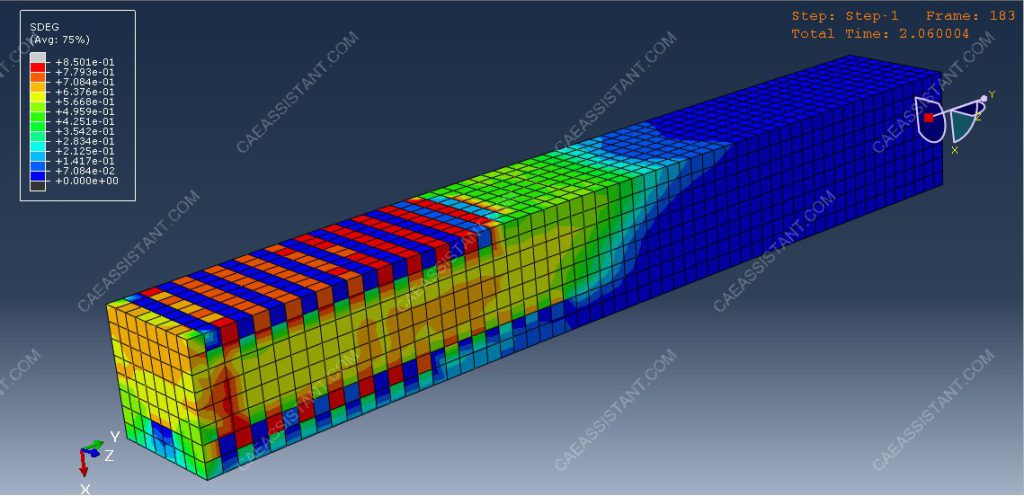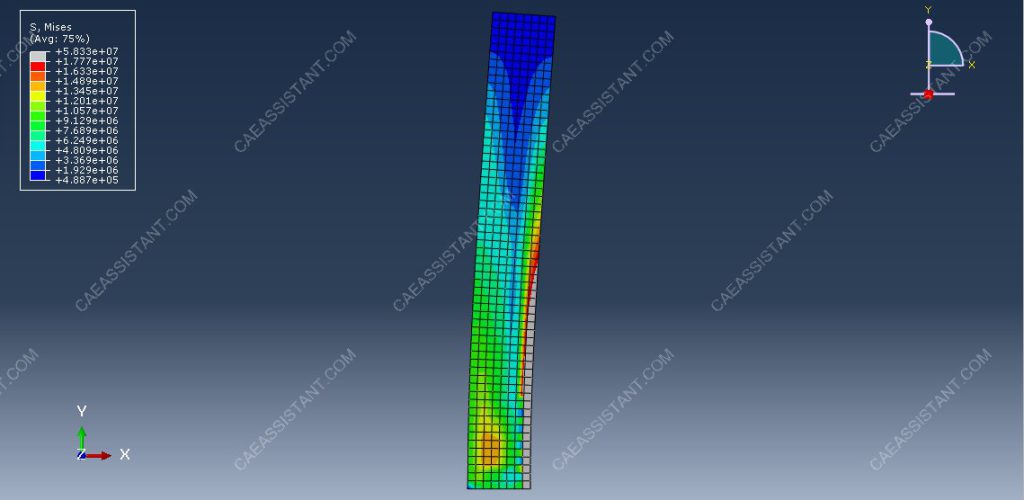
In this tutorial, cyclic loading of an Ultra-High-Performance Fiber-Reinforced Concrete (UHPFRC) column is simulated in Abaqus. The column is modeled as a three-dimensional solid part.
UHPFRC is a special type of concrete made with Portland cement, reactive admixtures, fine aggregates, inert admixtures, superplasticizers, and surface-treated steel fibers. Optimized grading of these constituents provides high packing density, resulting in ultra-high strength, ductility, and durability.
Traditional high-strength cement matrices fail suddenly after the first crack. The addition of fibers delays crack propagation and activates toughening mechanisms between fiber and matrix. As a result, UHPFRC shows pseudo-strain hardening after crack initiation. At peak load, strain localization occurs, and the bearing capacity decreases until rupture. Inelastic phenomena such as matrix cracking, fiber debonding, and slip provide notable ductility and energy absorption capacity.
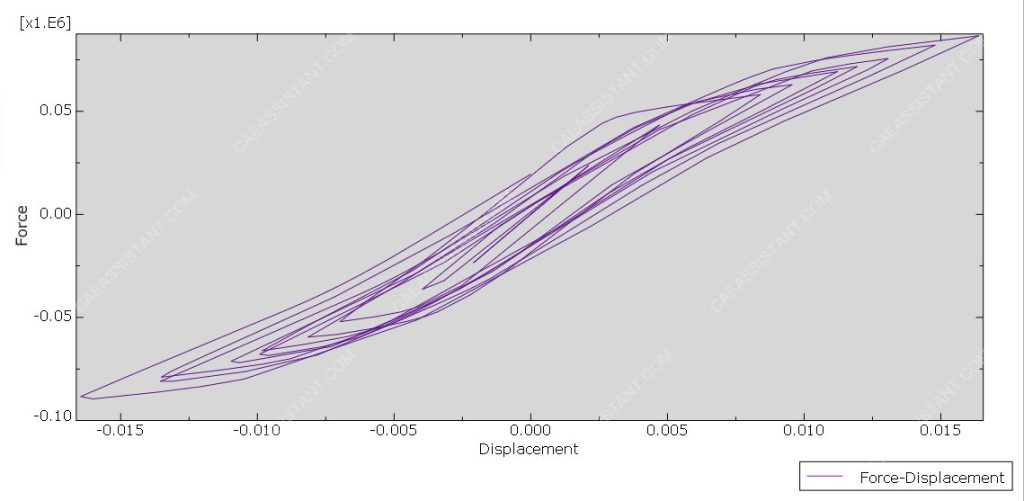
The Concrete Damaged Plasticity (CDP) model is used to represent UHPFRC behavior under cyclic loading. Material data can be obtained from reference papers. A general static step is applied with adjustments to the convergence model. To generate the hysteresis diagram, displacement and reaction force outputs are requested.
The cyclic load is applied to the top surface of the column using an amplitude protocol. The bottom surface is fixed as a boundary condition. A fine mesh is recommended to achieve accurate results.
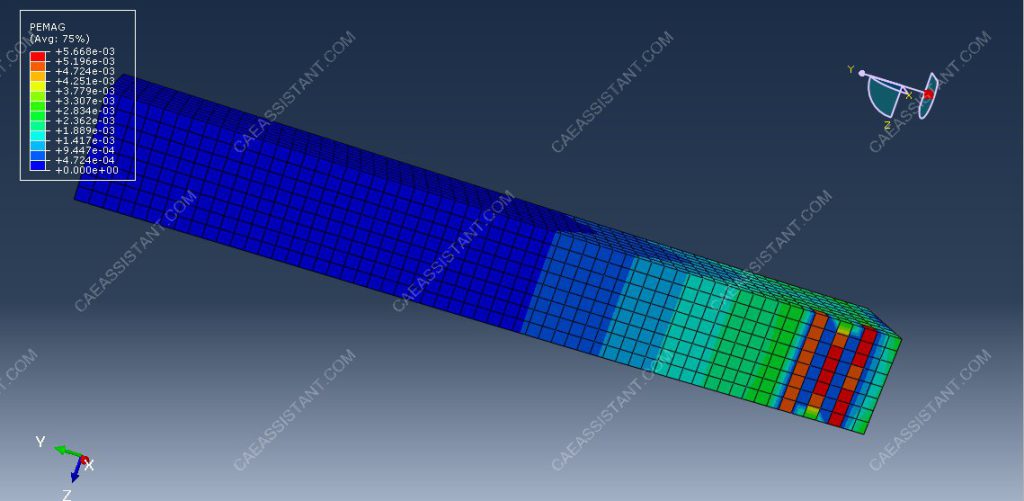
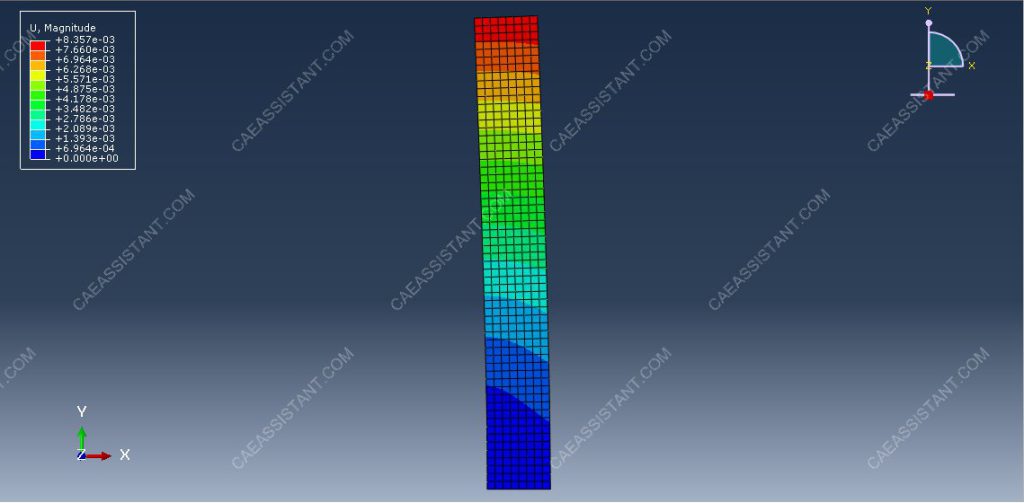
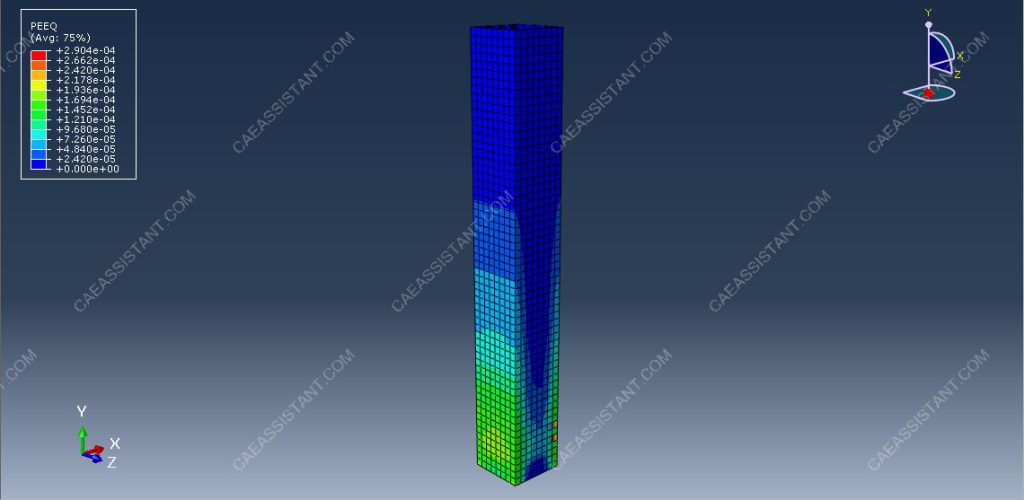
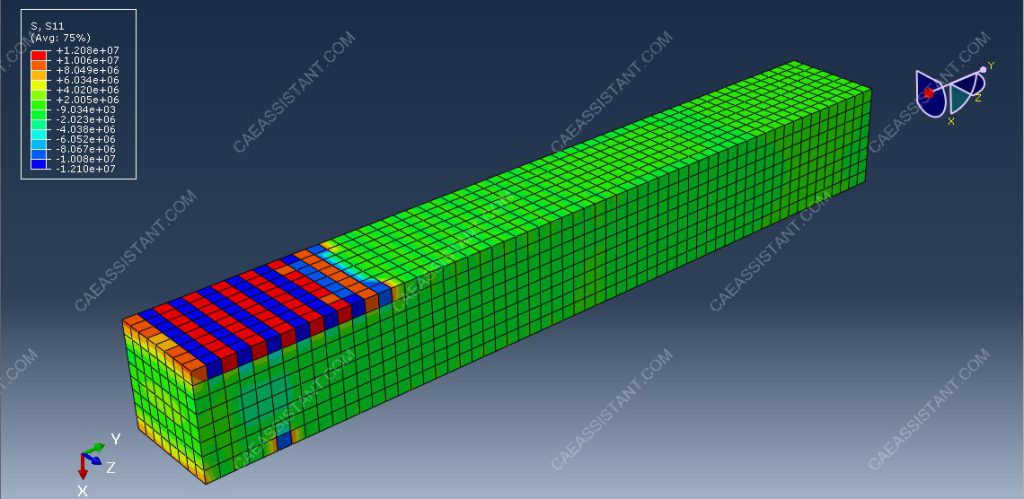
After the simulation, results such as stress distribution, strain fields, and hysteresis diagrams are available. Figures of the assembled model and simulation outputs can be reviewed for analysis.