In this tutorial, a numerical simulation of rock fracturing under blast loading is presented using a coupled Finite Element Method (FEM) and Smoothed Particle Hydrodynamics (SPH).
Drill-and-blast remains a common excavation technique for rock foundations and underground caverns in hydropower, transportation, and mining projects. These methods are widely used because they adapt well to different geological conditions. With the rapid development of explosion theory and computer technology, numerical simulation has become a powerful tool for studying blast effects and stress wave propagation in rock masses.
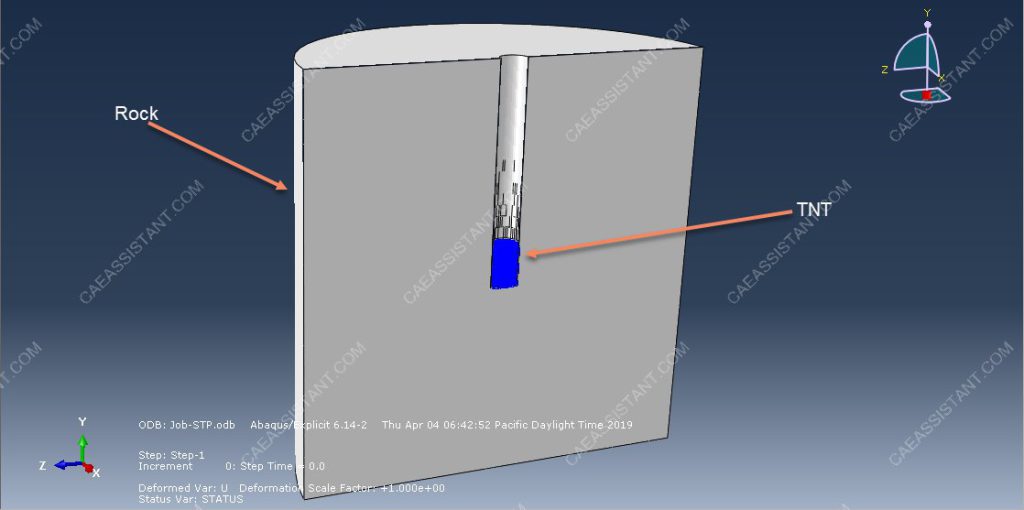
In this study, granite rock and TNT are modeled as three-dimensional parts.
- TNT modeling: The Jones–Wilkins–Lee (JWL) equation of state is applied to convert the chemical energy of TNT into mechanical pressure.
- Granite modeling: The Johnson–Holmquist II (JH-2) model is used to represent granite behavior under intense blast loading.
The assembled parts are analyzed using a dynamic explicit step with general contact. Fixed boundary conditions are applied to the rock. To represent the SPH mesh for TNT, both the CAE interface and input file are used to define PC3D elements. Mesh quality plays a critical role in the accuracy of results, especially in capturing radial crack propagation.
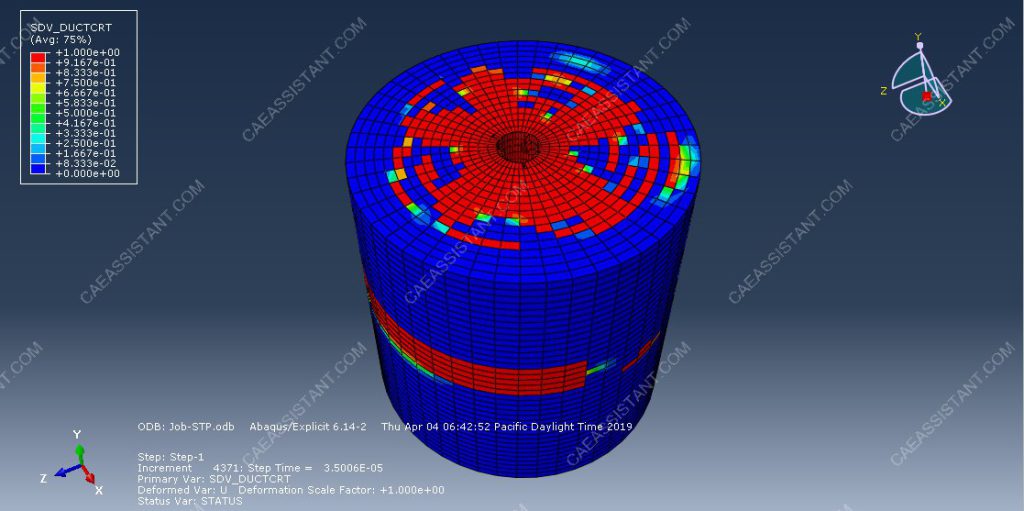
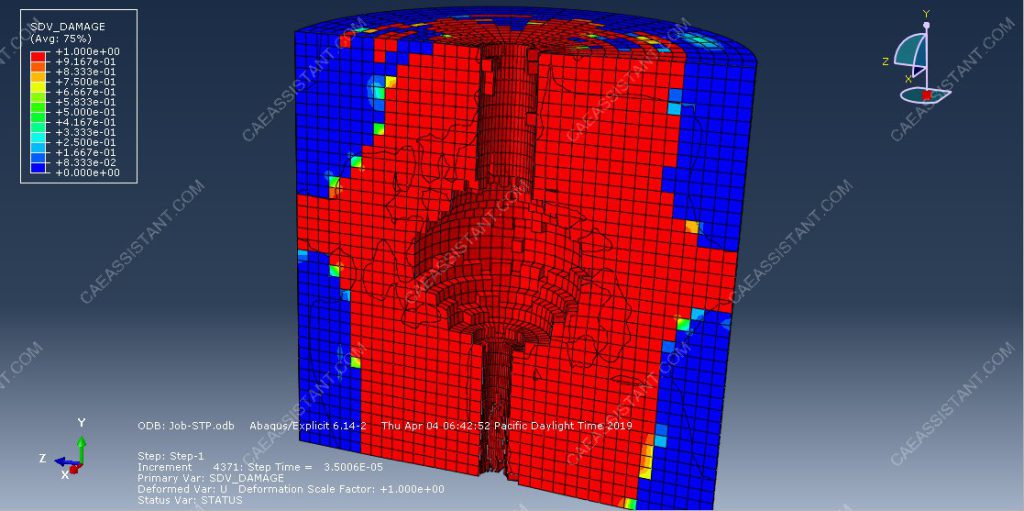
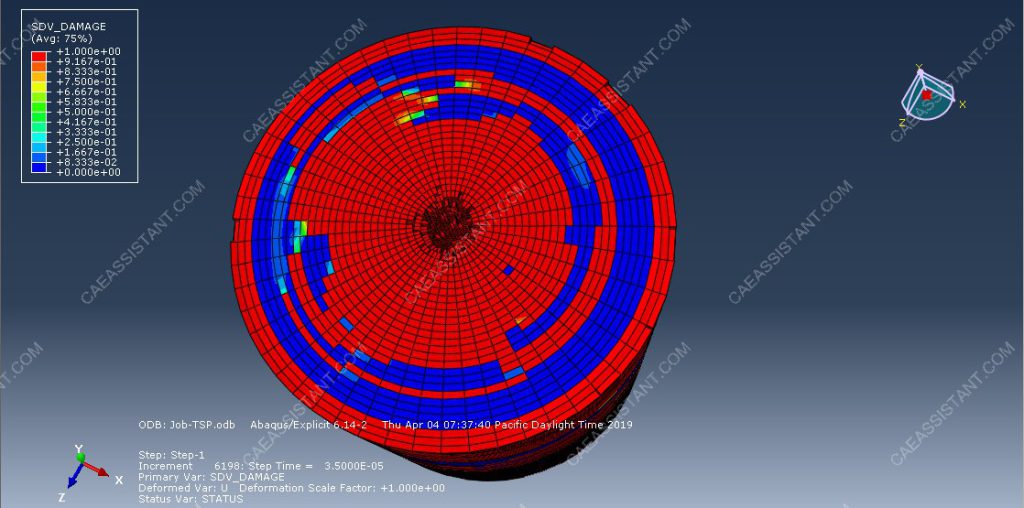
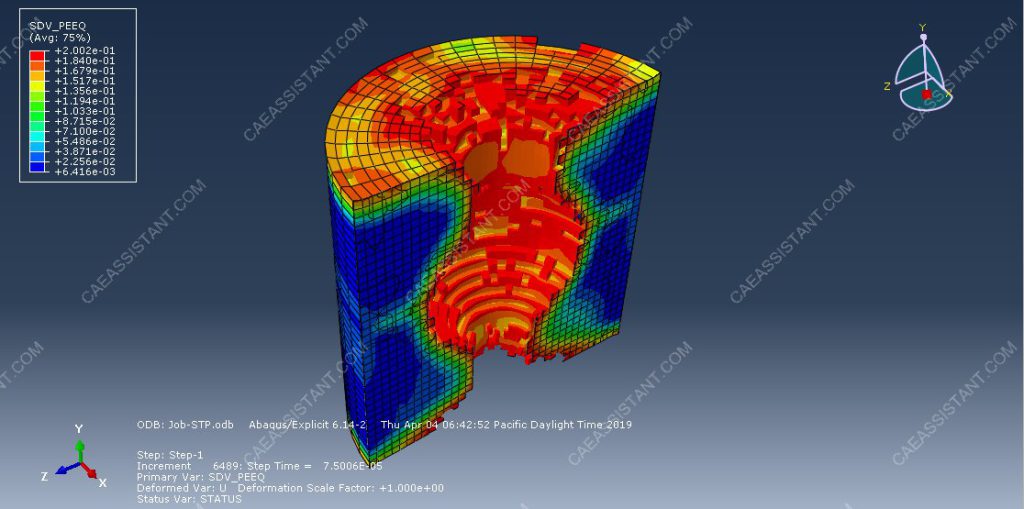
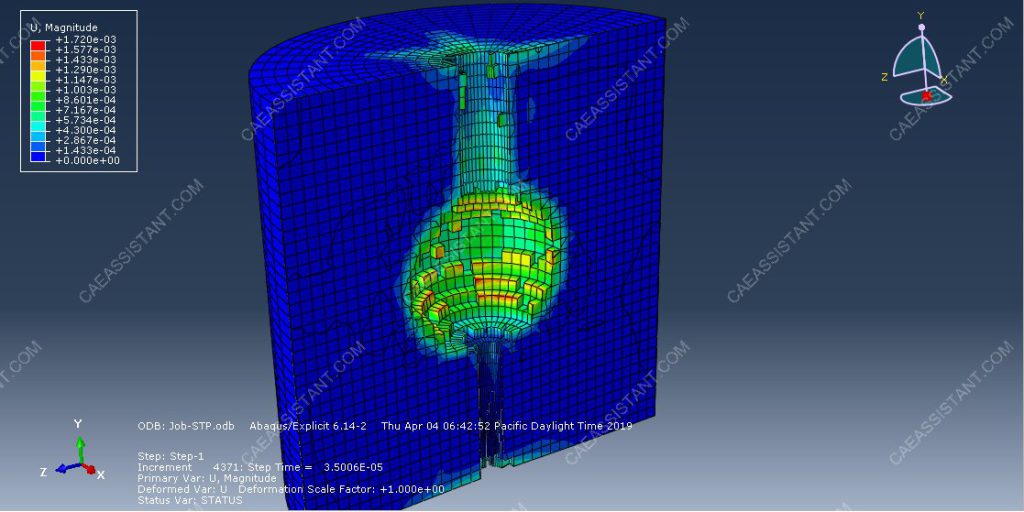
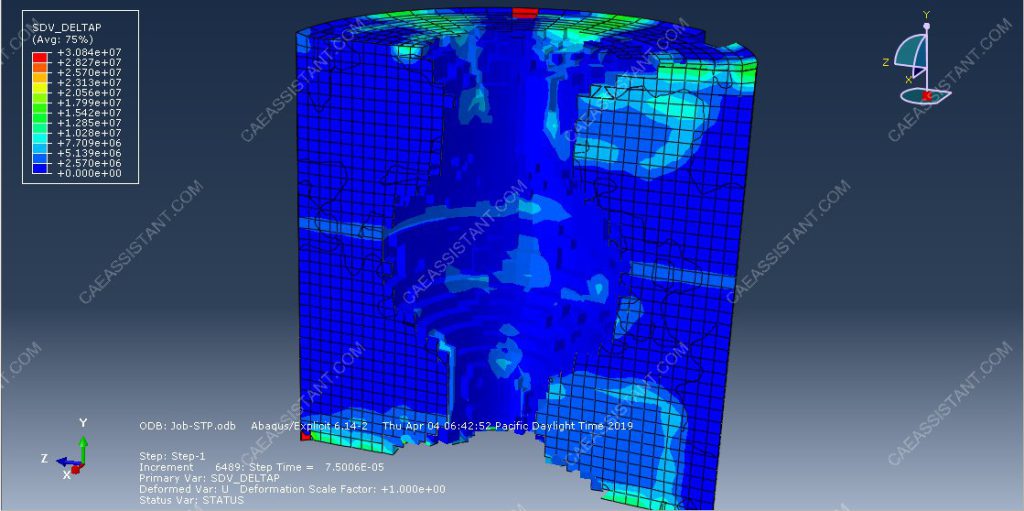
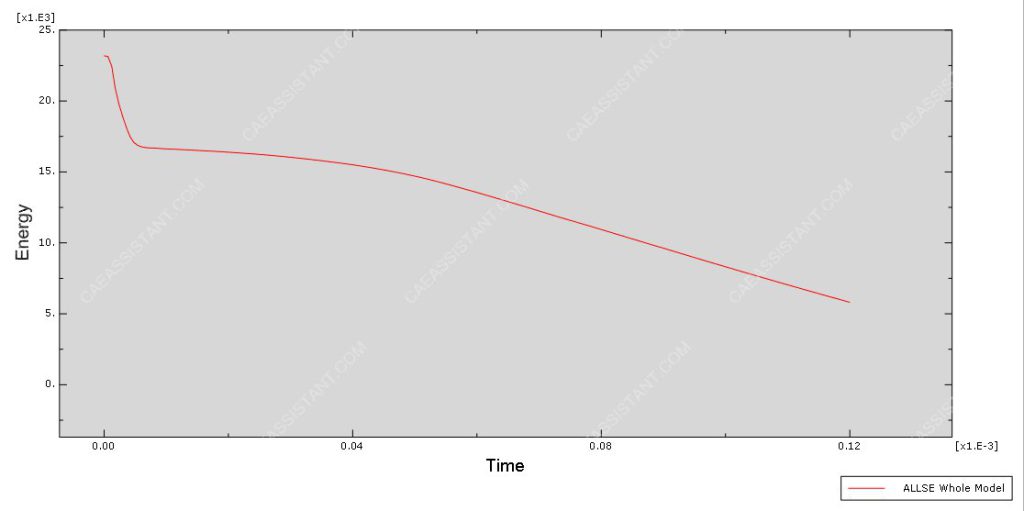
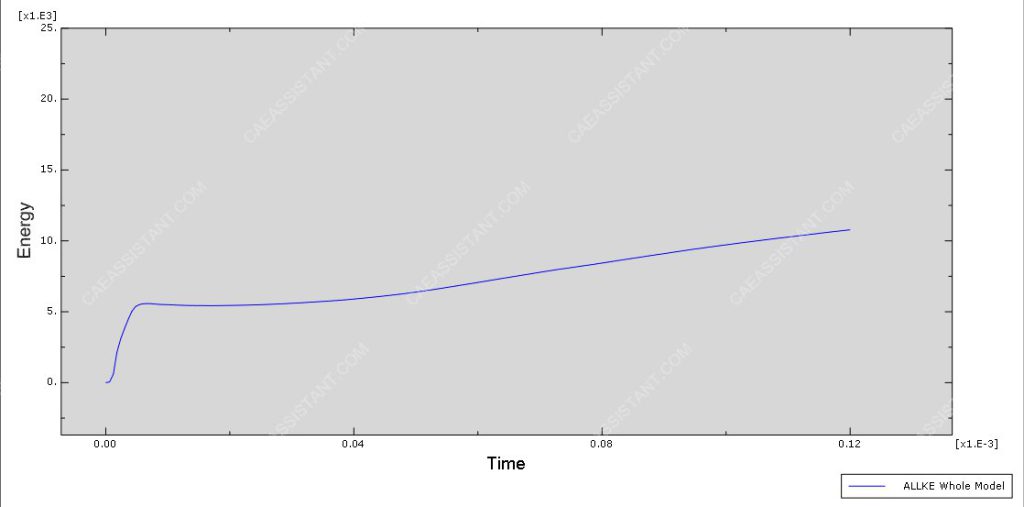
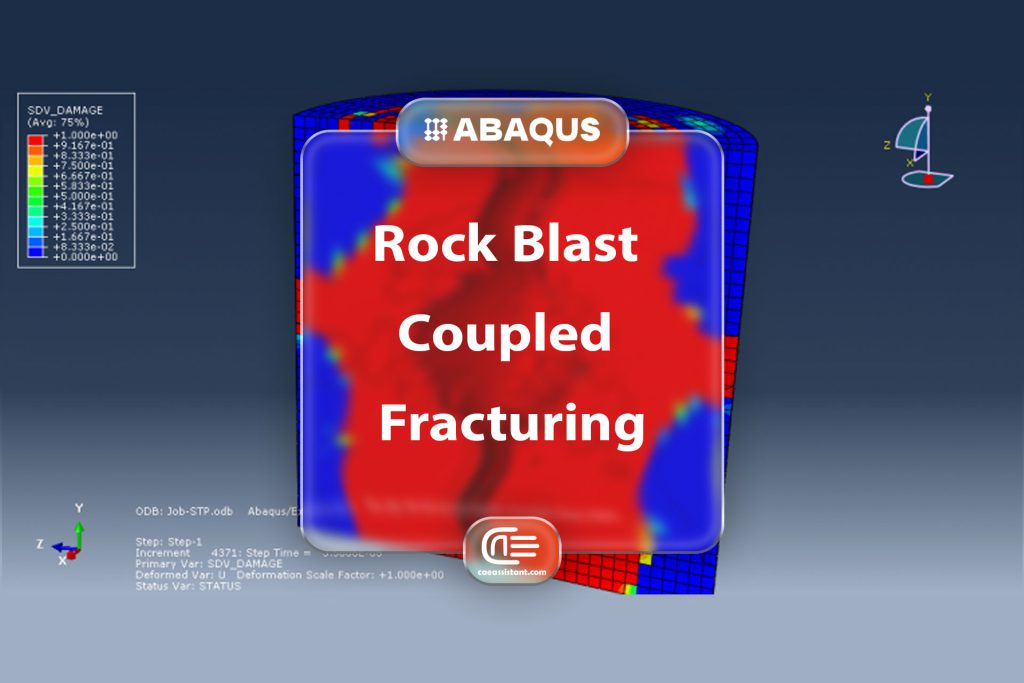
After the explosion, key outputs such as the damage parameter, stress distribution, and plastic strain can be obtained. Figures from the simulation illustrate these results and the progression of fracturing in the rock mass.