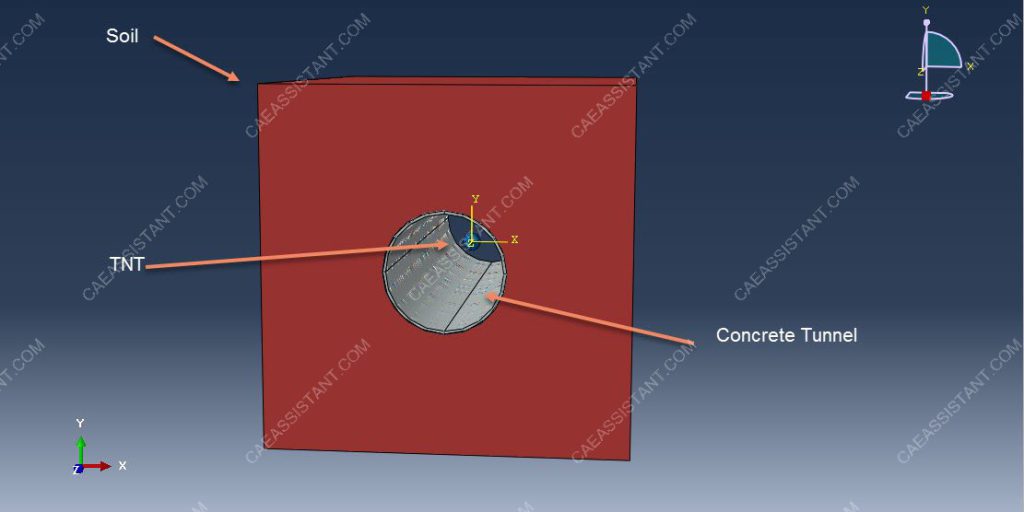
In this tutorial, the dynamic analysis of a tunnel in soil subjected to internal blast loading is investigated using the Coupled Eulerian–Lagrangian (CEL) method in Abaqus.
- The concrete tunnel is modeled as a solid part.
- The surrounding domain is defined as an Eulerian part.
- TNT and soil are modeled as solid parts.
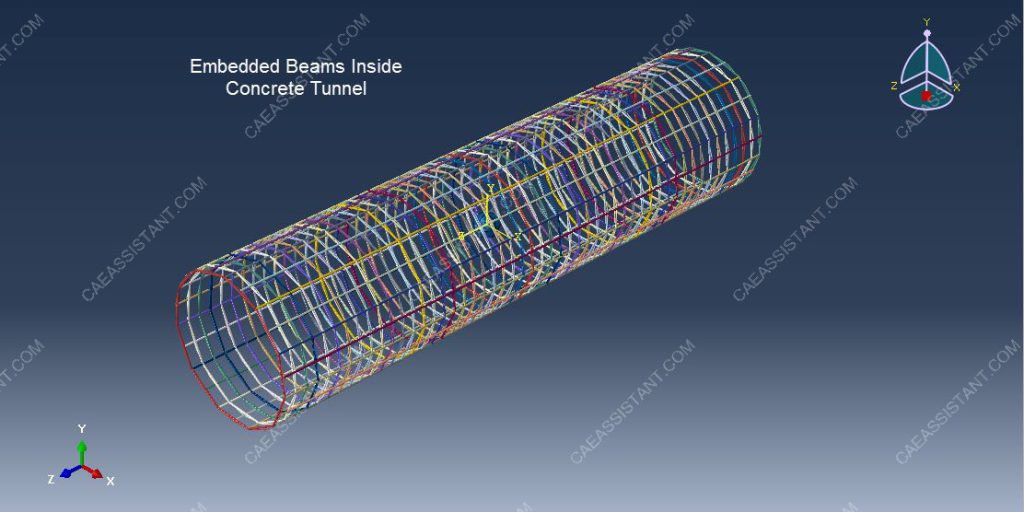
- Beams are represented as wire parts.
Underground tunnels—such as roadway, railway, utility, and water pipelines—are essential components of civil infrastructure. In recent decades, explosions caused by terrorist activities inside underground structures have become a serious threat. Internal explosions in tunnels are especially hazardous because the blast-induced shock waves reflect multiple times on the tunnel walls, amplifying the pressure and channeling the shock wave.
To design tunnels that can withstand such blast loads, it is important to understand their response both experimentally and numerically. This work focuses on advanced numerical analysis of tunnels subjected to blast loading.
Material Models and Methods:
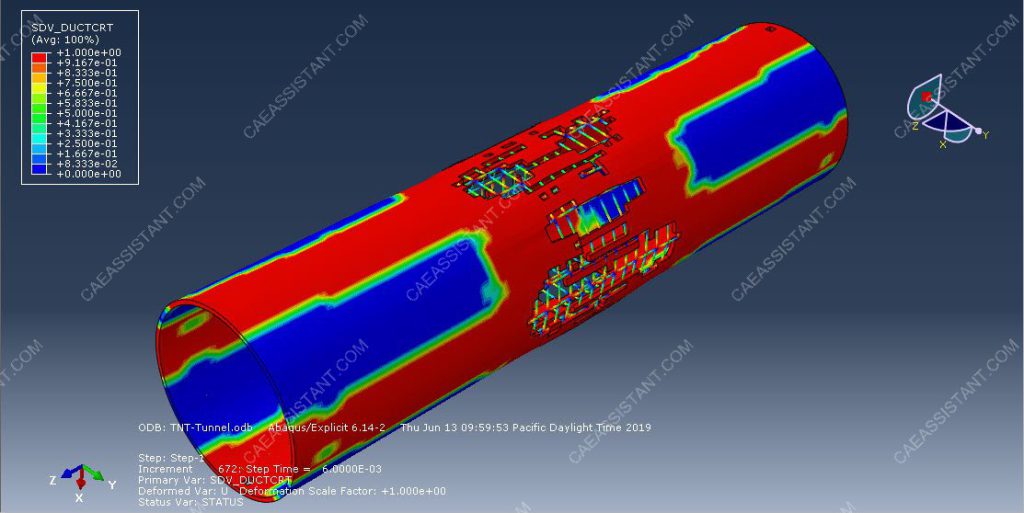
- Beams: Steel with elastic–plastic behavior, coupled with a ductile damage criterion.
- Soil: Elastic behavior with Mohr–Coulomb plasticity.
- TNT: JWL equation of state.
- Concrete tunnel: Johnson–Holmquist model to capture high-pressure failure.
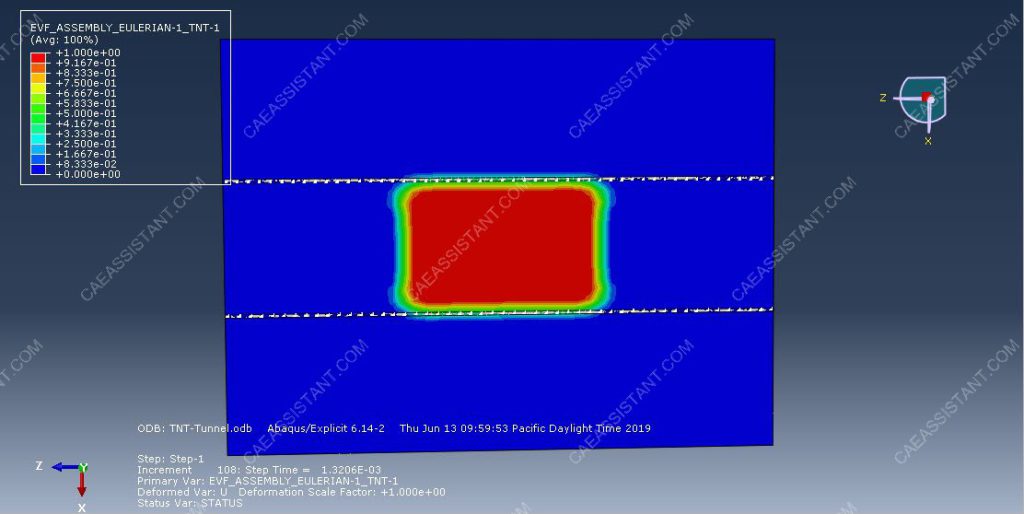
The dynamic explicit procedure is used, as it is suitable for blast simulations. General contact is applied across all domains, and embedded regions are defined for beams inside the concrete host. The Eulerian model uses the volume fraction method to specify the location and amount of TNT. Proper boundary conditions are assigned to both the Eulerian domain and the concrete tunnel.
Mesh size plays a critical role in accuracy. A fine mesh is necessary to capture the effects of blast loading.
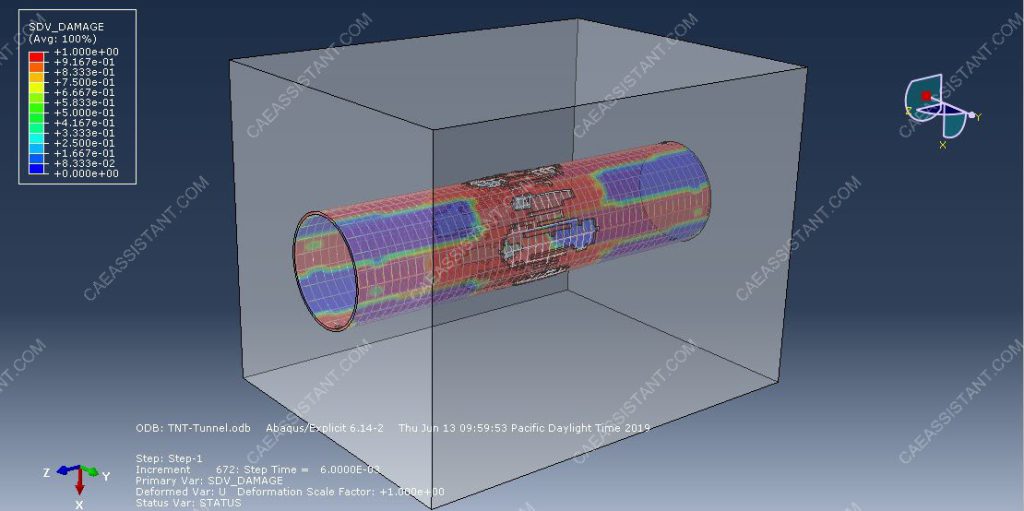
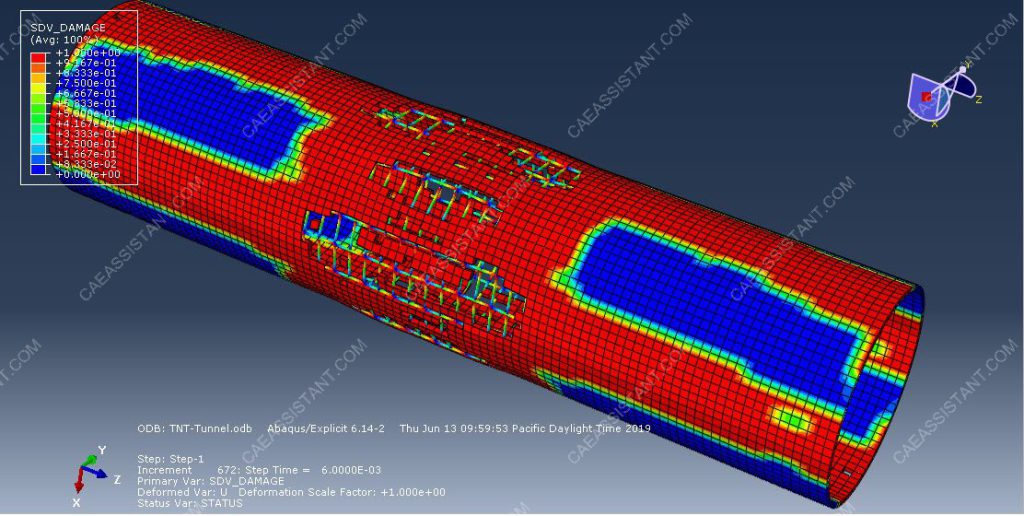
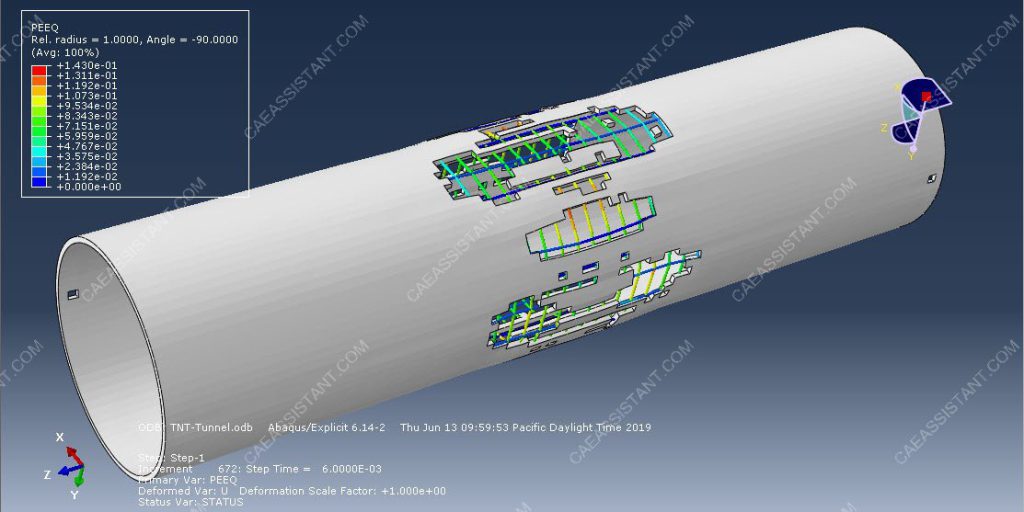
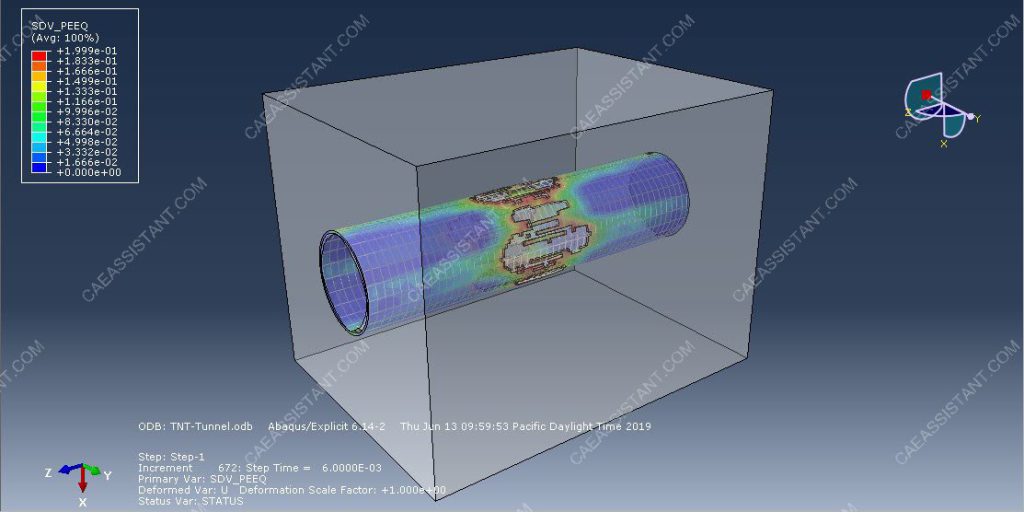
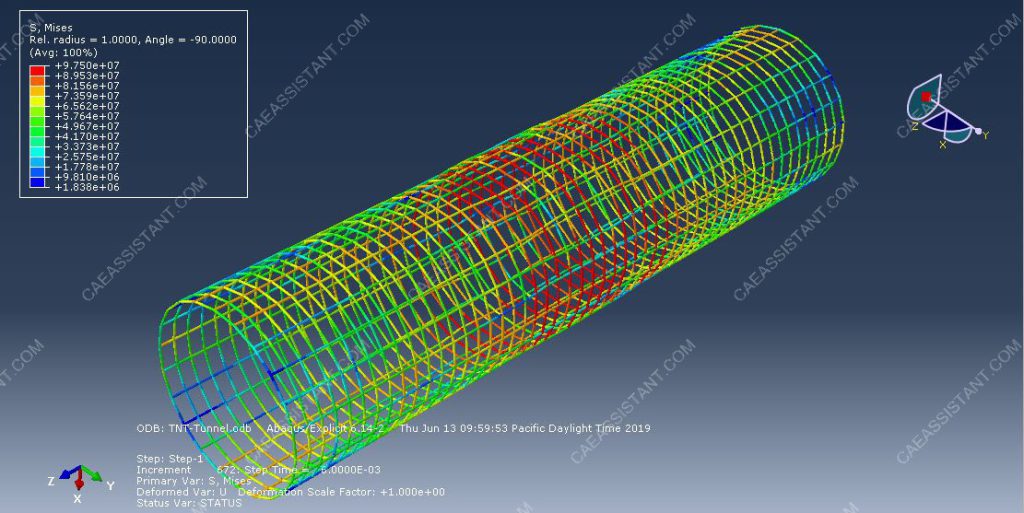
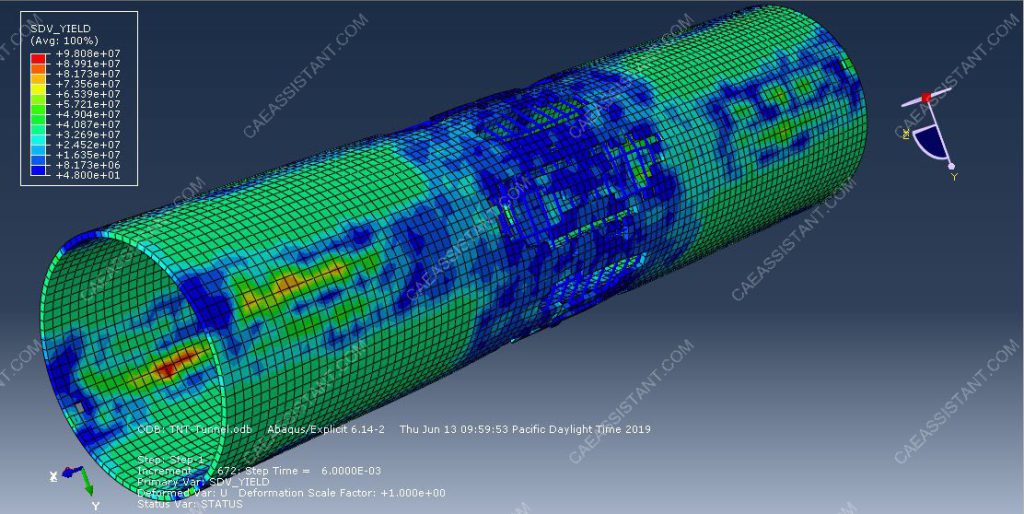
Simulation Results: The analysis provides outputs such as:
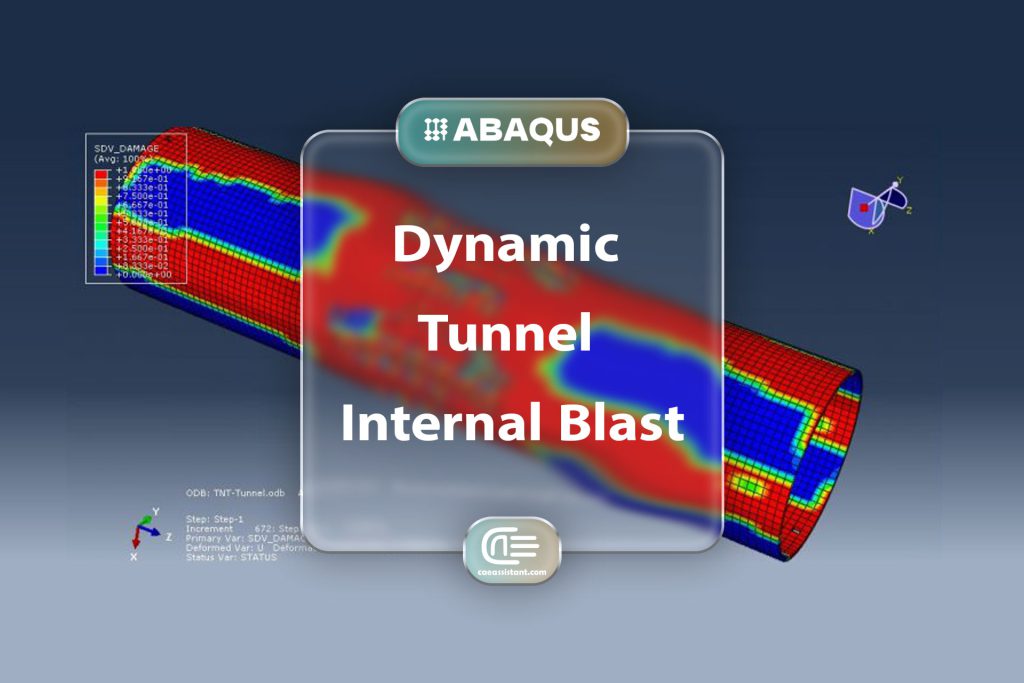
- Concrete damage variables
- Stress distribution
- Beam damage and strain
- Other structural response parameters
Figures of the assembled parts and simulation results are shown in the tutorial.