
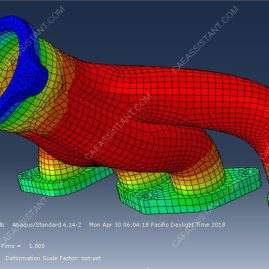
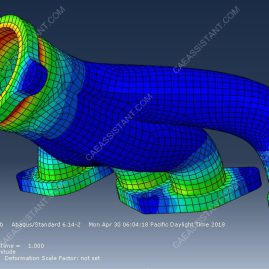
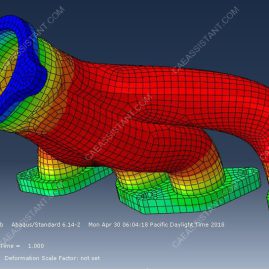
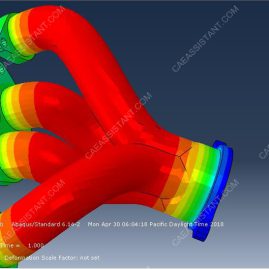
Heat transfer in engine exhaust manifolds is controlled by three main effects:
Conduction through the metal,
Convection from the hot exhaust gases,
Radiation between different parts of the metal surface.
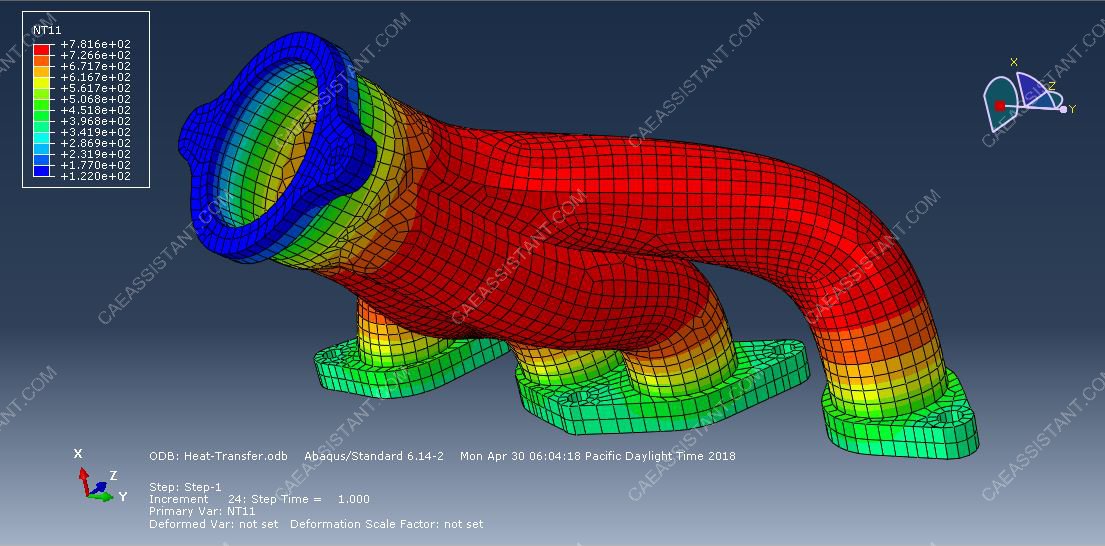
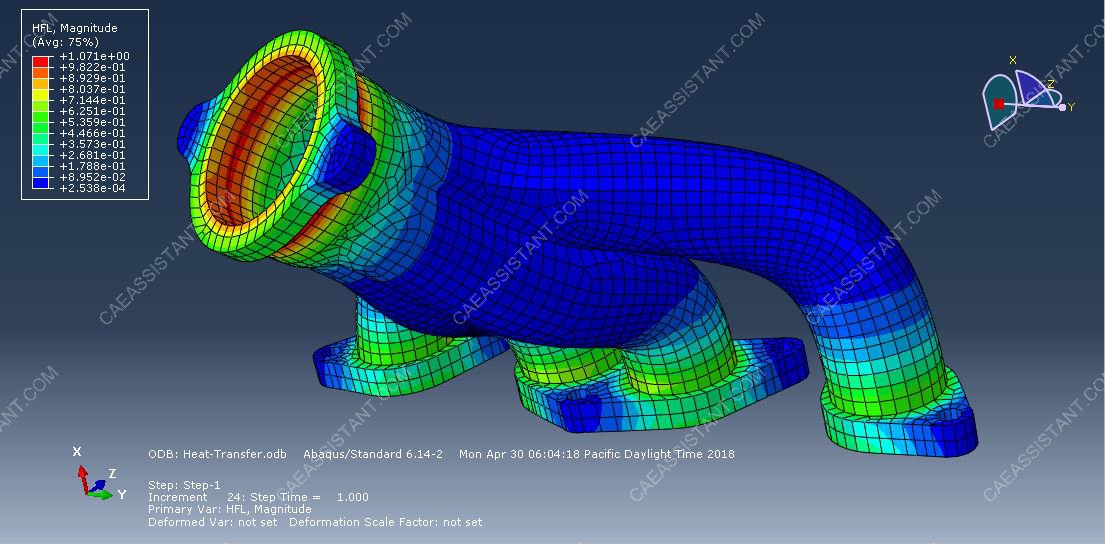
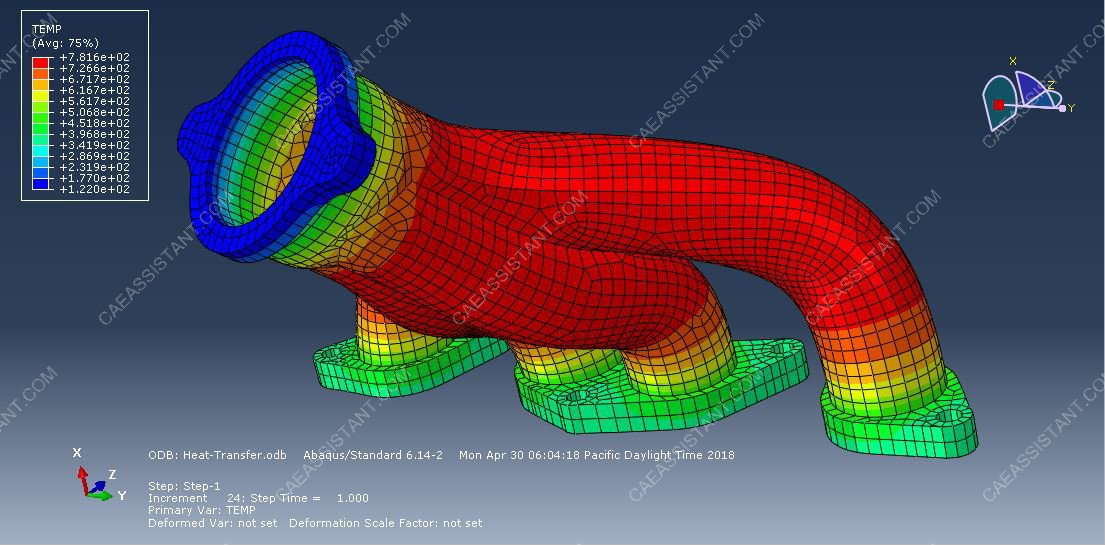
This tutorial demonstrates how to compute the equilibrium thermal state of a manifold under these combined effects. The analysis uses a single heat transfer step, where thermal loading conditions are gradually increased from zero.
Boundary constraints are simplified compared to real operating conditions: the temperatures at the cylinder head and outlet are fixed. Convection from the hot exhaust gases is applied to the internal surfaces of the manifold tubes. Radiation between the internal tube surfaces is modeled using different approaches:
The cavity radiation method, with and without cavity parallel decomposition,
The average-temperature radiation method.
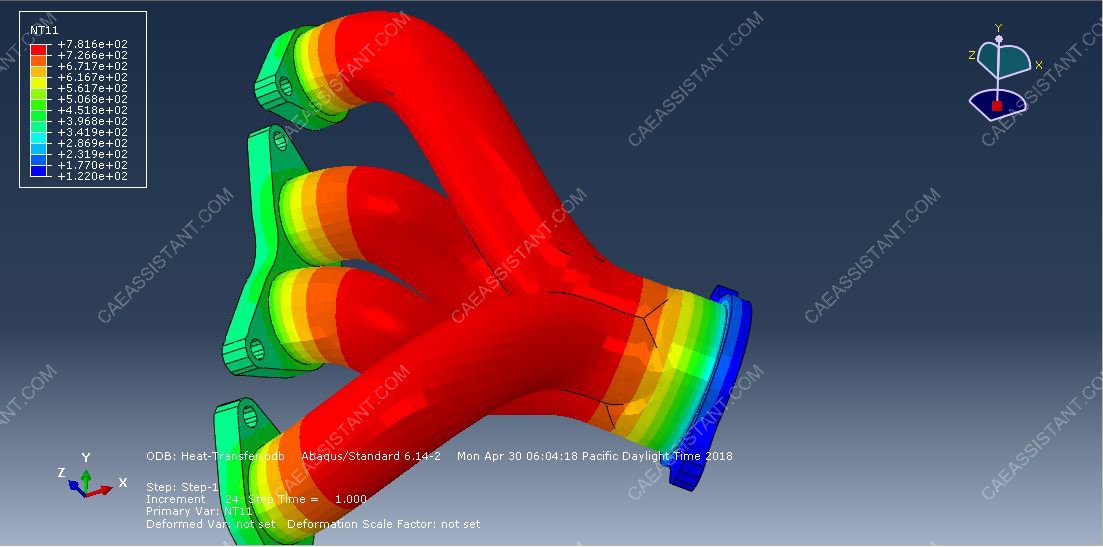
The manifold material is gray iron. Results show that peak temperatures are higher when using the cavity radiation method. Radiation heat transfer tends to smooth the temperature field: hotter regions radiate more heat, which is absorbed by cooler areas.
In the cavity radiation method, this smoothing effect is limited by geometric view factors. The distance and orientation of surface facets determine how much radiation exchange occurs. In contrast, the average-temperature method ignores view factors. Each facet exchanges radiation based only on its own temperature and the averaged cavity temperature. This leads to stronger smoothing and lower peak temperatures compared to the cavity method.
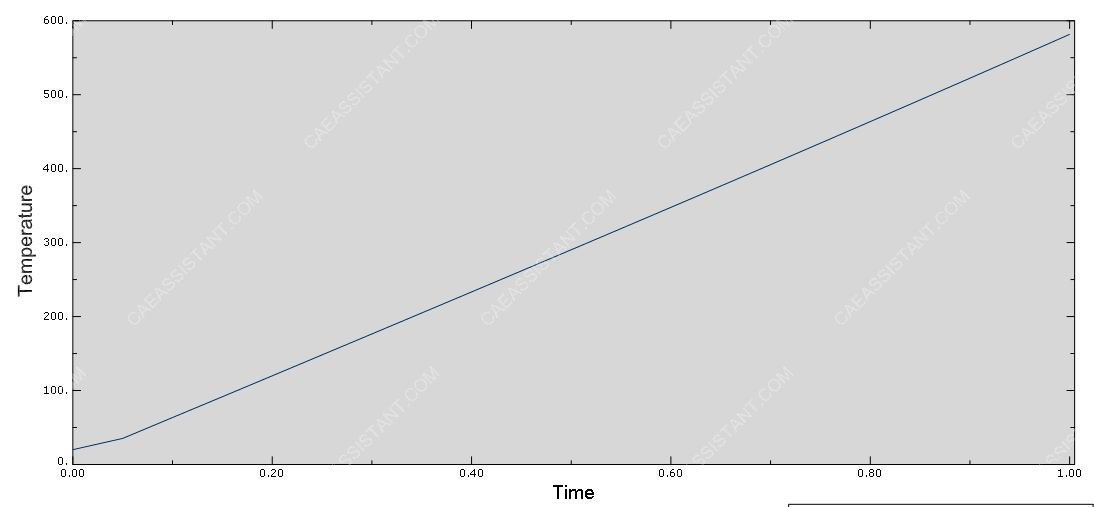
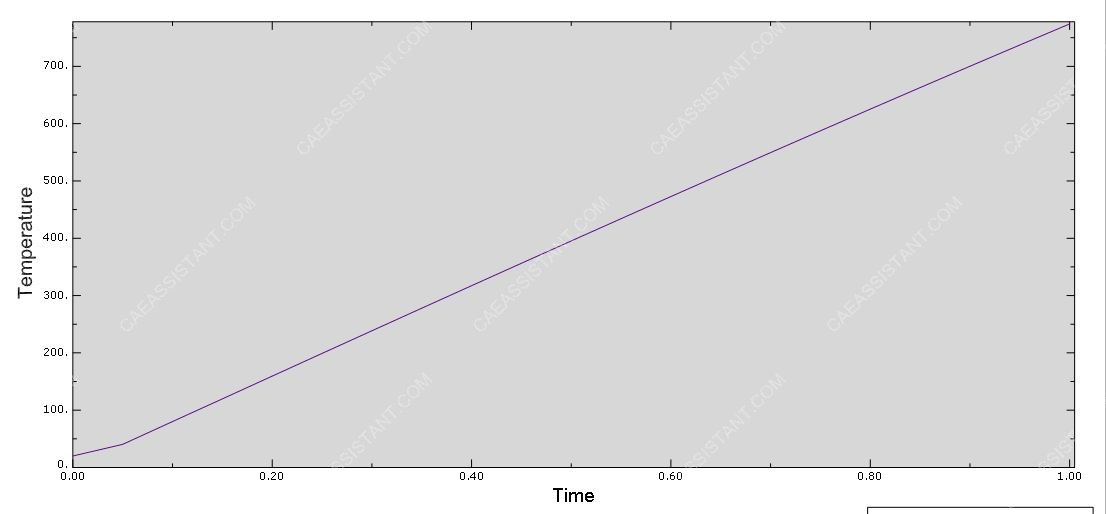
Figures of the simulation results are shown below.

Reviews
There are no reviews yet.