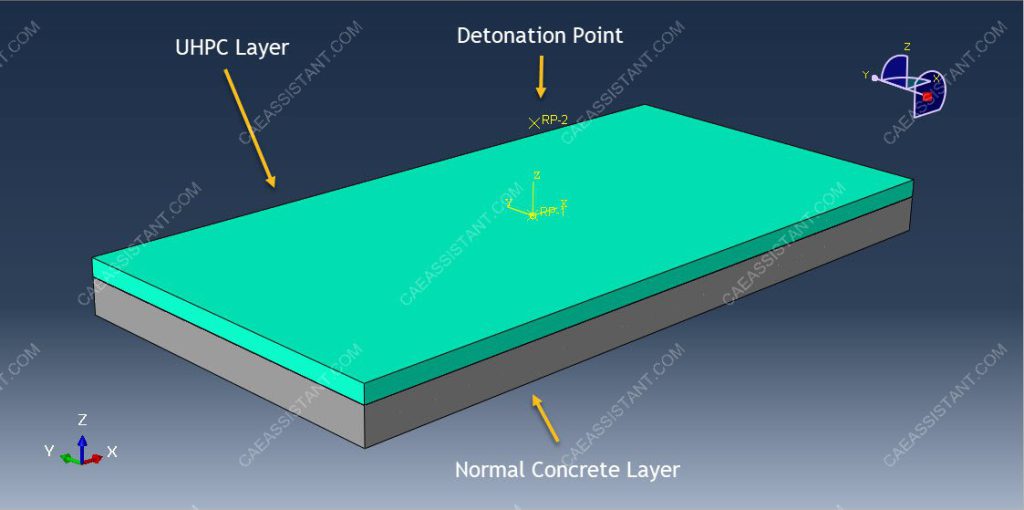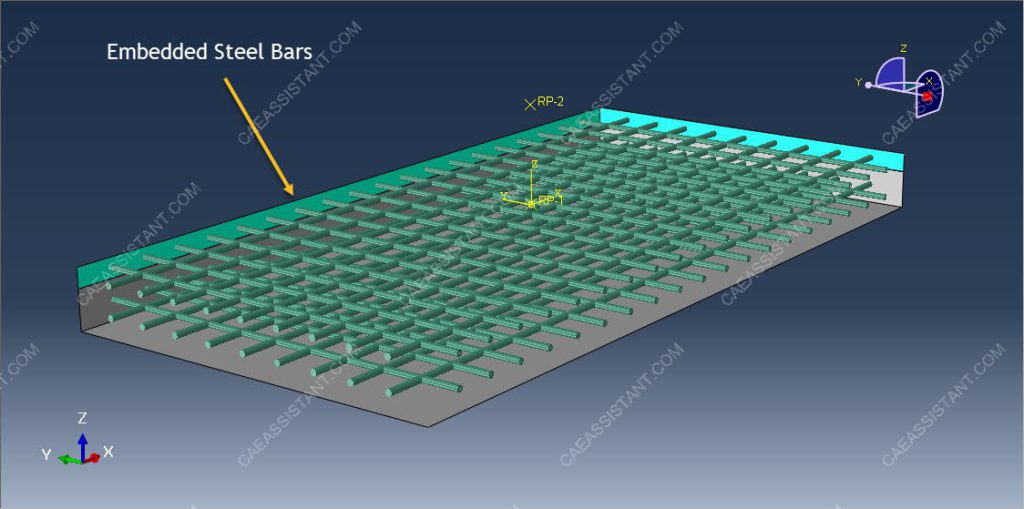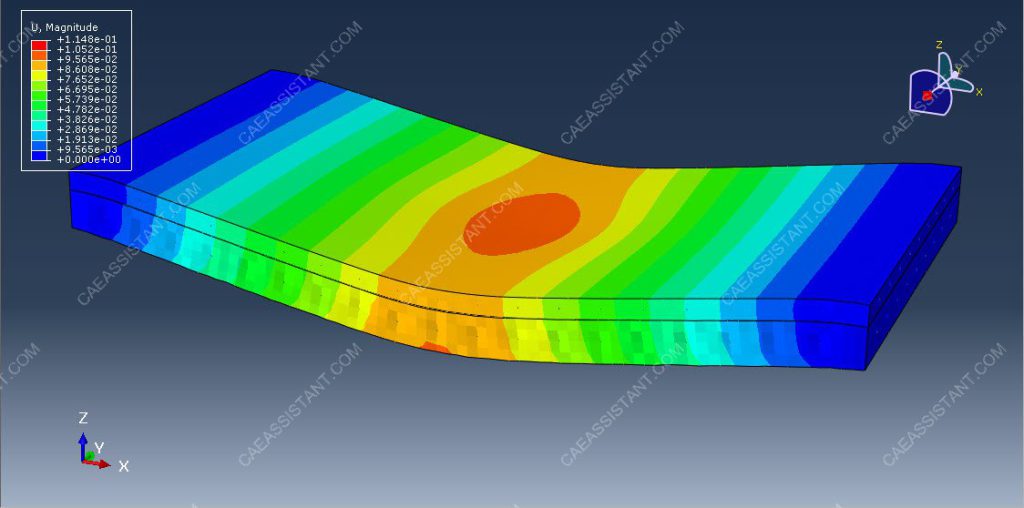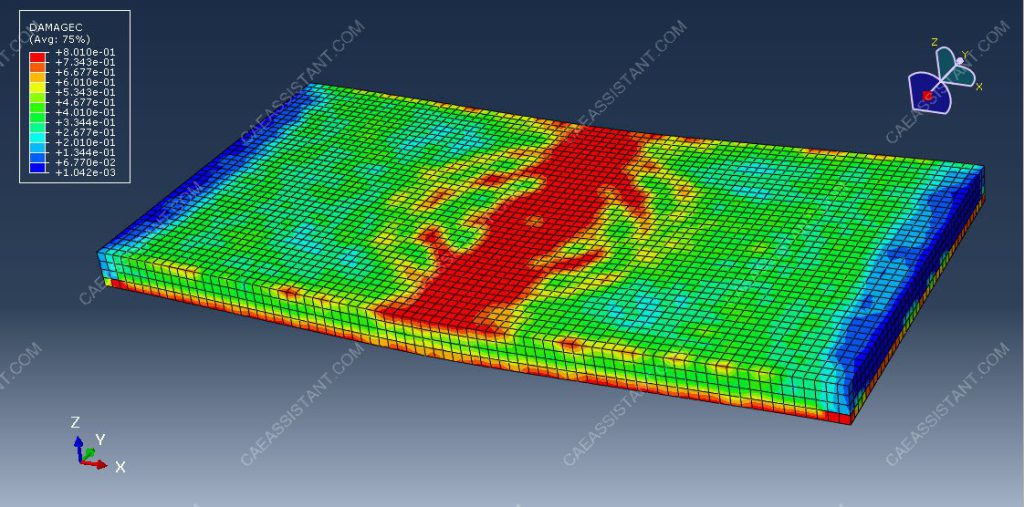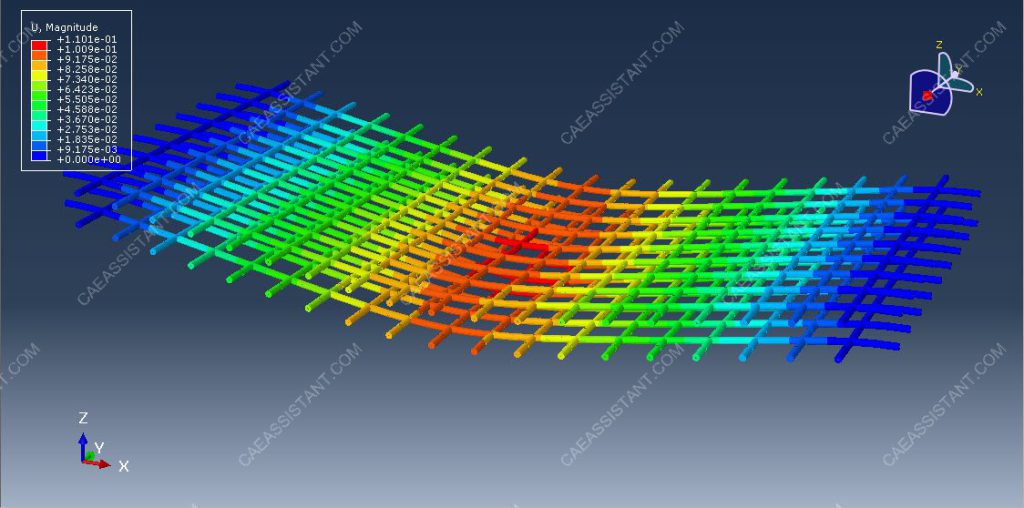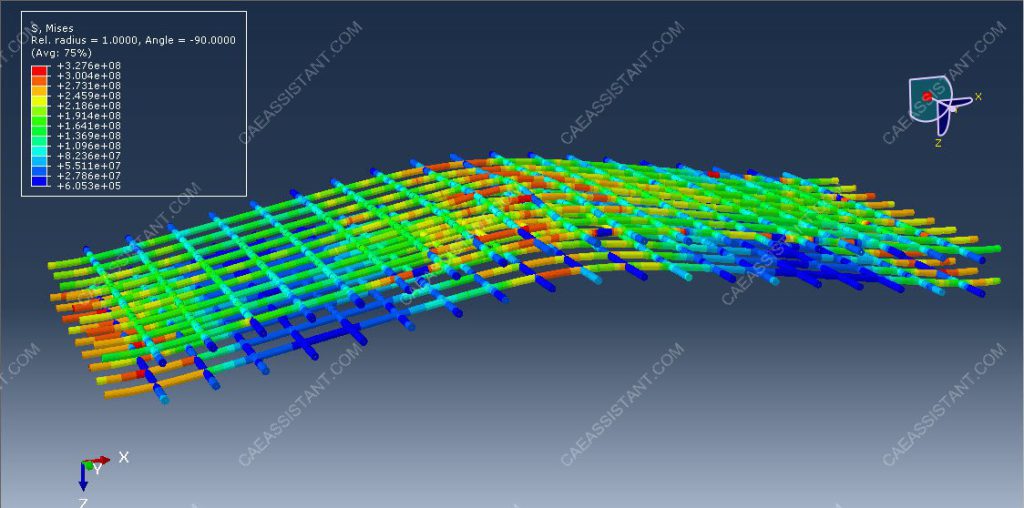
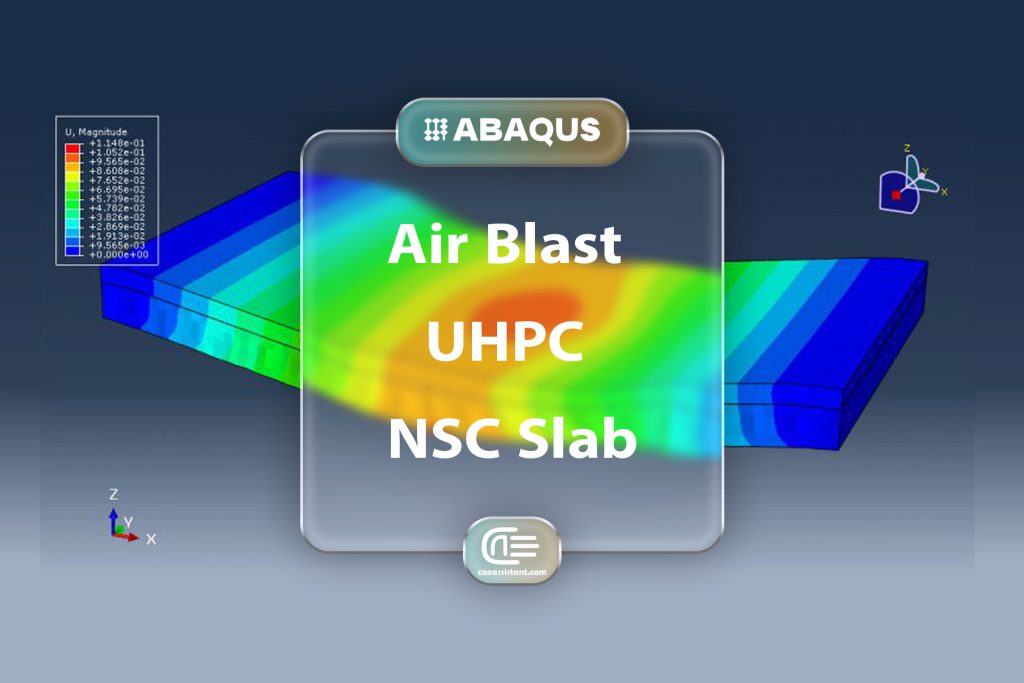
In this tutorial, the simulation of an air blast explosion over a composite reinforced concrete (RC) slab made of Ultra-High Performance Concrete (UHPC) and Normal Strength Concrete (NSC) is presented.
- The UHPC is modeled as the upper layer, while the NSC forms the bottom layer.
- Both UHPC and NSC are defined as three-dimensional solid parts.
- Steel reinforcement bars are modeled as three-dimensional wire parts and embedded within the concrete hosts.
- A cohesive interface is assigned between UHPC and NSC using stiffness and damage parameters.
UHPC has recently gained attention for strengthening and rehabilitating RC structures due to its excellent tensile and compressive strength, ductility, and durability. These properties make it especially suitable for bridge engineering and other demanding applications.
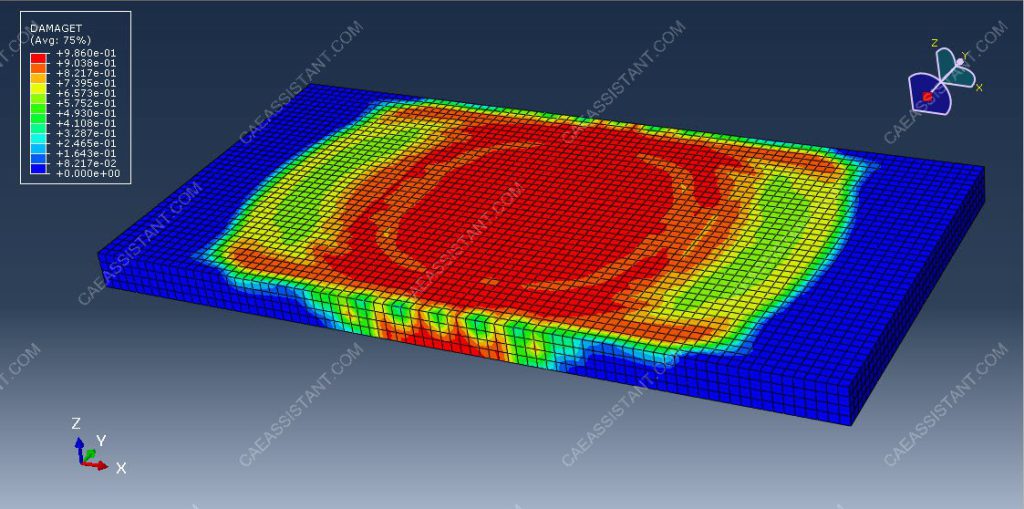
The Concrete Damaged Plasticity (CDP) model is used to represent the tensile and compressive behavior of both UHPC and NSC under blast loading. This model also captures the damage evolution during the analysis. Material properties for UHPC and NSC are taken from reference studies, while the steel reinforcement is defined with elastic-plastic behavior.
A dynamic explicit step is chosen for the blast simulation. The blast load is applied using the CONWEP procedure, which requires defining the detonation point and the TNT charge weight. Boundary conditions are set as pinned supports on two sides of the slab. To achieve accurate results, a fine mesh is recommended.
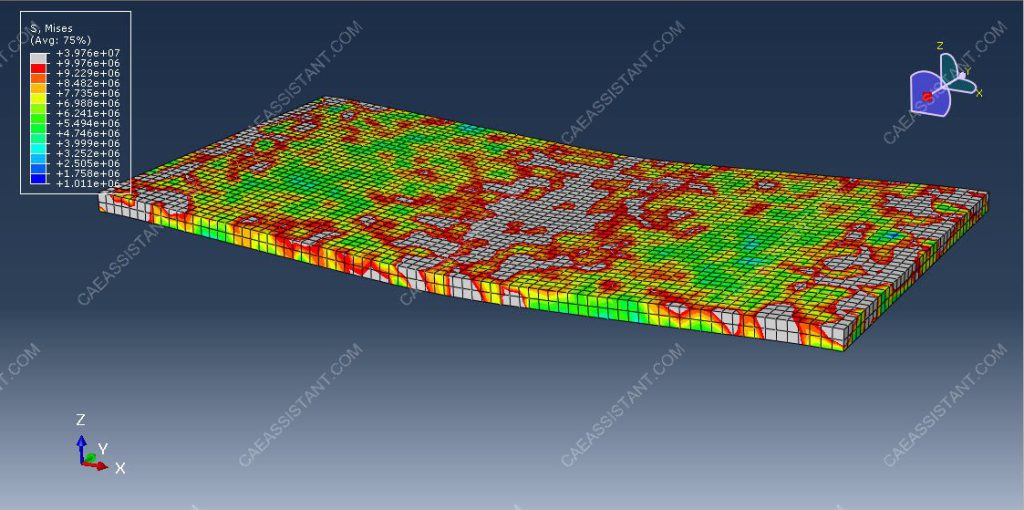
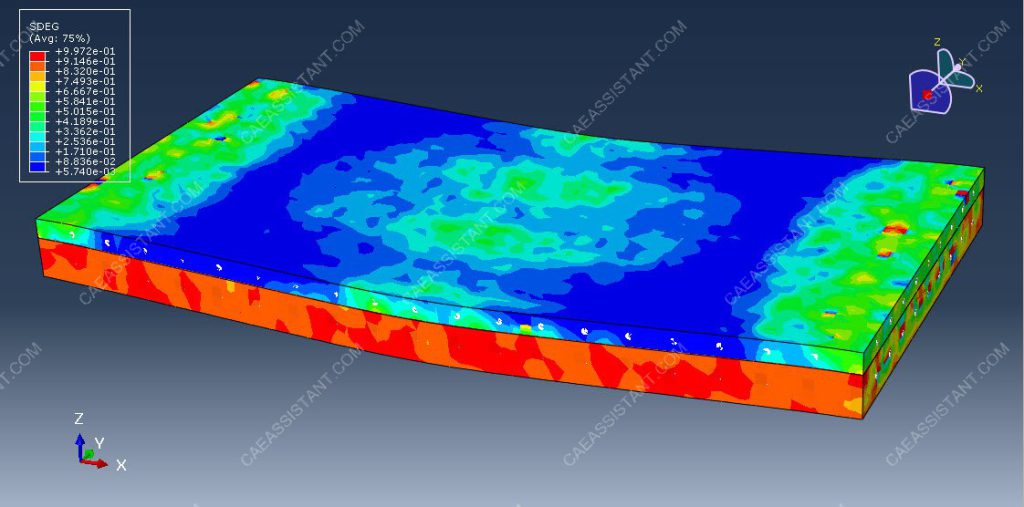
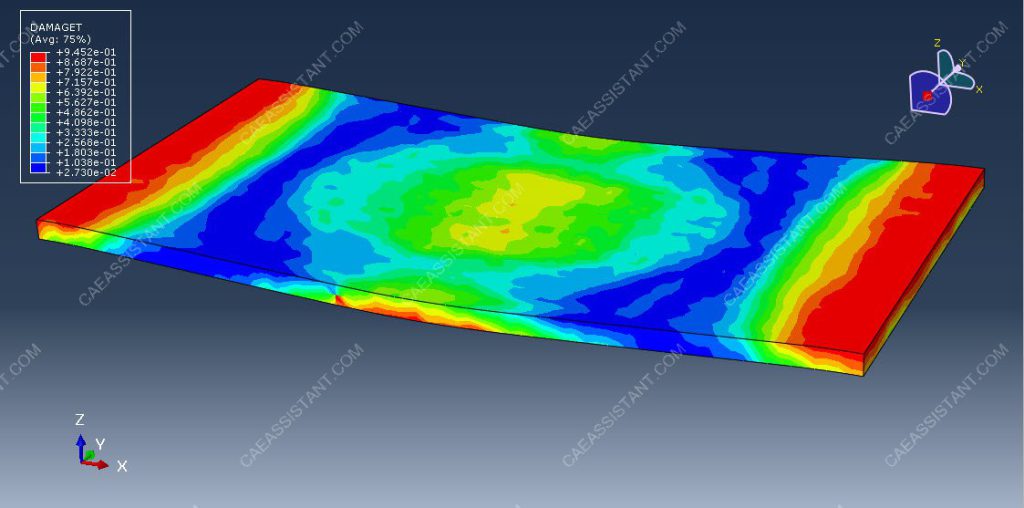
After the simulation, results such as stress, strain, tensile and compressive damage, and displacement are available for evaluation. Figures of the assembled parts and output results can be viewed for better understanding.