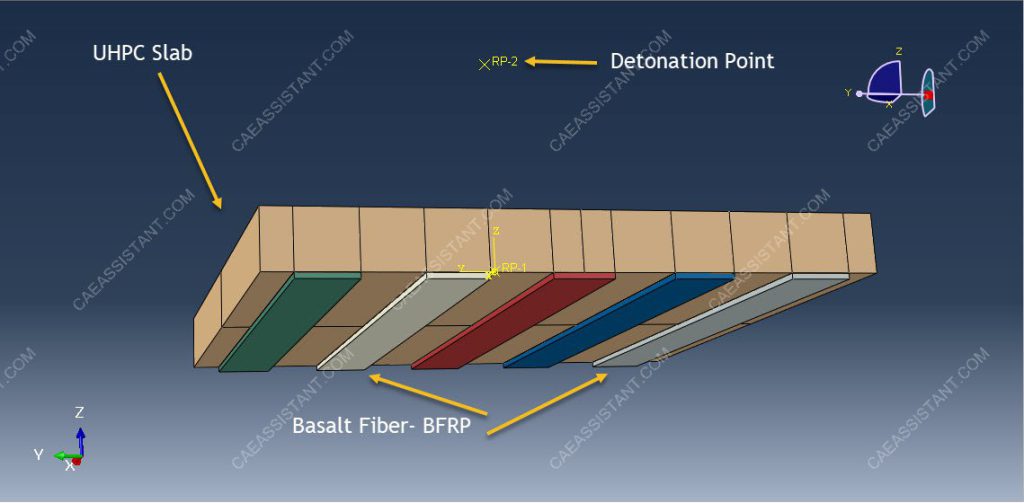
In this tutorial, the simulation of an air blast explosion over a UHPC slab reinforced with BFRP composite in Abaqus is presented.
- The Ultra-High-Performance Concrete (UHPC) is modeled as a three-dimensional solid part.
- The Basalt Fiber Reinforced Plastic (BFRP) is modeled as a shell part with four layers.
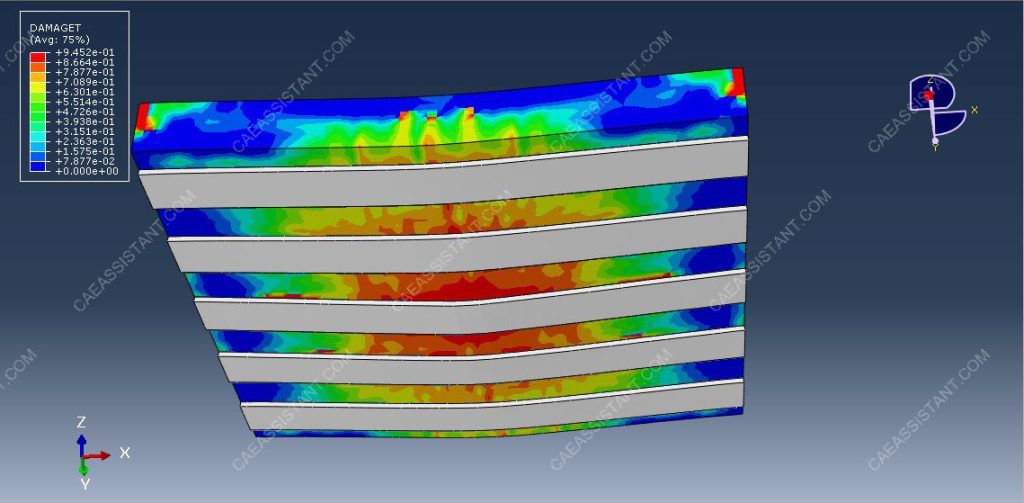
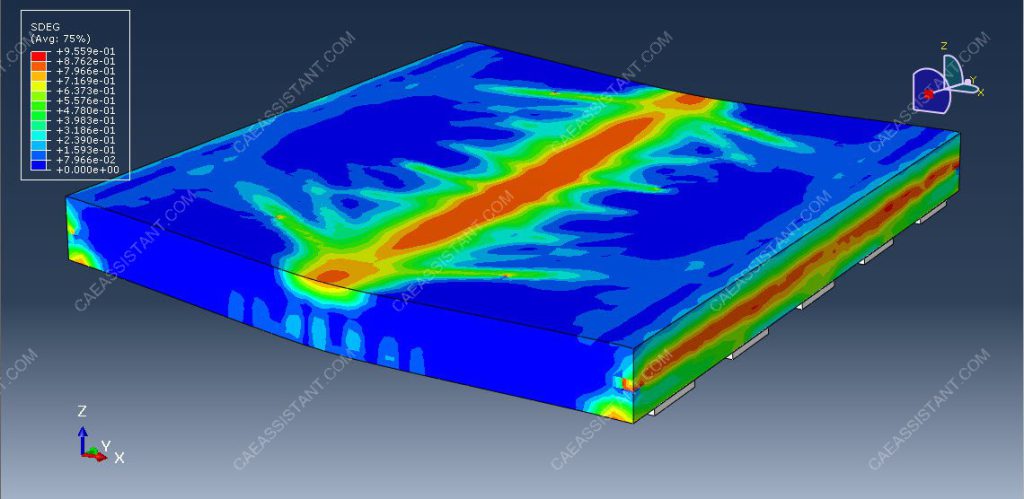
- Concrete-Damaged Plasticity is used to represent the nonlinear behavior of UHPC. In this model, tensile and compressive data are defined separately, and both tensile and compressive damage can be applied.
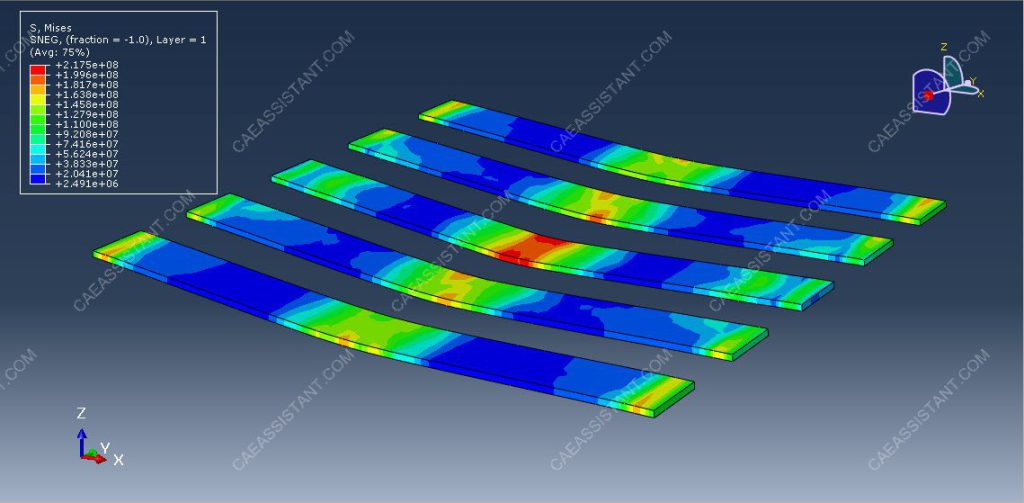
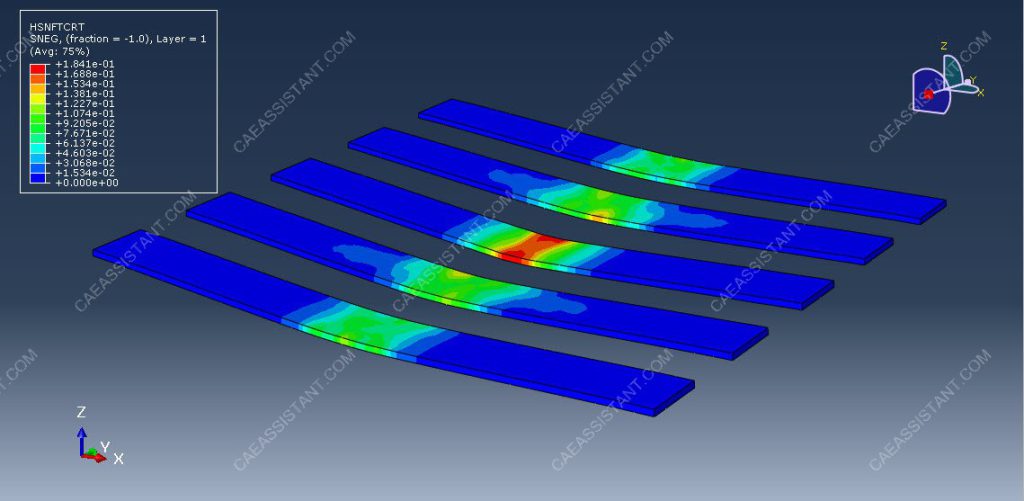
Laminated fiber-reinforced composites are widely used in aerospace, military, marine, and automotive industries due to their high strength-to-weight ratio, ease of fabrication, corrosion resistance, and cost-effectiveness. To model the BFRP behavior under blast loading, the elastic lamina model and Hashin’s damage criterion are applied.
A dynamic explicit step is chosen for this analysis. Ideal contact is defined between the UHPC surface and the BFRP composite layers. The COWEP blast procedure is used, where the amount of TNT and its location must be specified. Fixed boundary conditions are applied to the slab edges. A fine mesh is required to achieve accurate results under blast loading.
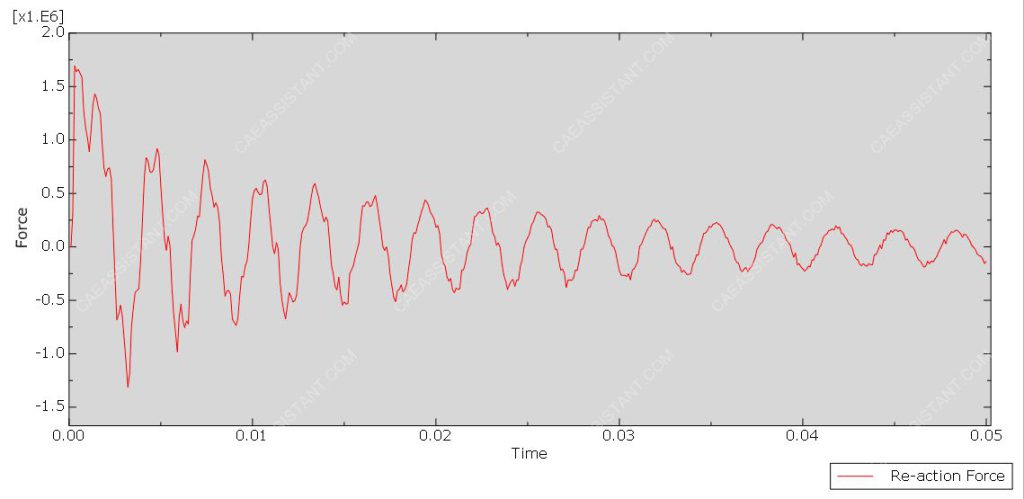
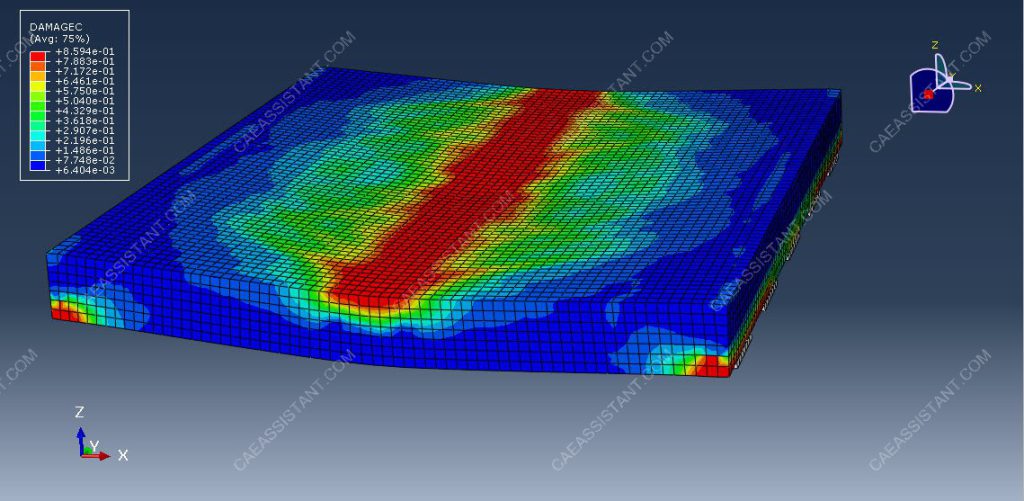
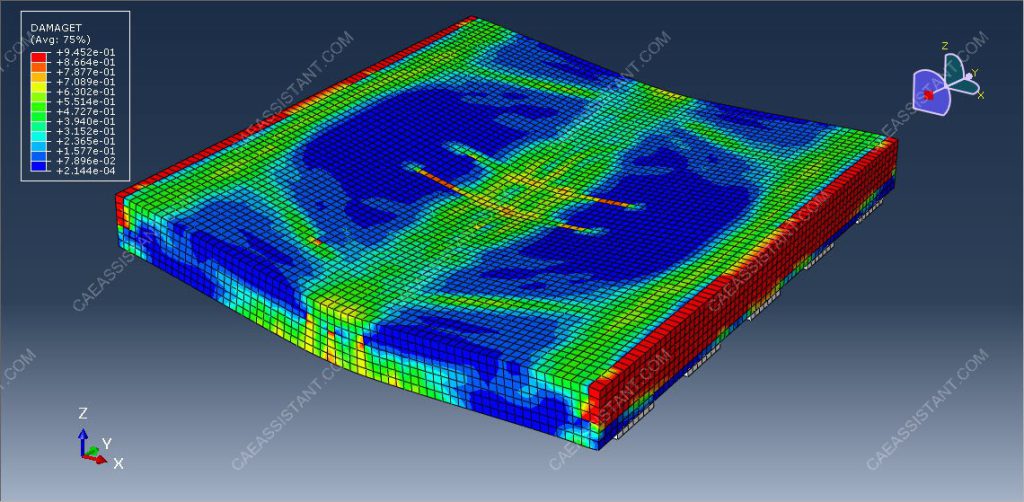
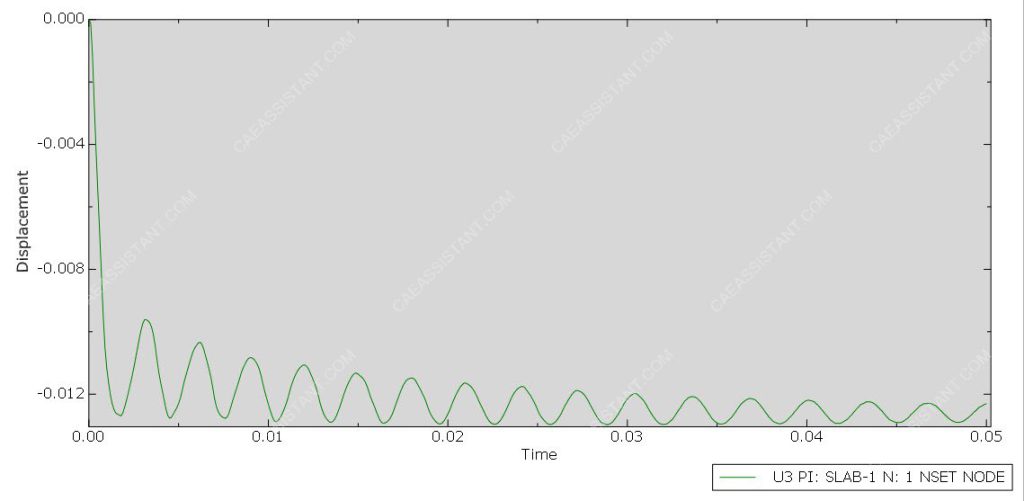
After the simulation, results such as stress, strain, tensile and compressive damage, fiber damage criterion, force diagrams, and displacement diagrams are available. Figures of these results are shown below.