Ocean waves are an important source of clean and renewable energy. They are generated by wind blowing across the ocean surface. In many regions, wind is strong and consistent enough to produce continuous waves.
Several technologies have been developed to capture wave energy. These systems differ in how they interact with waves and in the way they convert wave motion into usable energy. Wave energy converters are devices that transform wave energy into electrical power.
One type of converter is the point absorber. Point absorbers are small compared to the wavelength of incoming waves. Despite their size, they can capture energy from a wave front that is larger than the absorber itself.
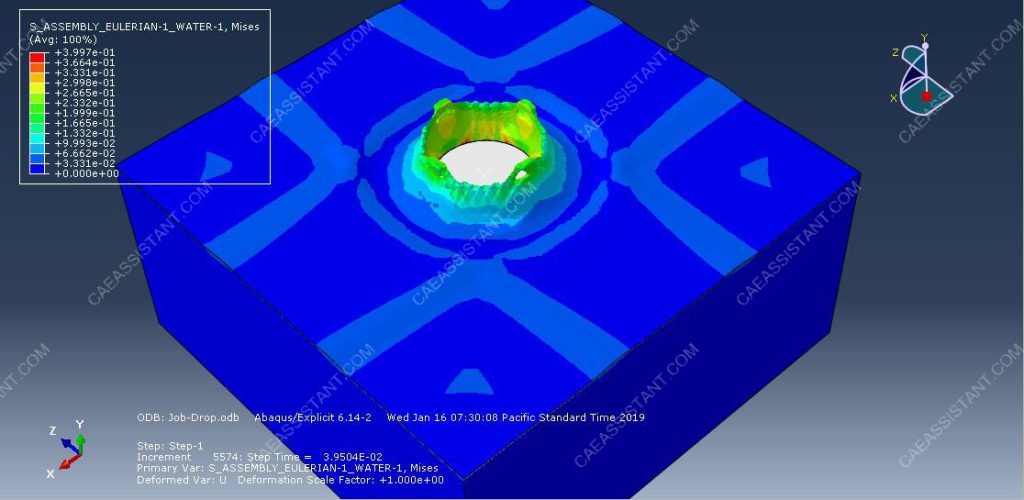
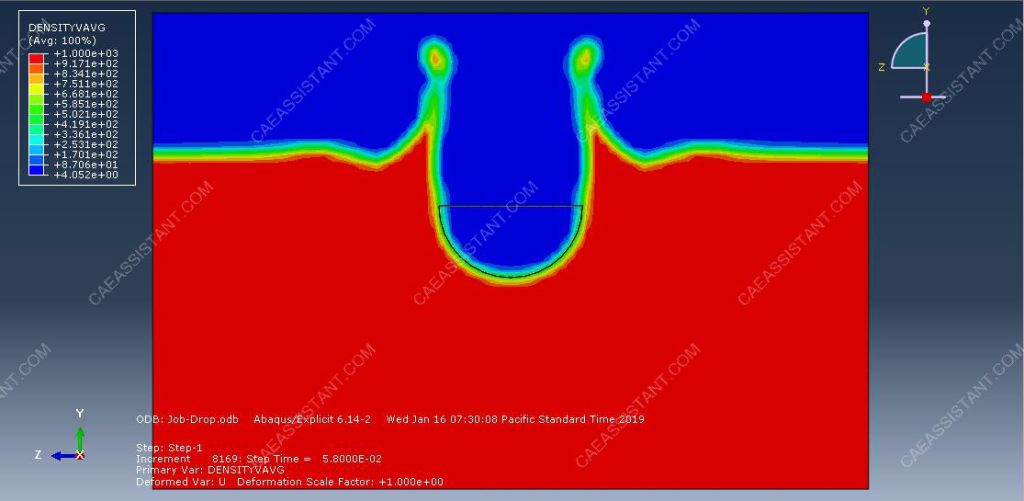
In this study, the hydrodynamic problem of water impact on three-dimensional buoys is analyzed using the explicit finite element method with a Coupled Eulerian–Lagrangian (CEL) solver. The fluid domain is modeled with an Eulerian formulation, while the buoy structure is modeled with a Lagrangian approach.
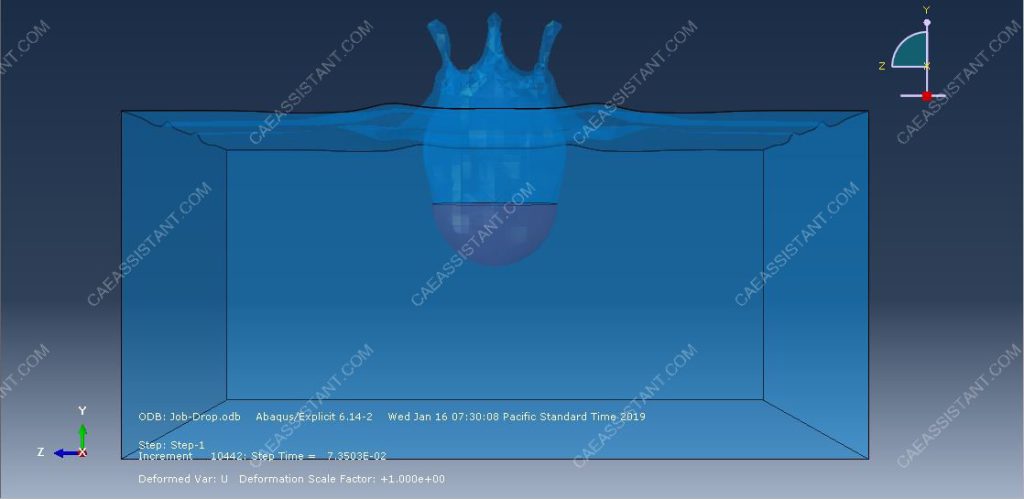
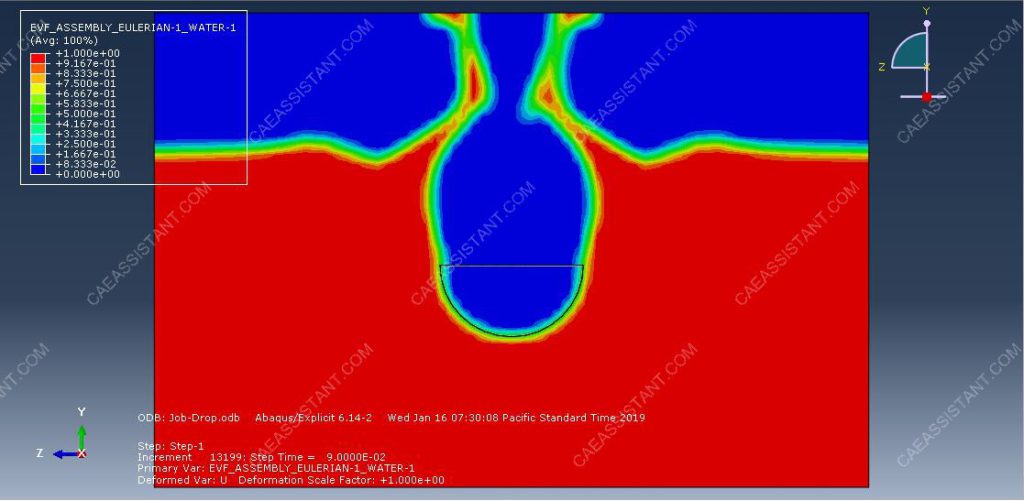
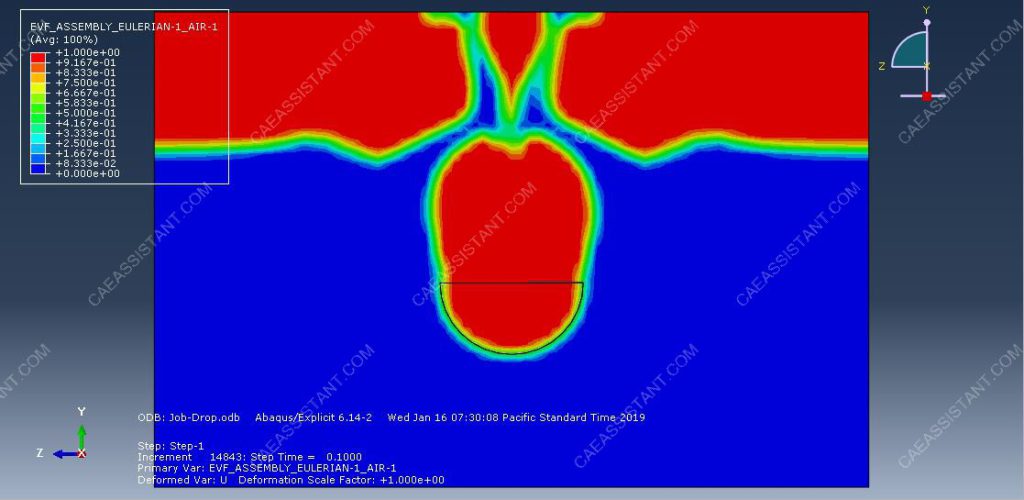
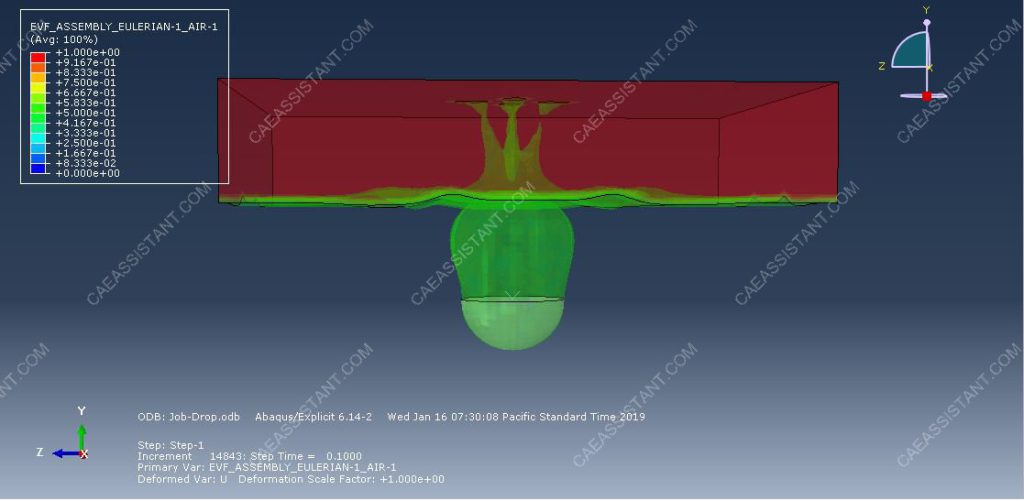
Different three-dimensional geometries, including a hemisphere, are investigated. The Us–Up equations are applied to describe water behavior, while an ideal gas formulation is used for air. During the simulation, the projectile penetrated the water, producing a visible splash. Figures of the results are shown below.