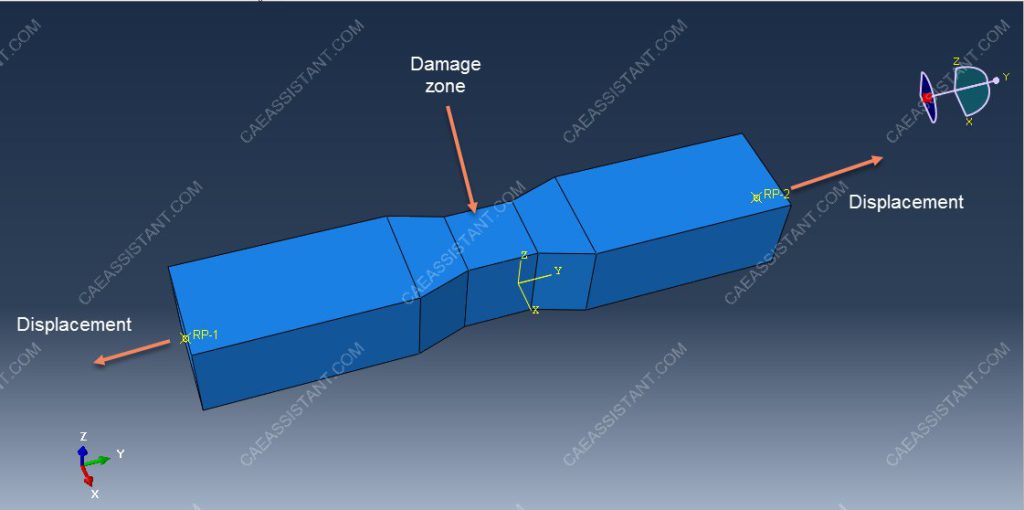
In this tutorial, we investigate the dynamic simulation of a tensile test on a steel piece under axial deformation using Abaqus. A three-dimensional model is created to represent the steel geometry.
To simulate failure behavior, the model uses shear and ductile damage with evolution, along with isotropic plasticity that is strain-rate dependent. All material data is sourced from the Abaqus documentation.
This simulation can be performed using either static or dynamic analysis. In this example, a dynamic explicit step is used to observe damage and failure. To accelerate the simulation, mass scaling is applied with a time target.
The front and back faces of the steel part are defined as rigid surfaces. Displacement loading is applied to these surfaces. Mesh quality in the middle region of the part is critical for accurate results.
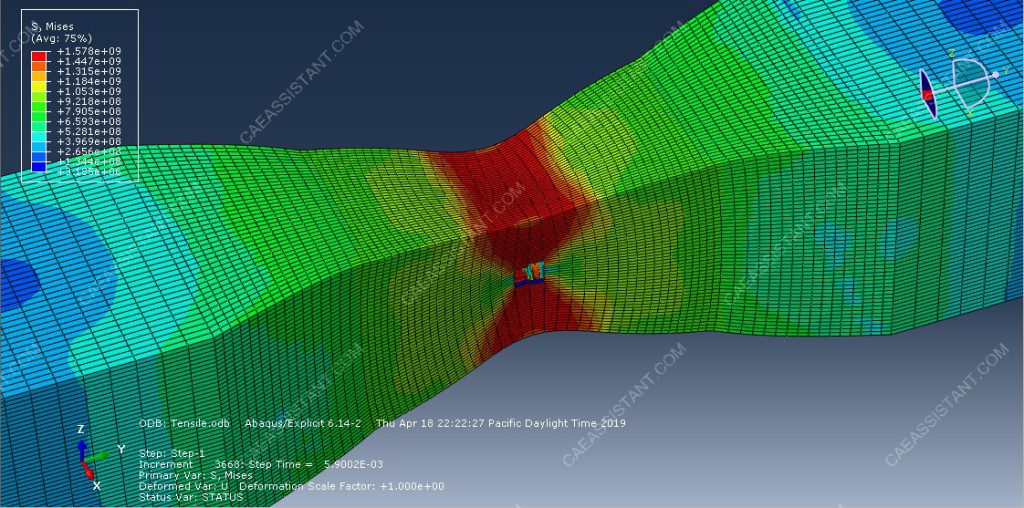
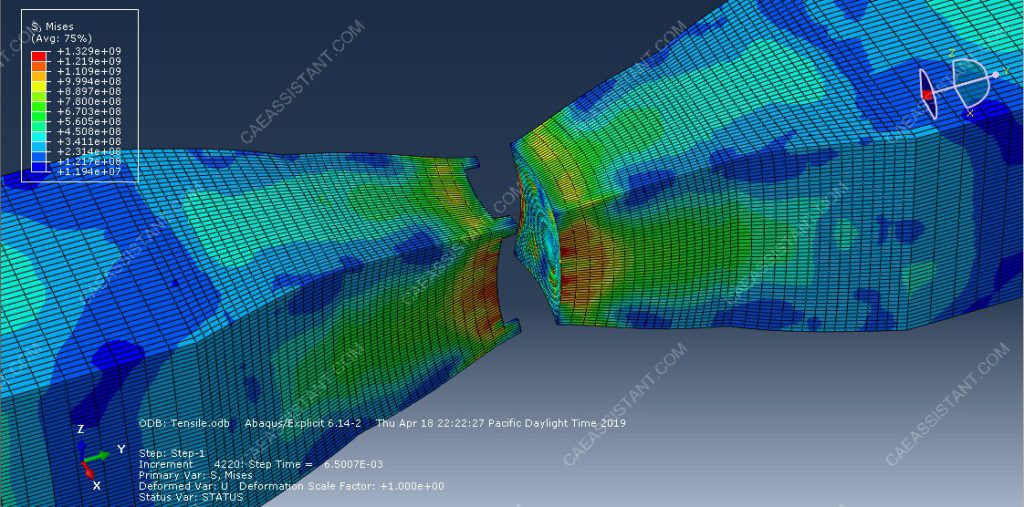
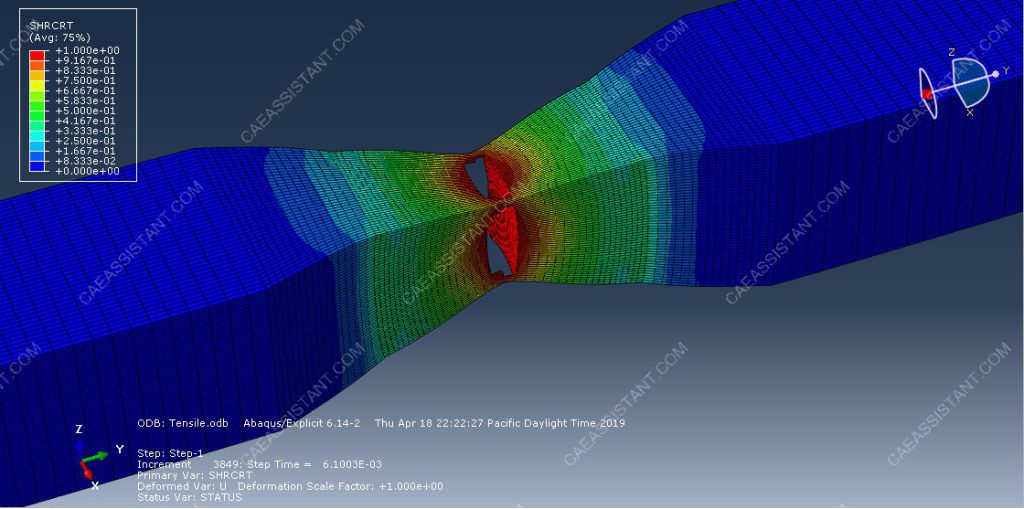
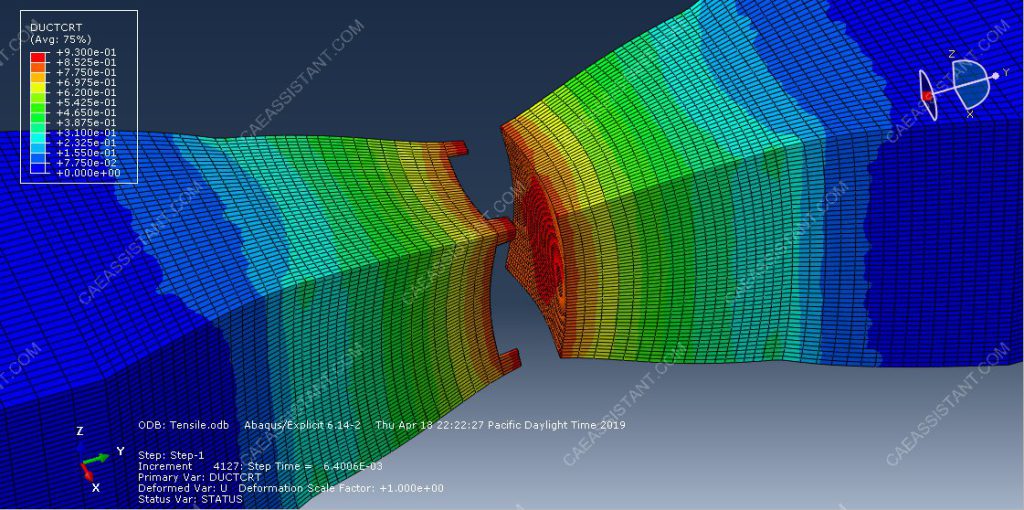
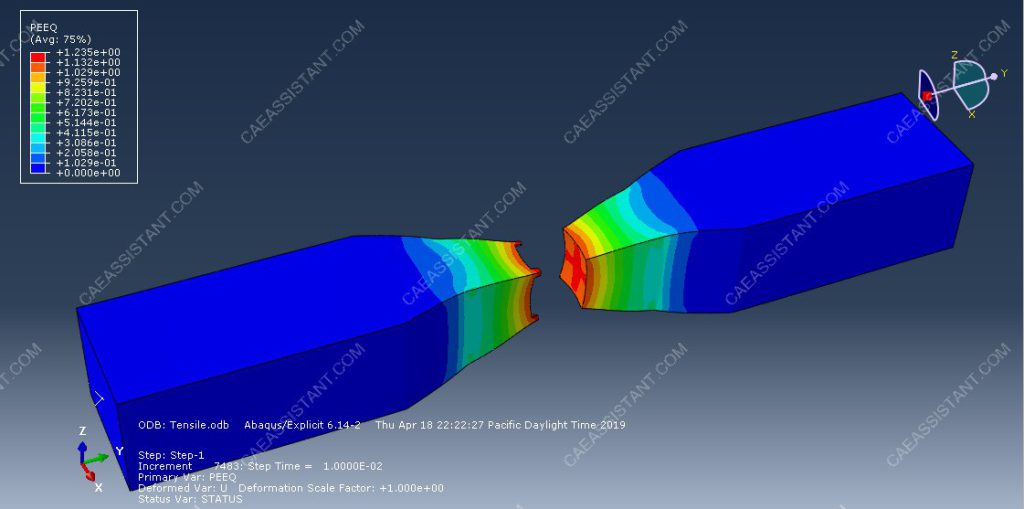
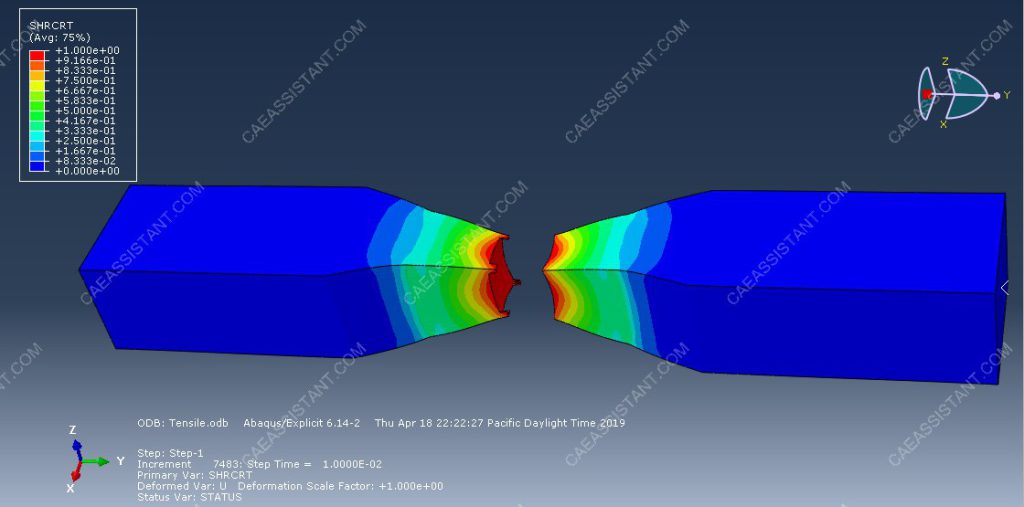
After running the simulation, damage and separation are clearly visible. Below are some figures illustrating the results.