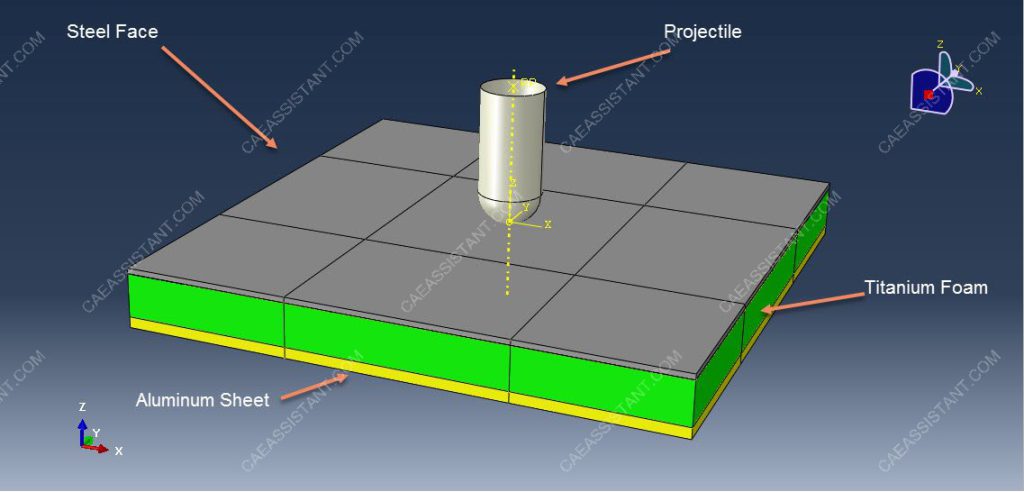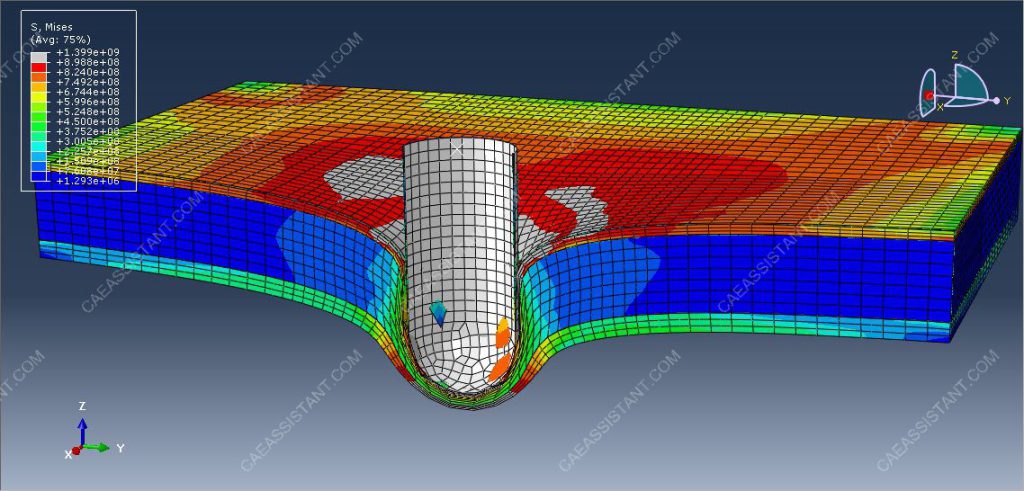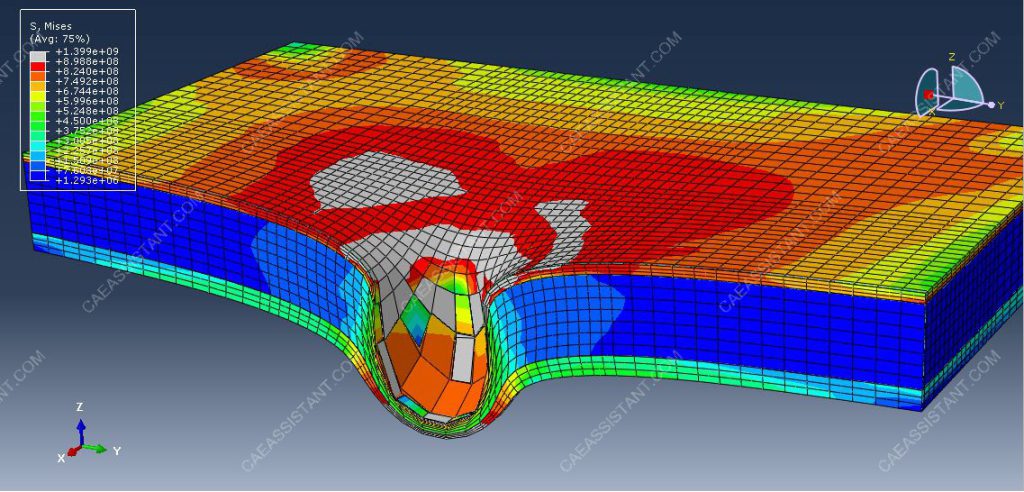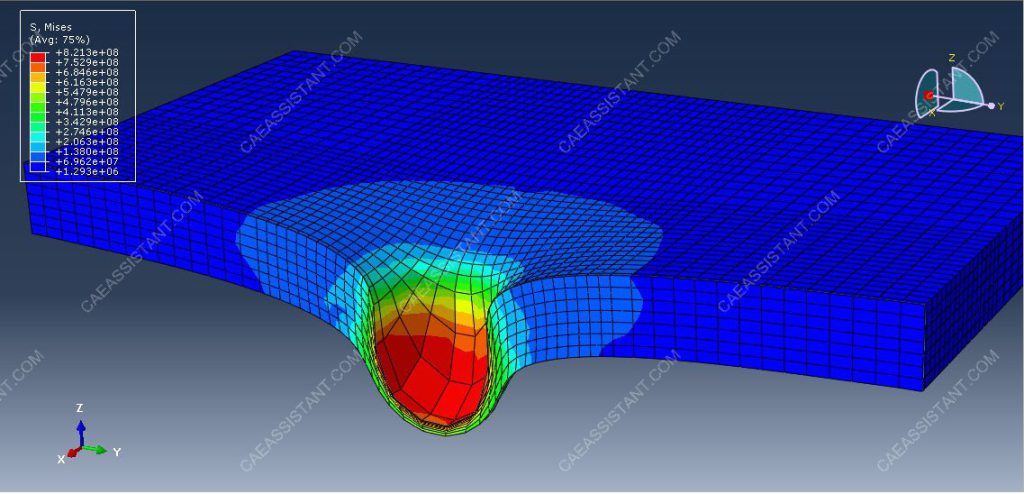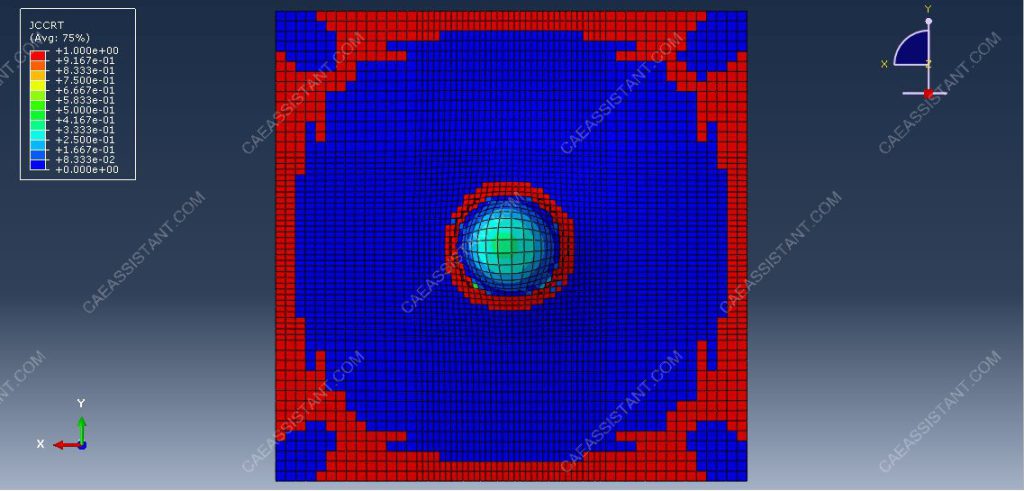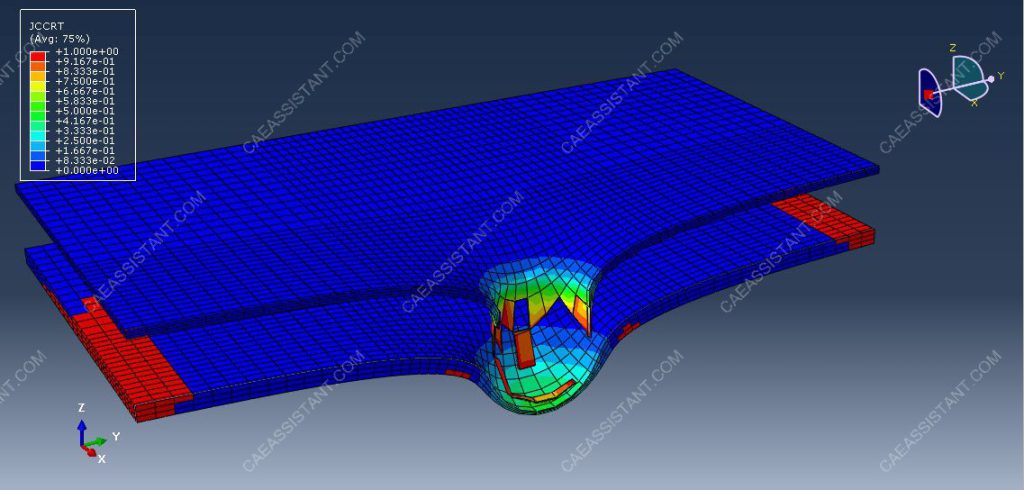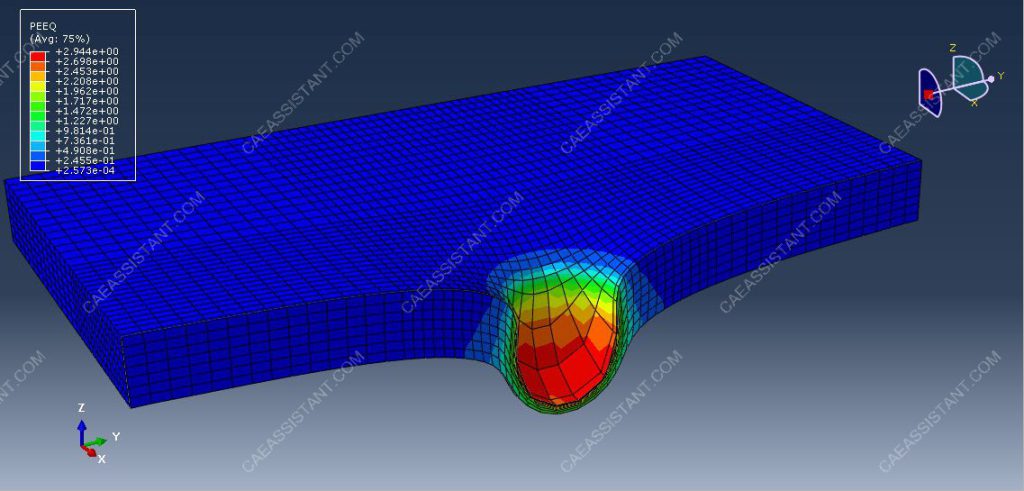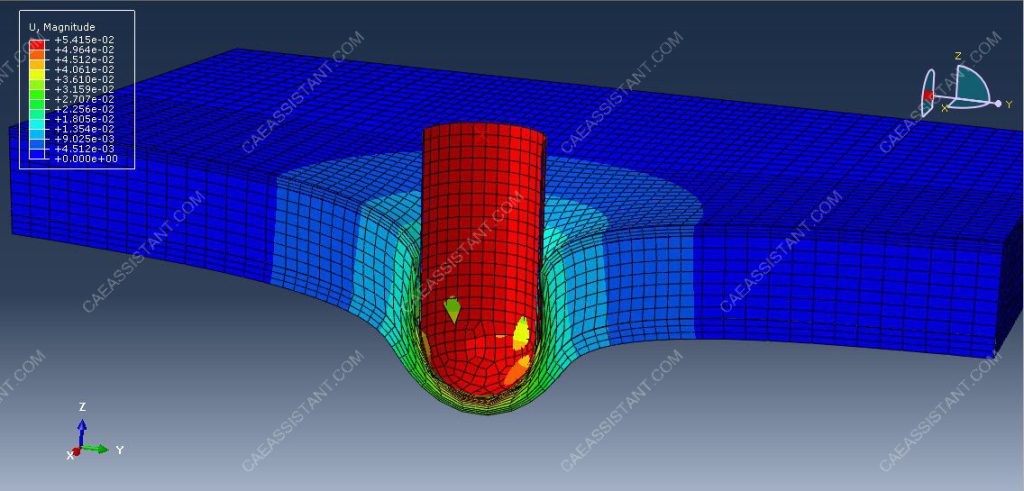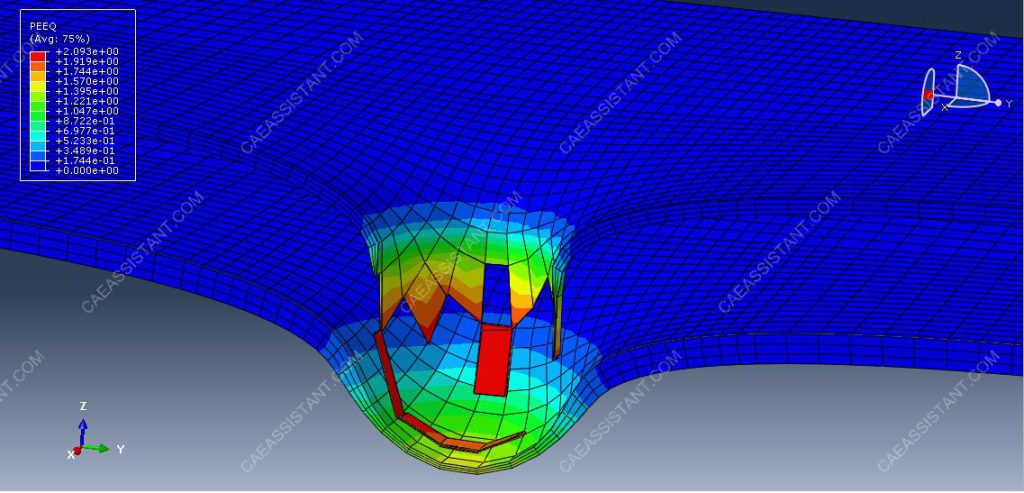
In this tutorial, we investigate the dynamic response of square sandwich plates with a metal foam core subjected to rigid projectile impact using Abaqus/Explicit.
Sandwich structures are increasingly used in critical engineering applications due to their superior performance compared to monolithic solid structures of the same mass. They offer high strength-to-weight and stiffness-to-weight ratios, making them a promising alternative. The structural behavior of sandwich plates depends on material properties, face-sheet and core geometry, and boundary conditions.
Metal foam is selected as the core material for its unique mechanical and physical properties. It is lightweight, nearly isotropic, and offers high energy absorption, good sound damping, non-combustibility, and ease of fabrication into curved shapes with integrated face-sheets.
In this simulation:
- Steel, aluminum, and titanium foam are modeled as 3D solid parts.
- Steel is defined using elastic-plastic behavior with the Johnson-Cook plasticity model. Damage and failure are modeled using Johnson-Cook damage with evolution.
- Abaqus/Explicit provides two Johnson-Cook failure models: a dynamic failure model for high strain-rate metal deformation, and a general damage initiation model recommended for progressive failure analysis.
- Titanium foam is modeled using elastic properties and crushable foam plasticity with isotropic hardening.
- Aluminum is defined with elastic behavior and Johnson-Cook plasticity and damage.
The simulation uses a dynamic explicit step. General contact with defined contact properties is applied. Perfect contact is assumed between steel and foam, and between aluminum and foam. Fixed boundary conditions are applied to the panel sides, and an initial velocity is assigned to the projectile. A fine mesh is used near the contact zone to ensure accuracy.
After the simulation, results such as stress, strain, damage, and foam compression are available for analysis.