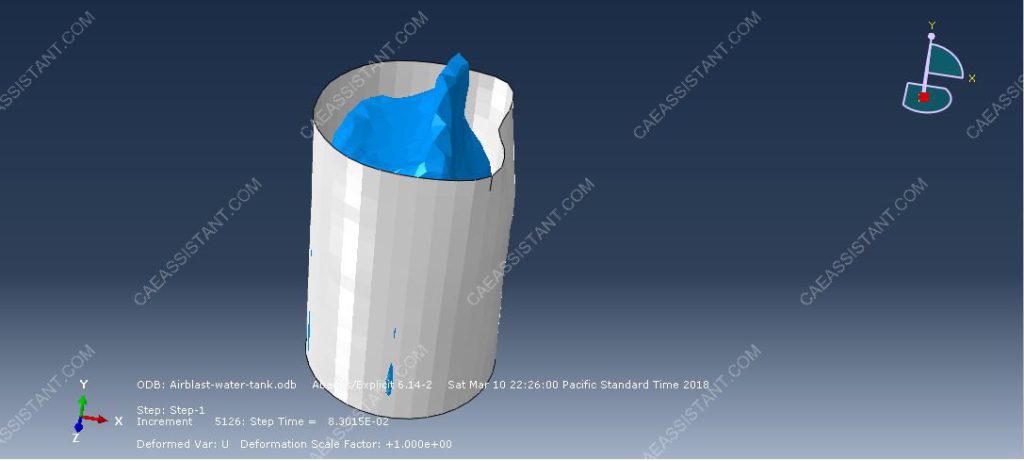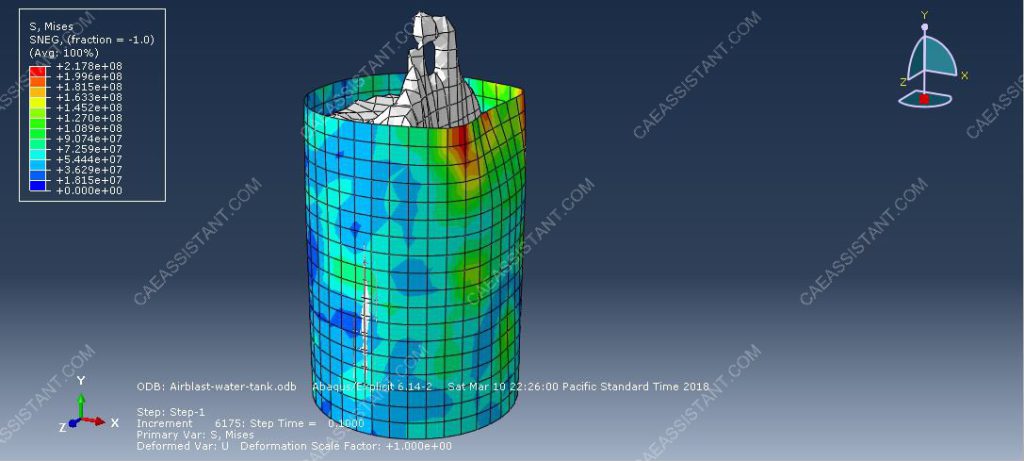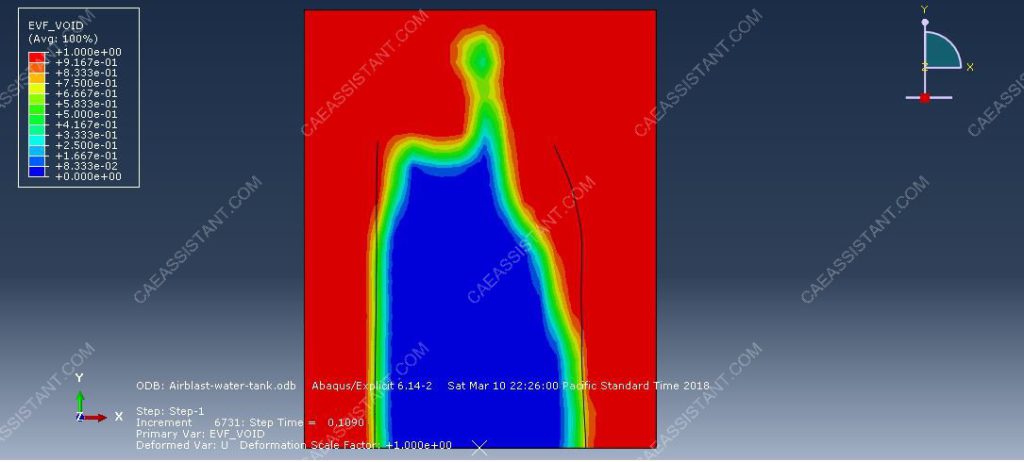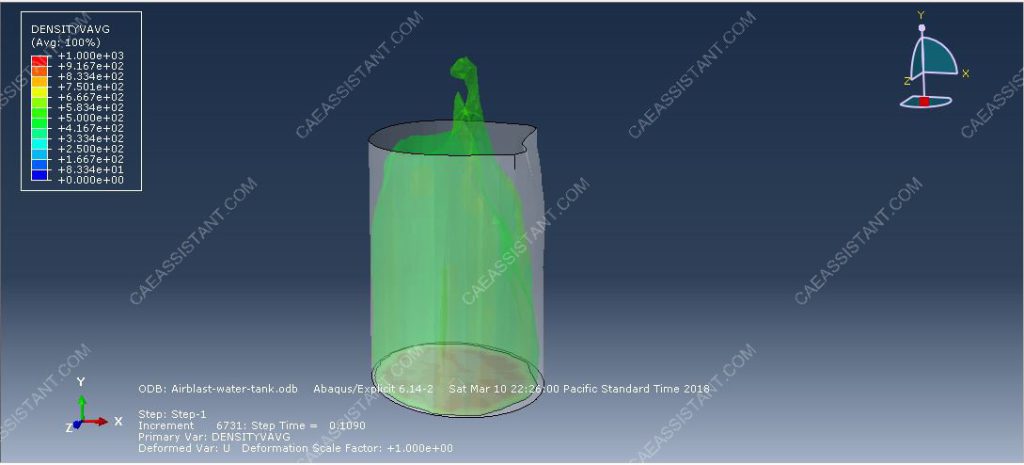
Terror attacks around the world have increasingly threatened human civilization. Over the past two decades, bomb blasts in crowded business districts, underground railway stations, and busy roads have caused significant loss of life and property. Despite this, the blast response of many critical civil infrastructures remains poorly understood due to complex material behavior, dynamic loading, and nonlinear effects.
One such vital infrastructure is the liquid storage tank. These tanks are essential for storing water, milk, petroleum, chemicals, and other liquids used in daily life and industry. Blast loading on such tanks can lead to severe consequences—water and milk shortages, health hazards from chemical spills, and fire risks from fuel leaks.
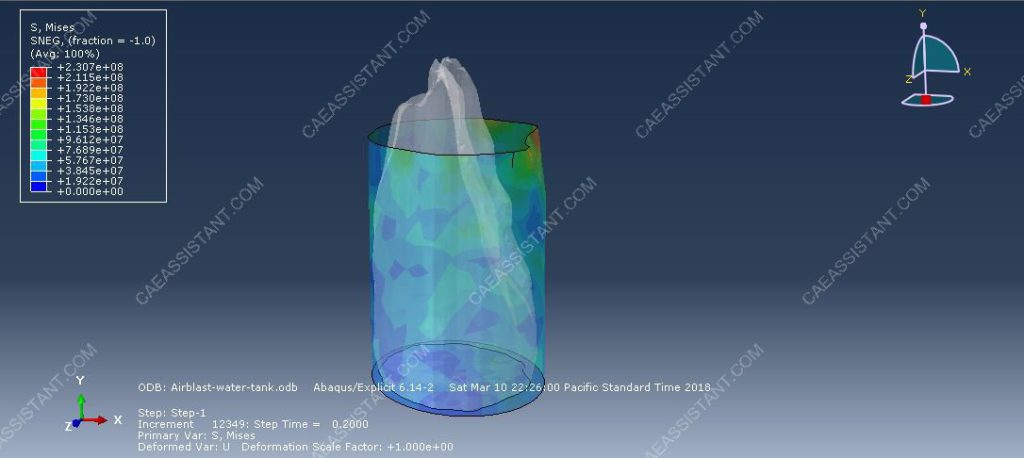
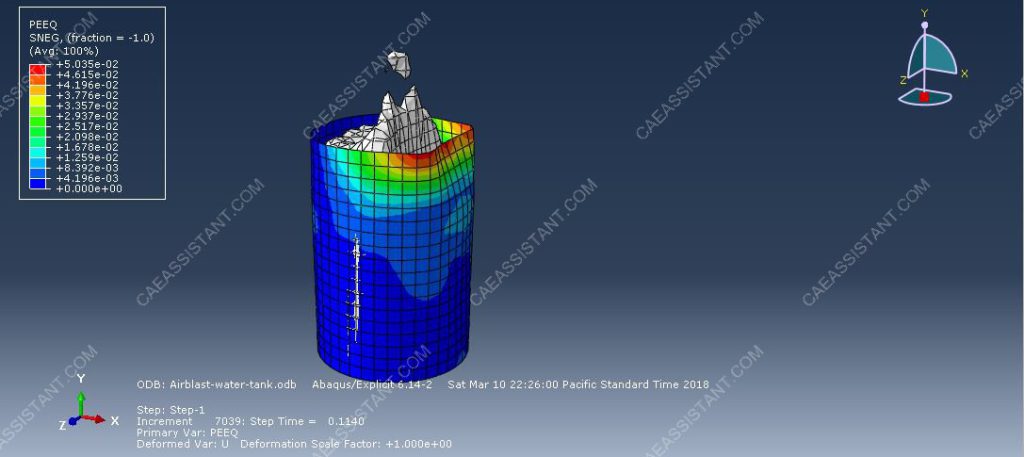
Understanding the dynamic behavior of liquid storage tanks under blast loading is crucial. This tutorial presents a step-by-step guide to simulating a blast impact on a steel water storage tank using Abaqus. The study includes three-dimensional finite element (FE) modeling for tanks with different aspect ratios.
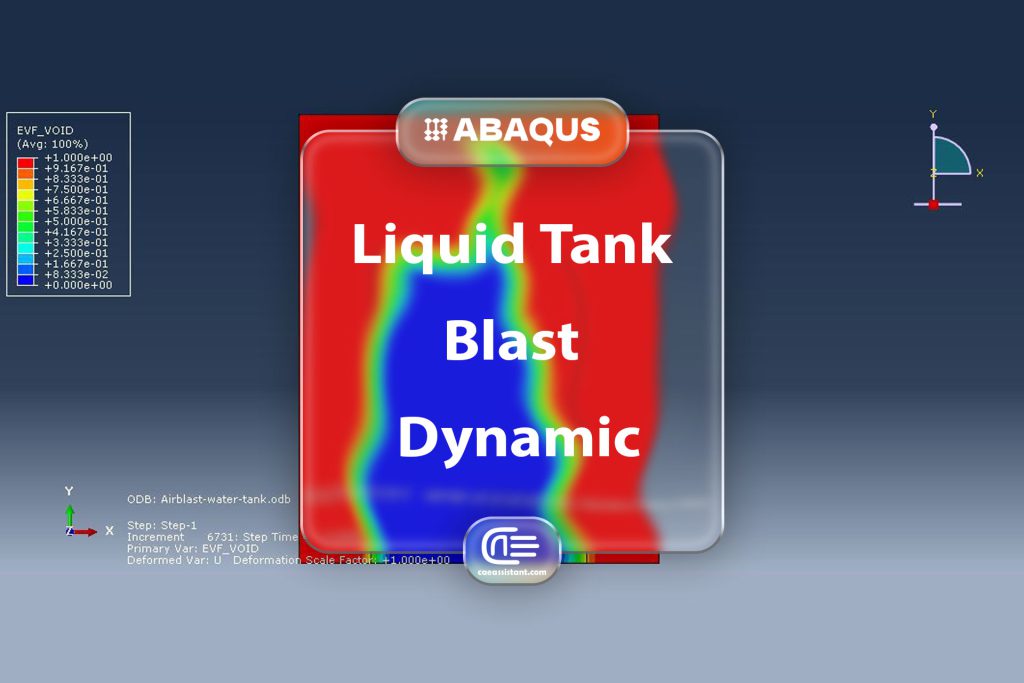
To simulate the blast effect, the CONWEP method is used. Water inside the tank is modeled as an Eulerian domain to visualize sloshing during the explosion. The tank structure is modeled using shell elements.