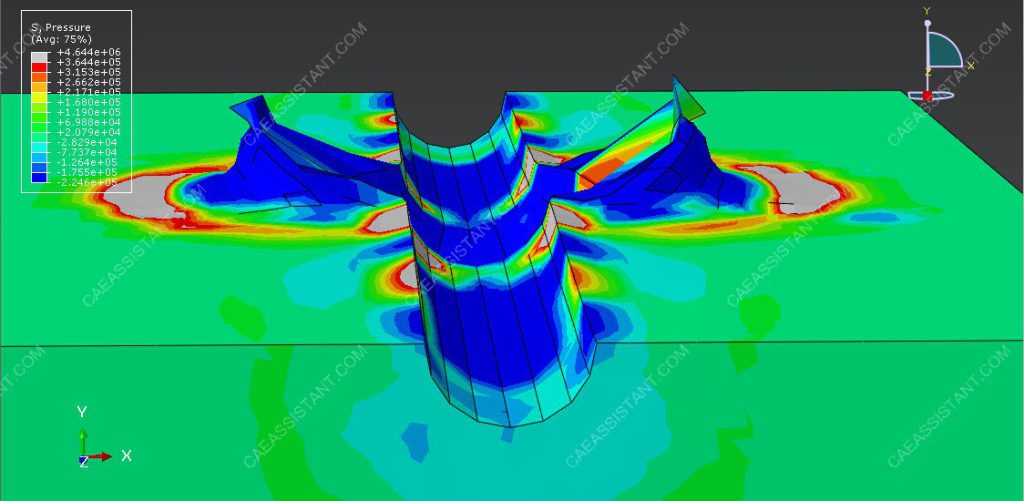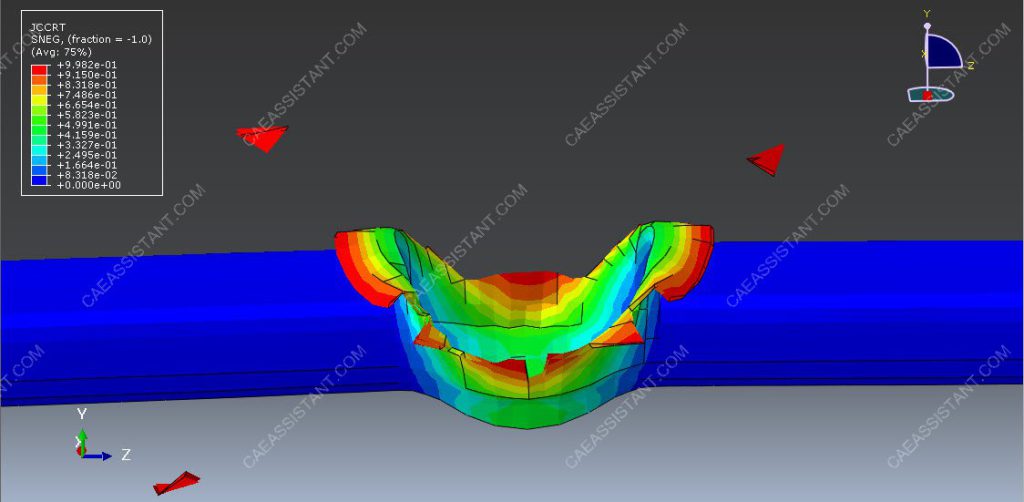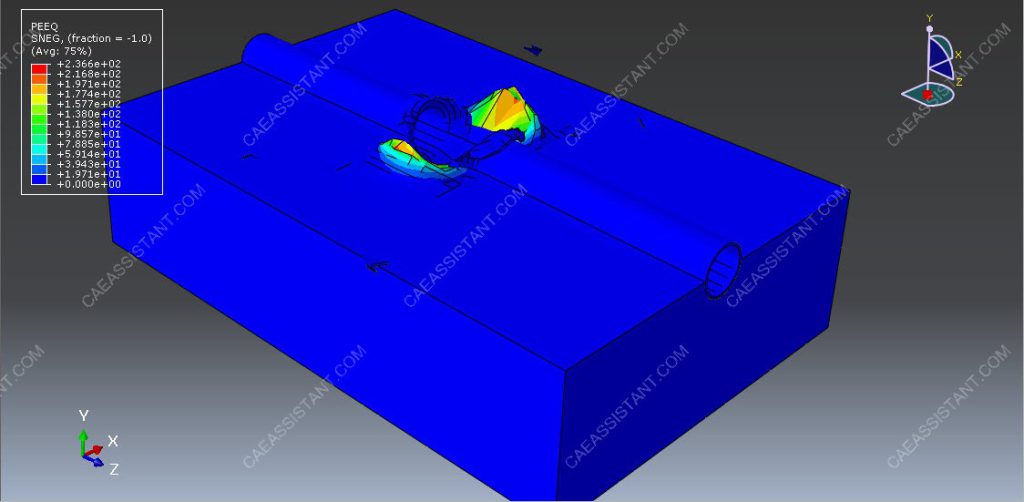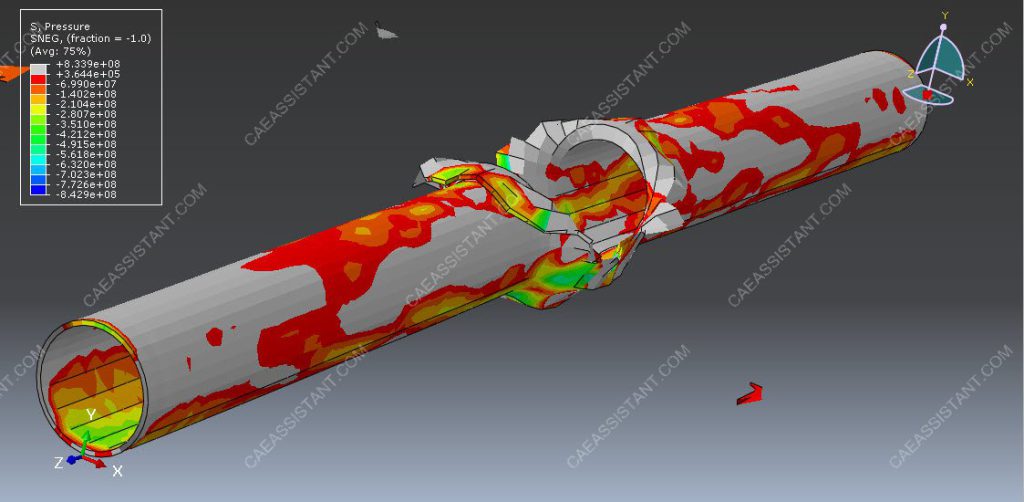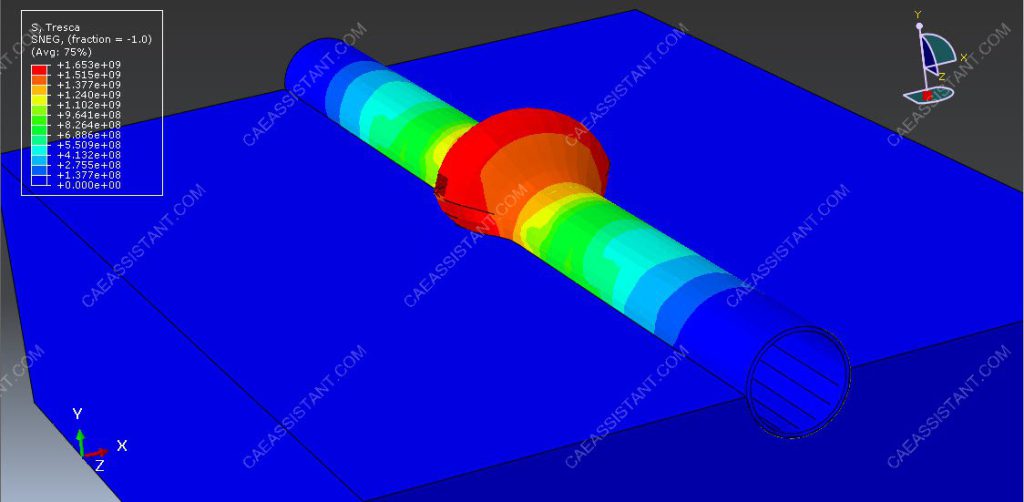
In this tutorial, the numerical simulation of pipeline damage mechanics under internal explosion in Abaqus is presented.
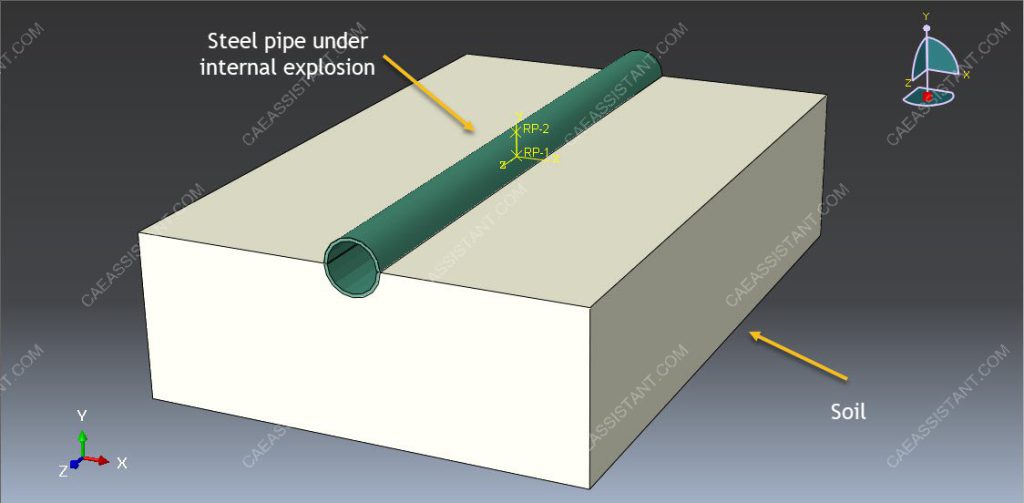
The steel pipe is modeled as a three-dimensional shell part, while the surrounding soil is modeled as a three-dimensional solid part. Half of the pipe is embedded in the soil, as shown in the assembly figure.
Pipelines typically have long conveying distances, high internal pressures, and wide distribution ranges. When a pipe bursts, explosions and combustion can occur, leading to severe risks of loss of life and property. Due to the variability of medium conditions and the complexity of boundary conditions, accurately solving high-pressure pipeline blasting problems is very challenging.
For the steel pipe, the Johnson-Cook (JC) plasticity model is selected. This model is a type of Mises plasticity with analytical forms for hardening and strain-rate dependence. It is suitable for high-strain-rate deformation of metals. The JC plasticity and damage model is applied to capture both high-rate loading and material damage during the blast.
For the soil, the Mohr-Coulomb plasticity model is used. The analysis is performed with a dynamic explicit step, which is appropriate for blast simulations. General contact with friction is defined, and the contact between the lower surface of the pipe and the soil is modeled using ideal contact or tie constraints.
The blast load is applied using the CONWEP procedure, with TNT defined as the incident wave. Boundary conditions include a fixed constraint at the bottom of the soil and pin constraints at both ends of the pipe. Mesh refinement is required to ensure accurate results.
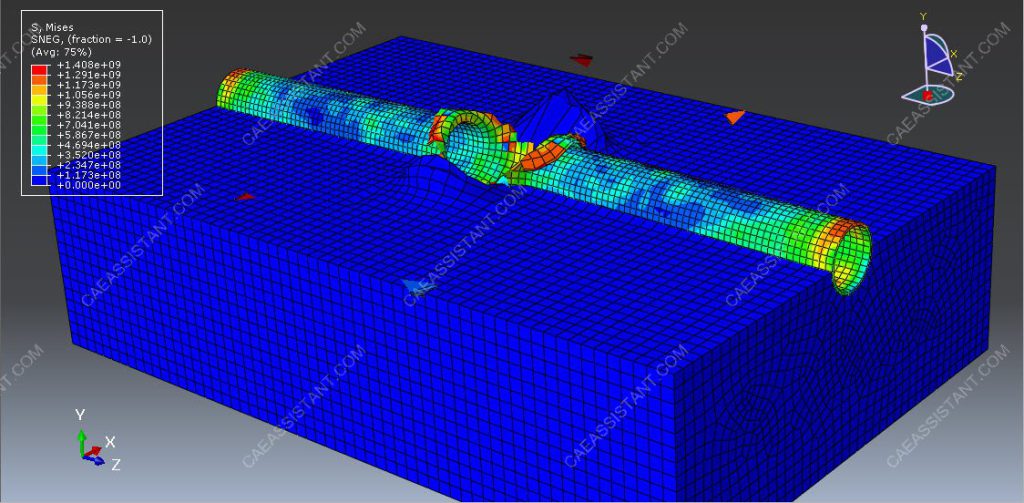
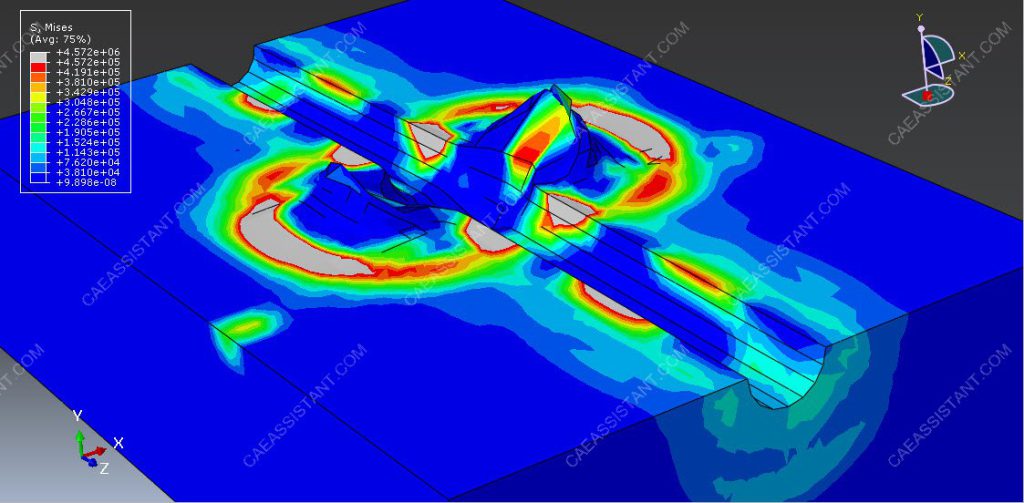
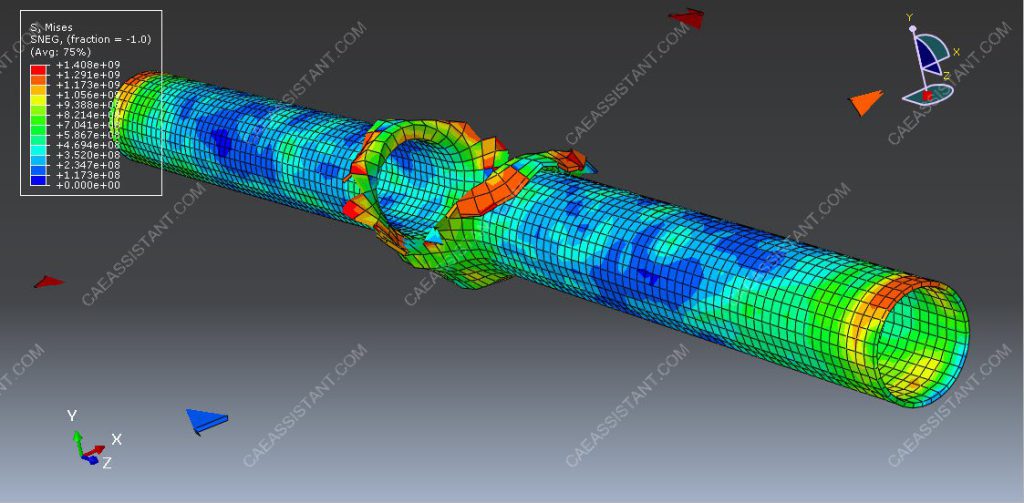
After the simulation, results such as stress, strain, damage, swelling, soil deformation, and blast depth are obtained. Figures of these results are provided for visualization.